Twice-compound leaves
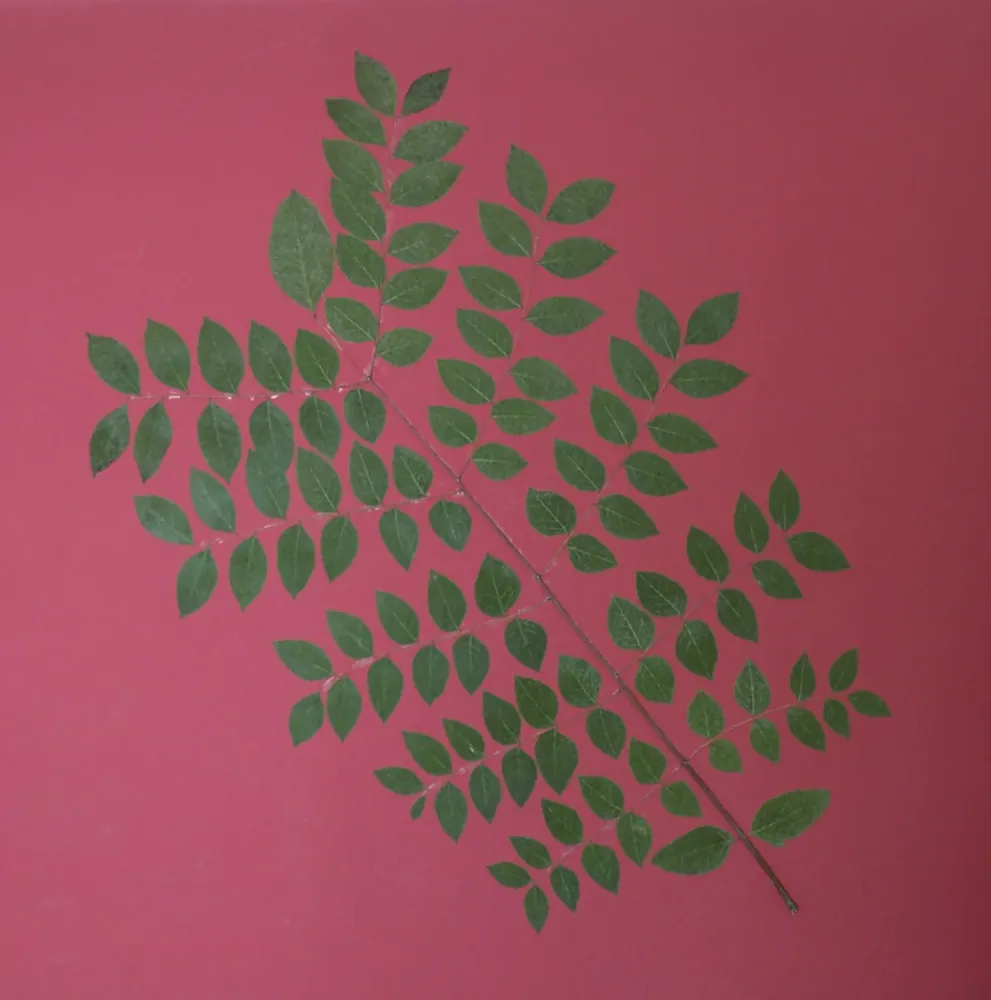
Very large leaves divide into smaller branches that carry many leaflets. One leaflet is not a whole leaf. Follow the arrangement visually without pulling a branch toward you.
Kentucky Coffeetree · Gymnocladus dioicus
Notice the space between branches. Give an unfinished thing time to unfold.
01 · Meet the tree
Kentucky coffeetree asks for a change of scale: one enormous compound leaf contains many smaller leaflets, while bare branches leave generous openings to the sky. Its seasonal rhythm offers a prompt for patience. You do not have to make every interval productive.
Very large leaves divide into smaller branches that carry many leaflets. One leaflet is not a whole leaf. Follow the arrangement visually without pulling a branch toward you.
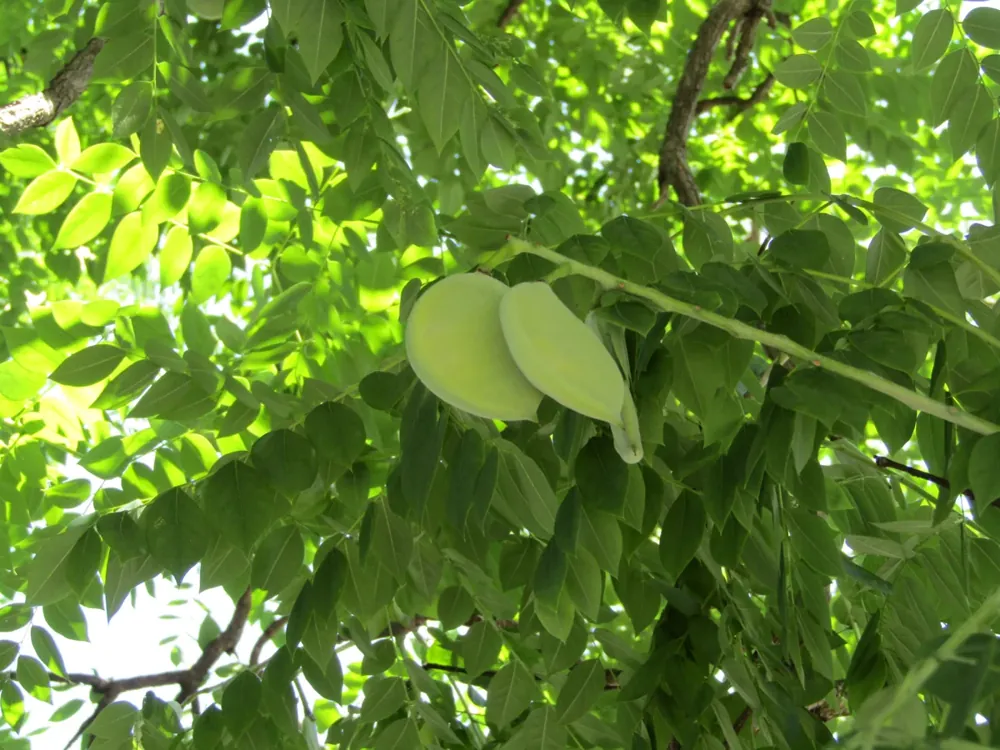
Gray-brown bark has deep fissures and scaly ridges. Female trees can produce thick, flattened brown pods. Leaves, seeds, and pod pulp are toxic; this observation practice includes no tasting or preparation.
Native to central and eastern North America, Kentucky coffeetree has an open, irregular crown. Male and female flowers are usually on separate trees, and some planted cultivars produce no pods.
Compare several features, and notice how age and season change their appearance. These photographs are starting points for observation; leave living leaves, needles, cones, and bark attached.
Leaves emerge relatively late in spring and can fall relatively early in autumn, turning yellow. Flowers appear in late spring to early summer. Pods on female trees may persist into winter. Look at the tree's present season without interpreting bare branches alone as a sign of poor health.
Botanical reference: NC State Extension’s kentucky coffeetree profile. This is a starting point for observation, not a complete identification key.
02 · Energy & character
Three qualities to contemplate beside the tree. Begin with what you can observe, then see what meaning emerges for you.
These tree-specific associations are new contemplative interpretations for the digital school. “Energy” here describes felt experience and symbolism; it is not a measured healing field or a promise of a particular effect.
Openings between stout branches leave sky visible within the crown.
Attend to the intervals as well as the objects. A little space can make an experience easier to meet.
Where would a little room help?
Leaves arrive and depart on a rhythm that can differ from nearby trees.
Let the tree prompt reflection on your own timing. An unfinished process does not always need to be rushed.
What could you allow more time?
Bare branches can remain a conspicuous part of this tree's year.
Consider a pause as part of a cycle rather than a missing achievement. Your experience may call for rest or for a small beginning.
What kind of pause would support you?
03 · Practice with this tree · About 5 minutes
An original five-minute practice of spacious attention and patience. Observe from stable ground, with seated and distance options equally welcome.
Open outdoor practice →Choose a permitted viewing place clear of damaged branches and fallen pods. Settle with your usual supports. Keep your head in a comfortable position rather than straining upward.
Find one opening between branches, or between groups of leaflets. Let the background be part of what you notice. Keep your breathing easy and unforced.
Move your attention from the opening to its bordering branch or leaf, then back. Notice how the whole scene includes both. You need not fill the interval with a thought.
Name one unfinished thing you can approach patiently. Choose either a small next step or a deliberate pause, according to your needs. Return to the full scene and close the practice.
Spend about five minutes, or less if that suits you. Keep your device available when needed. No touching, collecting, controlled breathing, or tree-supported movement is required; leave the tree and its surroundings undisturbed.
04 · Roots in the book
The book teaches attention and learning from trees. This page adds a species-specific encounter; it does not claim that the original book assigned these three energies to kentucky coffeetree.
Chapter 3 introduces three pathways and choosing an appropriate setting.
Read the chapter companionOriginal: printed pp. 13–17Chapter 4 encourages a sustainable beginning with five or ten minutes.
Read the chapter companionOriginal: printed p. 28Presence, patience, and balance connect this new practice with Chapter 6’s invitations to learn from trees.
Explore Wisdom and WonderOriginal: Chapter 6, printed pp. 96–12405 · Notice for yourself
Reflect quietly or write a sentence in your own notebook. On another visit, look at the same detail again. Your experience may fit these themes, suggest something different, or simply be a few minutes of looking.