Walk or move along an accessible path
Use your usual pace, wheelchair, or mobility aid. Pick a route that lets you return comfortably. Keep your attention on the route while moving.
 Tree Yoga SchoolPractice with the living world
Lesson 03 · About 10 minutes
Turn a short, familiar walk into a practice of noticing. Give yourself permission to pause rather than making distance the goal.
An introductory adaptation from the original Tree Yoga School book.
Preparation
Choose a familiar, permitted route suited to your mobility, with stable surfaces and safe places to pause. Check weather and daylight, bring what you normally need, and keep navigation and communication tools available. Stay on permitted paths and leave roots, bark, plants, and wildlife undisturbed.
Practice
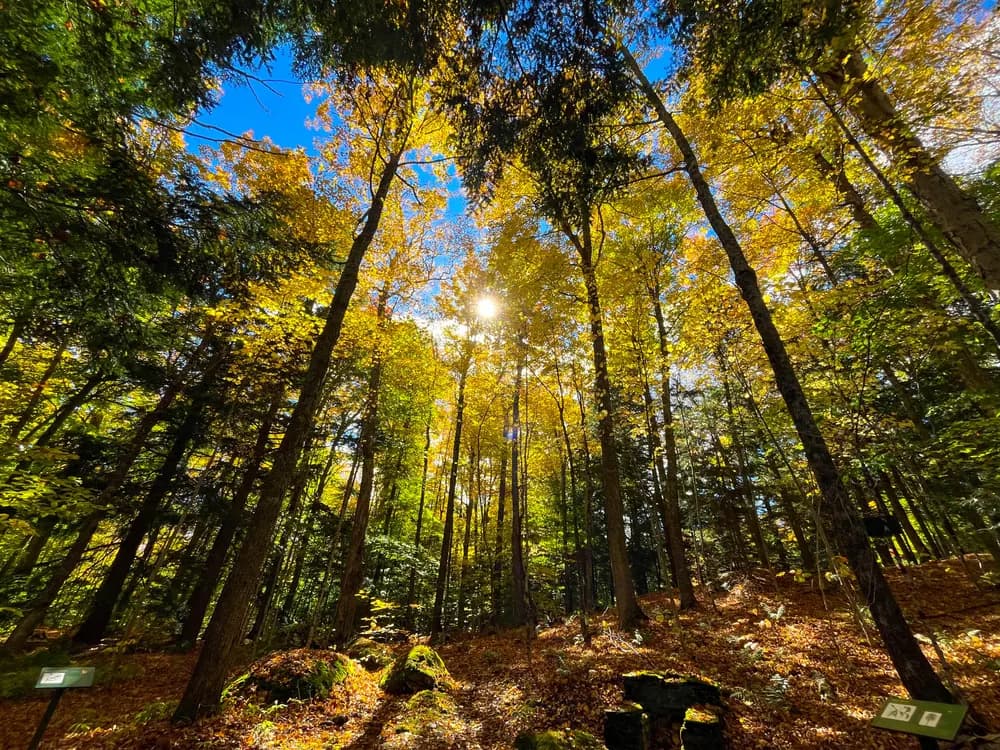
Move at a comfortable pace. Notice the path and your surroundings. You do not need to synchronize breathing with movement.
Stop in a safe place without blocking the path. Observe a detail you might have passed by: the trunk, a branch, or the shape of the canopy.
Continue only as far as suits you. Pause near a second tree and notice one difference. You can make this comparison from one viewpoint too.
Head back while you still feel comfortable, or finish at your viewpoint. Notice something familiar as though you were seeing it for the first time.
These are invitations, not requirements. Shorten the practice, skip a step, or finish whenever you need to.
Optional · Original teaching with Alex Julian
Who and How · 31:56. This longer chapter video accompanies the original book. It provides wider context; it is not a step-by-step demonstration of the shorter adapted practice on this page.
The video connects to YouTube only when you choose to load it.
Watch on YouTube Who and How — Video lesson with Alex JulianCaptions were unavailable in the source player when reviewed on October 17, 2026. A verified transcript is not yet available here. The Read section gives complete written instructions for this adapted practice; it is not a transcript of Alex’s video.
Explore the original chapter companionTime away from the screen
Keep your device available whenever you need it for access, navigation, or communication.
Reflection
Reflect quietly or write a sentence in your own notebook. Nothing needs to be submitted or shared. Repeat this lesson as often as you like.
Roots of this lesson
This short route with deliberate pauses adapts the book’s Tree Yoga Hiking pathway. The accessible and stationary alternatives, approximate duration, and reflection are new. Physical contact with trees is not required.
Developed with AI assistance for the renewed digital school. This lesson makes no medical or healing claims.
Explore a particular tree: Pine in the Tree Library, or follow the teachings through the book.