Needles
Eastern white pine has soft, flexible, blue-green needles gathered in bundles of five. Observe an accessible branch or fallen needles without picking living growth.
Eastern white pine · Pinus strobus
Return to one clear point. Notice what stays, what changes, and how you begin again.
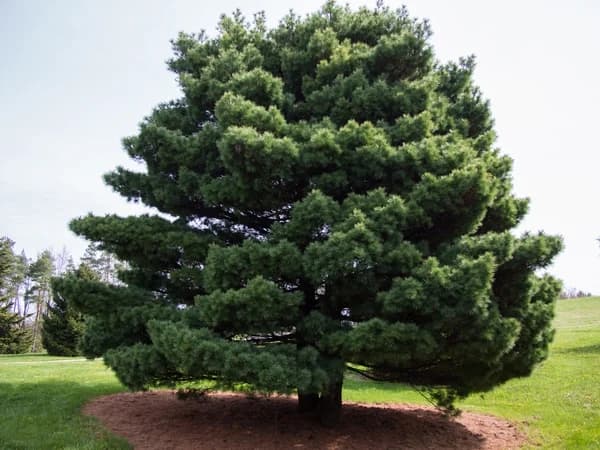
01 · Meet the tree
An evergreen can be an invitation to consider constancy. Spend time with an actual pine: its individual shape, the light between its needles, and the life around it. Let the encounter come before the meaning.
Eastern white pine has soft, flexible, blue-green needles gathered in bundles of five. Observe an accessible branch or fallen needles without picking living growth.
Its seed cones are long and narrow, often curved, with scales that lack sharp spines. Compare more than one feature when identifying a tree.
This species is native to eastern North America, including Massachusetts and New Hampshire. Pines belong to the genus Pinus; this page focuses on one species rather than treating every pine as identical.
Compare several features, and notice how age and season change their appearance. These photographs are starting points for observation; leave living leaves, needles, cones, and bark attached.
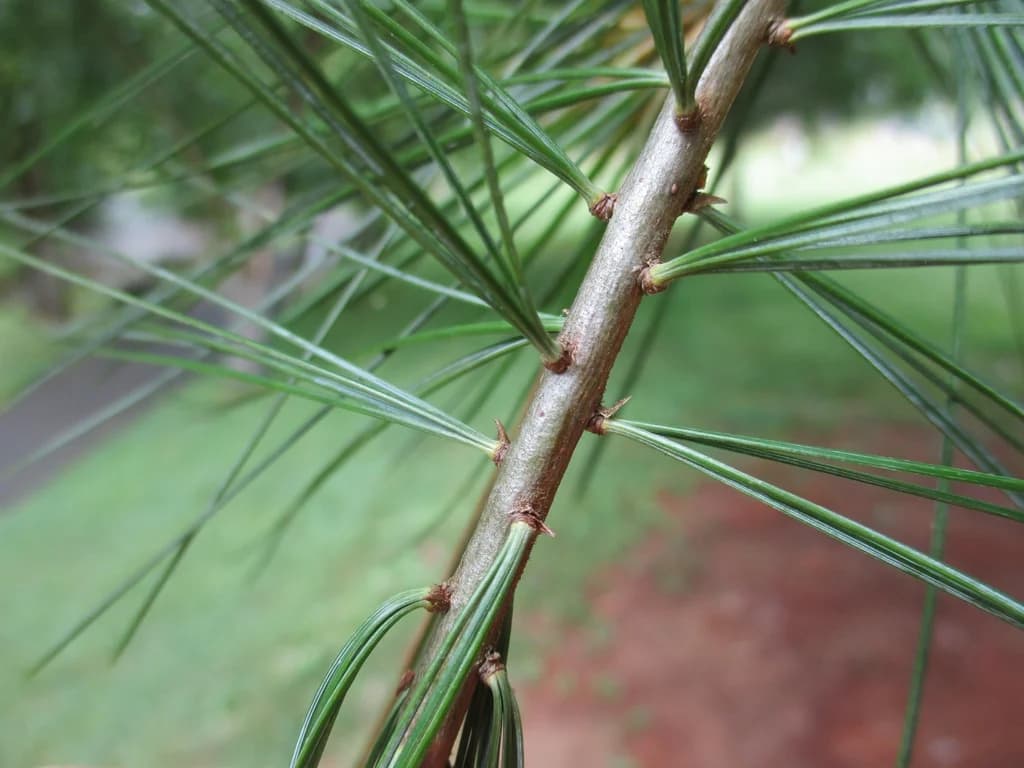
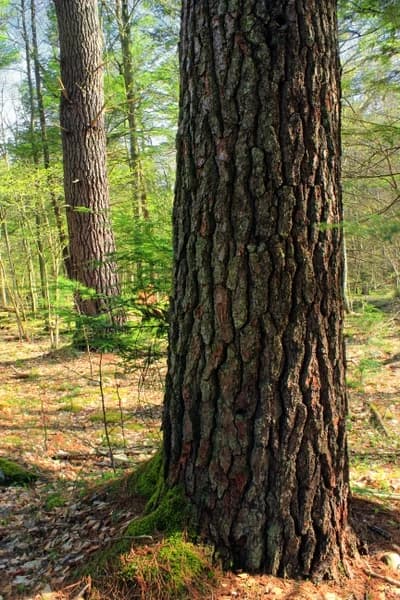
Evergreen does not mean unchanging. Eastern white pine retains green foliage across the seasons while older needle bundles eventually fall. On repeated visits, notice new growth, fallen needles, weather, and shifting light.
Botanical reference: NC State Extension’s eastern white pine profile. This is a starting point for observation, not a complete identification key.
02 · Energy & character
Three qualities to contemplate beside the tree. Begin with what you can observe, then see what meaning emerges for you.
These tree-specific associations are new contemplative interpretations for the digital school. “Energy” here describes felt experience and symbolism; it is not a measured healing field or a promise of a particular effect.
Green needles remain visible across the seasons.
Consider a commitment you can return to through changing circumstances. Constancy can include rest and adjustment.
What is worth returning to?
A single needle bundle offers one small, distinct detail to observe.
Let one detail become your anchor. Clarity begins here as a practice of choosing where to place your attention.
What deserves your attention today?
An individual tree carries the visible record of its growth in branches and bark.
Use that continuing growth as a prompt to begin again patiently. Your next visit can be small and still matter.
What is your next sustainable step?
03 · Practice with this tree · About 5 minutes
A new observation meditation connecting the book’s one-pointed focus and perseverance to time beside a pine. Read once, then practice away from the screen.
Open outdoor practice →Choose a permitted place with stable ground, suitable weather, and no hazardous branches overhead. Sit on a bench, use your usual seat or wheelchair, or stand with your normal supports. You can observe from a distance.
Choose a detail you can see comfortably: a needle bundle, a patch of bark, or an opening between branches. Keep your eyes open and let your breath continue naturally.
Notice thoughts and nearby sounds. Whenever attention wanders, return to your detail. There is no need to make the mind silent or produce a particular feeling.
After a few minutes, widen your attention to the surroundings. Ask what you would like to return to in your day. Choose one small action, then finish at your own pace.
Spend about five minutes, or less if that suits you. Keep your device available when needed. No touching, collecting, controlled breathing, or tree-supported movement is required; leave the tree and its surroundings undisturbed.
04 · Roots in the book
The book teaches attention and learning from trees. This page adds a species-specific encounter; it does not claim that the original book assigned these three energies to pine.
Chapter 3 introduces three pathways and choosing an appropriate setting.
Read the chapter companionOriginal: printed pp. 13–17Chapter 4 encourages a sustainable beginning with five or ten minutes.
Read the chapter companionOriginal: printed p. 28One-pointed focus, perseverance, and presence connect this new practice with Chapter 6’s invitations to learn from trees.
Explore Wisdom and WonderOriginal: Chapter 6, printed pp. 96–12405 · Notice for yourself
Reflect quietly or write a sentence in your own notebook. On another visit, look at the same detail again. Your experience may fit these themes, suggest something different, or simply be a few minutes of looking.