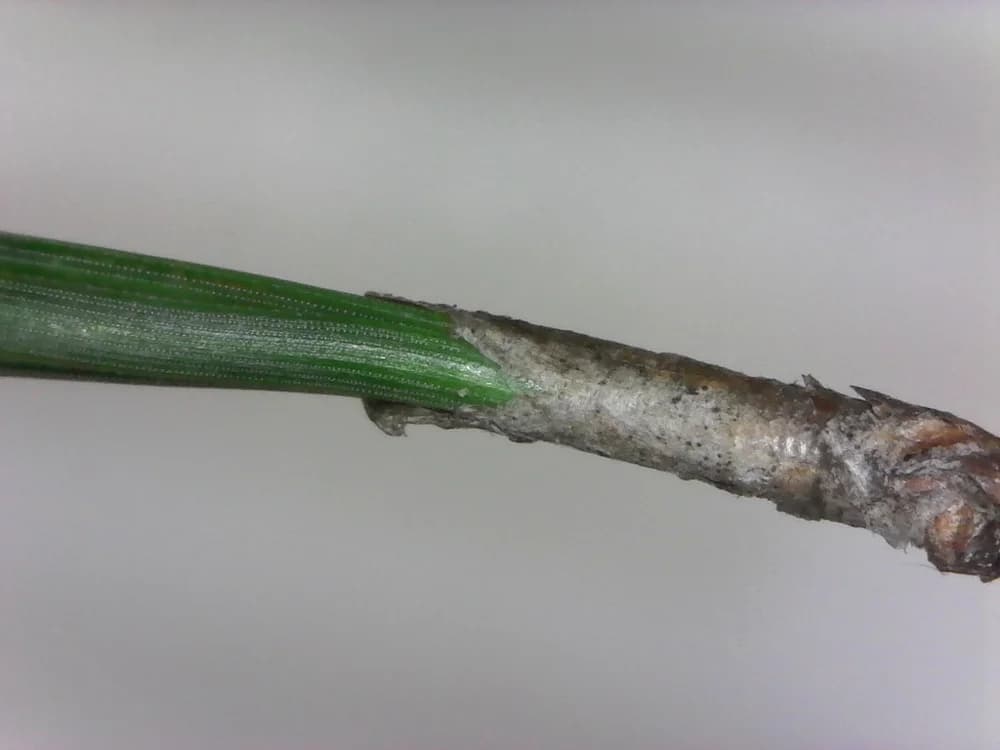
Needles
Evergreen needles usually grow in bundles of three and gather toward twig tips. Several other pines also have three needles per bundle; compare needle length, cones, bark, and regional range.
Loblolly Pine · Pinus taeda
Notice growth from a steady place.
01 · Meet the tree
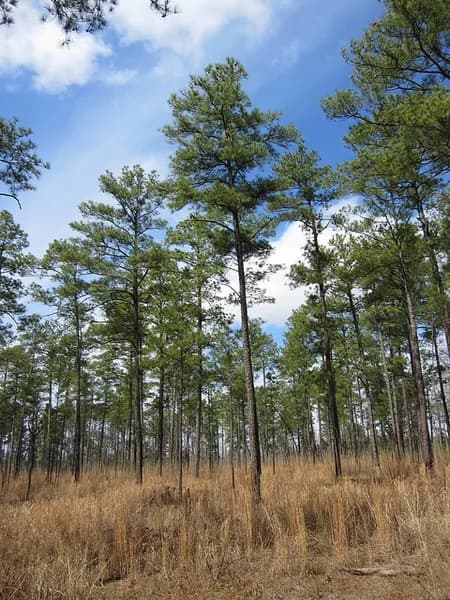
Loblolly pine often lifts its crown above a tall, straight trunk. Begin with the part you can see comfortably, rather than looking upward for every detail. Its continuing growth offers a prompt to consider a sustainable direction in your own day.
Evergreen needles usually grow in bundles of three and gather toward twig tips. Several other pines also have three needles per bundle; compare needle length, cones, bark, and regional range.
Seed cones have sharp points on their scales. Mature bark develops thick, irregular plates. Observe attached features or fallen material without peeling bark or taking cones.
Native to the southeastern United States, loblolly pine grows in varied settings including old fields and moist lowlands. Choose stable ground and a view clear of damaged limbs; do not practice beneath the crown in strong winds.
Compare several features, and notice how age and season change their appearance. These photographs are starting points for observation; leave living leaves, needles, cones, and bark attached.
Spring brings shoots and pollen cones. Summer offers green foliage and developing seed cones. Older needles eventually brown and fall while other bundles remain green. Winter reveals the contrast between the trunk, evergreen crown, and surrounding deciduous trees.
Botanical reference: NC State Extension’s loblolly pine profile. This is a starting point for observation, not a complete identification key.
02 · Energy & character
Three qualities to contemplate beside the tree. Begin with what you can observe, then see what meaning emerges for you.
These tree-specific associations are new contemplative interpretations for the digital school. “Energy” here describes felt experience and symbolism; it is not a measured healing field or a promise of a particular effect.
A trunk connects the present crown to earlier growth.
Choose a direction you can support through repeated, modest action.
What are you tending over time?
Green needles remain while older bundles fall.
Allow a commitment to include replacement, rest, and adjustment.
What can continue in a changing form?
The trunk offers a steady reference beneath the crown.
Return attention to something close and visible when the larger task feels distant.
What helps you find your place?
03 · Practice with this tree · About 5 minutes
An original five-minute observation practice. Read once, then give your attention to the tree; sitting, standing, or observing from a distance are equally welcome.
Open outdoor practice →Sit or stand with your usual supports on a permitted path, clear of unstable banks and hazardous branches. Postpone the visit in strong winds.
Observe a patch of bark or an accessible needle cluster without reaching. Let your breathing stay natural.
Follow the visible trunk only as far as comfortable. Consider one process you are growing without measuring yourself against the tree.
Name one modest action you can repeat. Notice the ground and surrounding sounds before finishing.
Spend about five minutes, or less if that suits you. Keep your device available when needed. No touching, collecting, controlled breathing, or tree-supported movement is required; leave the tree and its surroundings undisturbed.
04 · Roots in the book
The book teaches attention and learning from trees. This page adds a species-specific encounter; it does not claim that the original book assigned these three energies to loblolly pine.
Chapter 3 introduces three pathways and choosing an appropriate setting.
Read the chapter companionOriginal: printed pp. 13–17Chapter 4 encourages a sustainable beginning with five or ten minutes.
Read the chapter companionOriginal: printed p. 28Growth, Continuity, Grounding connect this new practice with Chapter 6’s invitations to learn from trees.
Explore Wisdom and WonderOriginal: Chapter 6, printed pp. 96–12405 · Notice for yourself
Reflect quietly or write a sentence in your own notebook. On another visit, look at the same detail again. Your experience may fit these themes, suggest something different, or simply be a few minutes of looking.