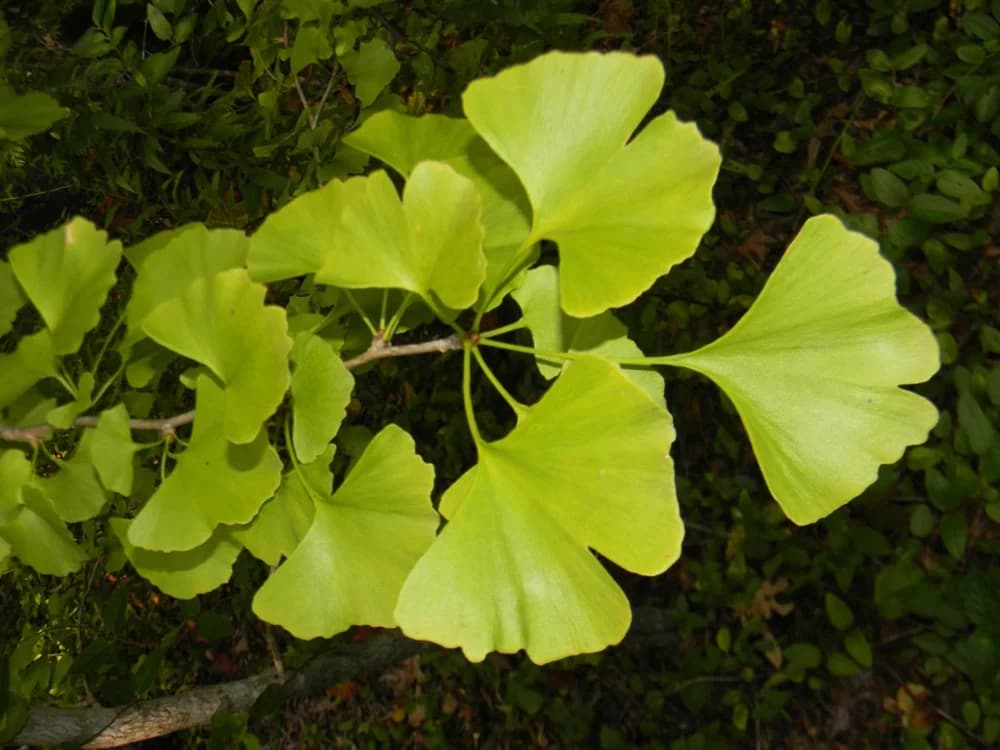
Leaves
Fan-shaped leaves have veins that fork outward; many have a central notch. Leaves turn yellow in autumn before falling.
Ginkgo · Ginkgo biloba
Meet this moment within a longer story.
01 · Meet the tree
Ginkgo’s distinctive leaves offer a simple place to begin. The tree belongs to an ancient lineage, yet the individual in front of you has its own particular life. Let that longer view prompt perspective without making your present concerns seem small or unimportant.
Fan-shaped leaves have veins that fork outward; many have a central notch. Leaves turn yellow in autumn before falling.
Ginkgo is a deciduous gymnosperm: female trees bear seeds with a fleshy outer covering, rather than botanical fruits. Observe without handling fallen seeds, which can irritate skin; do not taste them.
Native to China and widely cultivated elsewhere, ginkgo often grows in parks and streets. Its ancient lineage does not tell you the age of an individual tree.
Compare several features, and notice how age and season change their appearance. These photographs are starting points for observation; leave living leaves, needles, cones, and bark attached.
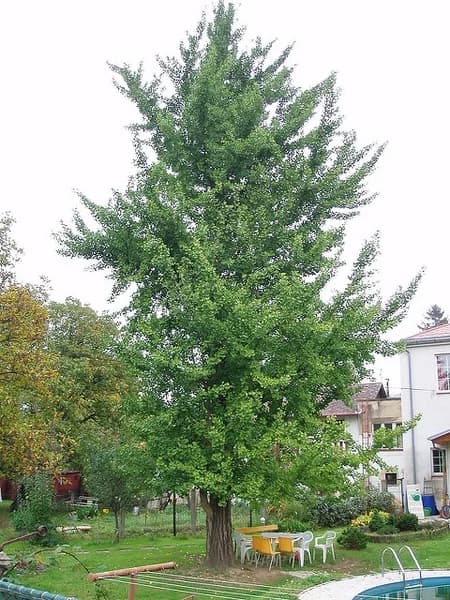
Spring brings unfolding fans, followed by green summer foliage. Autumn can turn the crown golden yellow before leaves fall. Winter reveals branching and buds. Trees vary in form, and many planted trees are male cultivars that do not bear seeds.
Botanical reference: NC State Extension’s ginkgo profile. This is a starting point for observation, not a complete identification key.
02 · Energy & character
Three qualities to contemplate beside the tree. Begin with what you can observe, then see what meaning emerges for you.
These tree-specific associations are new contemplative interpretations for the digital school. “Energy” here describes felt experience and symbolism; it is not a measured healing field or a promise of a particular effect.
A living tree carries a lineage beyond the span of one visit.
Consider what you have inherited and what you wish to carry forward.
What deserves your continued care?
One leaf sits within a crown and a larger landscape.
Move between a specific concern and its wider context without dismissing either.
What changes when you widen the view?
The leaf you see belongs to this particular season.
Return from the long story to a detail available now.
What can you attend to today?
03 · Practice with this tree · About 5 minutes
An original five-minute observation practice. Read once, then give your attention to the tree; sitting, standing, or observing from a distance are equally welcome.
Open outdoor practice →Sit or stand on stable, permitted ground, clear of traffic and slippery fallen seeds. Leave seeds and foliage untouched.
Choose a leaf or, in winter, a branching detail. Observe it with ordinary breathing and a comfortable head position.
Name a concern occupying you, then consider it within the coming season or year. Allow it to matter at both scales.
Choose one small action available now. Include the whole tree and surroundings before moving on.
Spend about five minutes, or less if that suits you. Keep your device available when needed. No touching, collecting, controlled breathing, or tree-supported movement is required; leave the tree and its surroundings undisturbed.
04 · Roots in the book
The book teaches attention and learning from trees. This page adds a species-specific encounter; it does not claim that the original book assigned these three energies to ginkgo.
Chapter 3 introduces three pathways and choosing an appropriate setting.
Read the chapter companionOriginal: printed pp. 13–17Chapter 4 encourages a sustainable beginning with five or ten minutes.
Read the chapter companionOriginal: printed p. 28Continuity, Perspective, Presence connect this new practice with Chapter 6’s invitations to learn from trees.
Explore Wisdom and WonderOriginal: Chapter 6, printed pp. 96–12405 · Notice for yourself
Reflect quietly or write a sentence in your own notebook. On another visit, look at the same detail again. Your experience may fit these themes, suggest something different, or simply be a few minutes of looking.