Needles
Many leafy shoots have flat needles that appear in two ranks, green above with pale bands beneath. Foliage varies with shoot position. Coast redwood stays evergreen, unlike dawn redwood, which sheds its foliage seasonally.
 Tree Yoga SchoolPractice with the living world
Coast redwood · Sequoia sempervirens
Follow one line into a wider world. Notice the conditions that help life continue.
Optional · saved in this browser on this device.
01 · Meet the tree
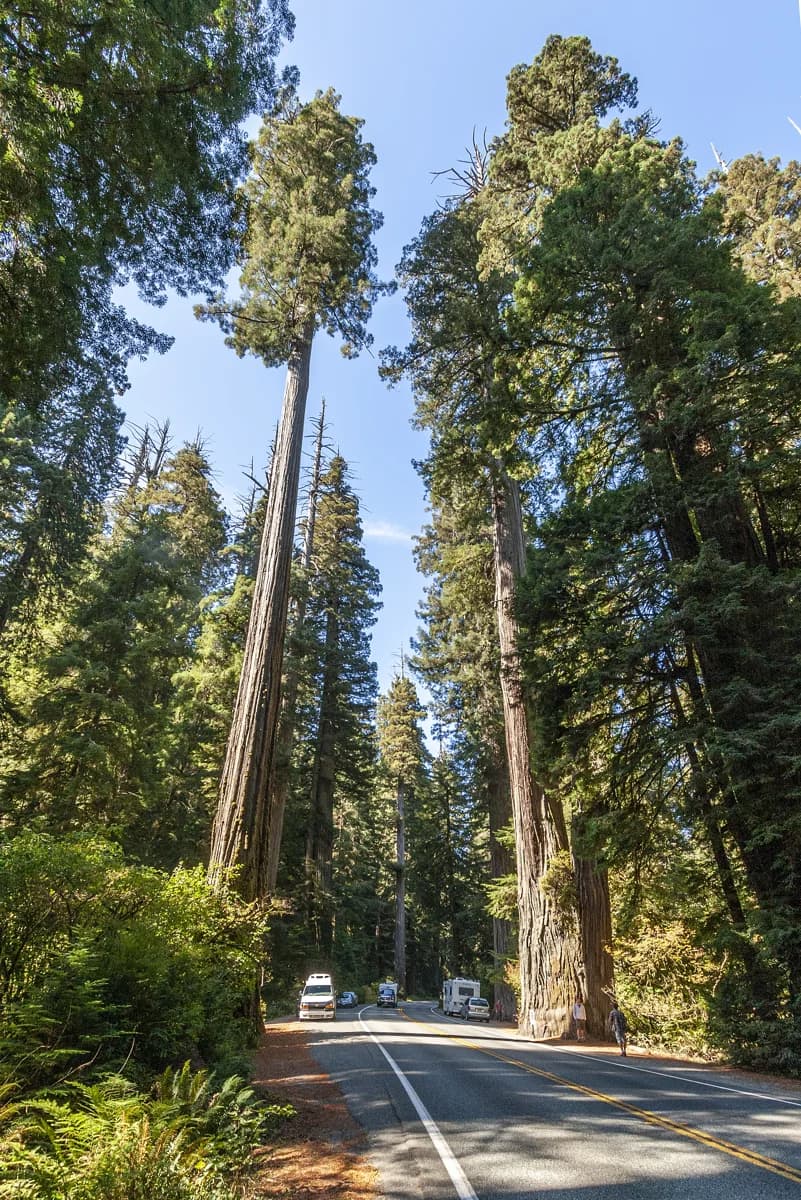
Coast redwood belongs to the moist coastal forests of California and southwestern Oregon. A towering grove can inspire wonder, but a planted tree or an accessible leafy shoot can offer an equally worthwhile beginning: a line, a pattern, and a place to pay attention.
Many leafy shoots have flat needles that appear in two ranks, green above with pale bands beneath. Foliage varies with shoot position. Coast redwood stays evergreen, unlike dawn redwood, which sheds its foliage seasonally.
Thick reddish-brown bark is fibrous and furrowed. Small woody seed cones are roughly an inch long, much smaller than the cones of many pines. Combine foliage, cones, and bark; height alone cannot distinguish redwood species.
Native forests occupy a coastal belt from southwestern Oregon into central California, associated with a cool, moist climate. Trees are also cultivated elsewhere. This is Sequoia sempervirens, distinct from giant sequoia, Sequoiadendron giganteum.
Compare several features, and notice how age and season change their appearance. These photographs are starting points for observation; leave living leaves, needles, cones, and bark attached.
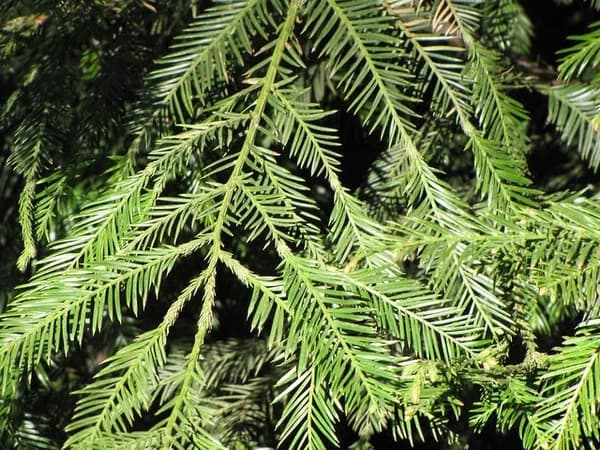
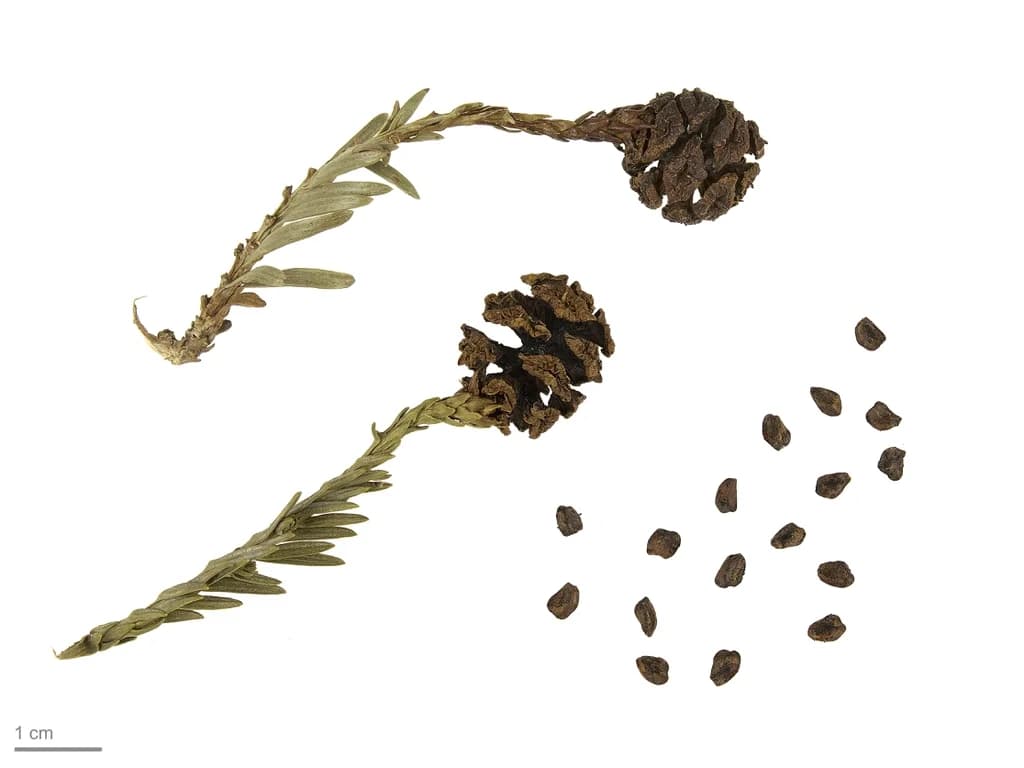
Watch fresh growth against older needles, small cones when visible, and changes in the light reaching the forest floor. An evergreen crown still replaces older foliage. Return in suitable conditions to notice moisture and surrounding life without treating one visit as a complete picture of the forest.
Chapter 4 invites a practice of returning across seasons. Read When and Where Try the seasonal observation practice
Botanical reference: NC State Extension’s coast redwood profile. This is a starting point for observation, not a complete identification key.
02 · Energy & character
Three qualities to contemplate beside the tree. Begin with what you can observe, then see what meaning emerges for you.
These tree-specific associations are new contemplative interpretations for the digital school. “Energy” here describes felt experience and symbolism; it is not a measured healing field or a promise of a particular effect.
A tree grows within a particular setting of light, soil, moisture, and other life.
Reflect on the conditions that support your own work and rest.
What support is easy to overlook?
A small shoot belongs to a much larger crown.
Let attention move between one manageable detail and a wider setting.
Which scale would help me see more clearly?
Green foliage persists while individual needles are replaced.
Continuing can include renewal rather than holding everything unchanged.
What can I renew within an ongoing commitment?
03 · Practice with this tree · About 5 minutes
A new five-minute observation practice exploring connection and perspective beside coast redwood. A garden specimen or a distant view from an established trail is enough.
Open outdoor practiceChoose a stable, permitted viewpoint with your usual seat or supports. Keep to established routes and avoid exposed roots or fallen barriers.
Trace a trunk edge, branch, or nearby shoot with your eyes. Choose a comfortable angle without trying to see the tree’s highest point.
Notice the light, surrounding vegetation, and any moisture you can observe. Let ordinary breathing accompany the shift from one detail to the wider place.
Name one condition that helps you continue in your own life. Consider one small way to care for it, then finish with attention to the tree.
Spend about five minutes, or less if that suits you. Keep your device available when needed. No touching, collecting, controlled breathing, or tree-supported movement is required; leave the tree and its surroundings undisturbed.
04 · Roots in the book
The book teaches attention and learning from trees. This page adds a species-specific encounter; it does not claim that the original book assigned these three energies to coast redwood.
Chapter 3 introduces three pathways and choosing an appropriate setting.
Read the chapter companionOriginal: printed pp. 13–17Chapter 4 encourages a sustainable beginning with five or ten minutes.
Read the chapter companionOriginal: printed p. 28Presence, perseverance, and unconditional love connect this new practice with Chapter 6’s invitations to learn from trees.
Explore Wisdom and WonderOriginal: Chapter 6, printed pp. 96–12405 · Notice for yourself
Reflect quietly or write a sentence in your own notebook. On another visit, look at the same detail again. Your experience may fit these themes, suggest something different, or simply be a few minutes of looking.