Bark
Upper bark sheds in patches, revealing pale cream or white surfaces among gray and brown. The lower trunk may be darker and scaly. Leave attached bark in place.
American sycamore · Platanus occidentalis
Look at the pattern, then widen your view. Notice how a distinctive life belongs to a larger place.
01 · Meet the tree
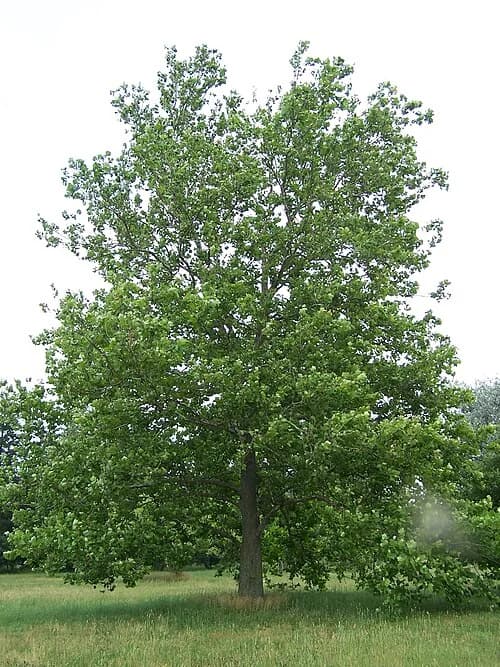
American sycamore can catch your eye from far away with pale upper bark and a spreading crown. Closer attention reveals a mosaic of colors and textures. Let both distances have a place in the encounter.
Upper bark sheds in patches, revealing pale cream or white surfaces among gray and brown. The lower trunk may be darker and scaly. Leave attached bark in place.
Large, alternate leaves have three to five main lobes and coarse teeth. Round seed balls hang on slender stalks, usually singly. London plane can look similar, so compare several features.
Native to eastern and central North America, American sycamore often grows near rivers and streams and is also planted in parks. Observe from stable ground rather than stepping onto an eroding bank.
Compare several features, and notice how age and season change their appearance. These photographs are starting points for observation; leave living leaves, needles, cones, and bark attached.
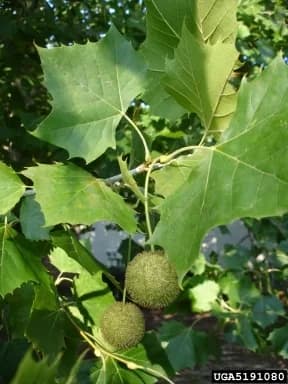
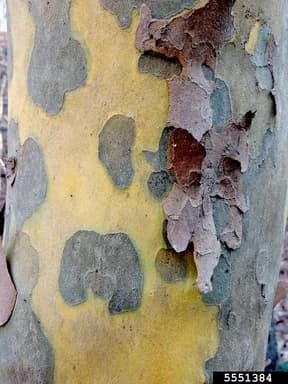
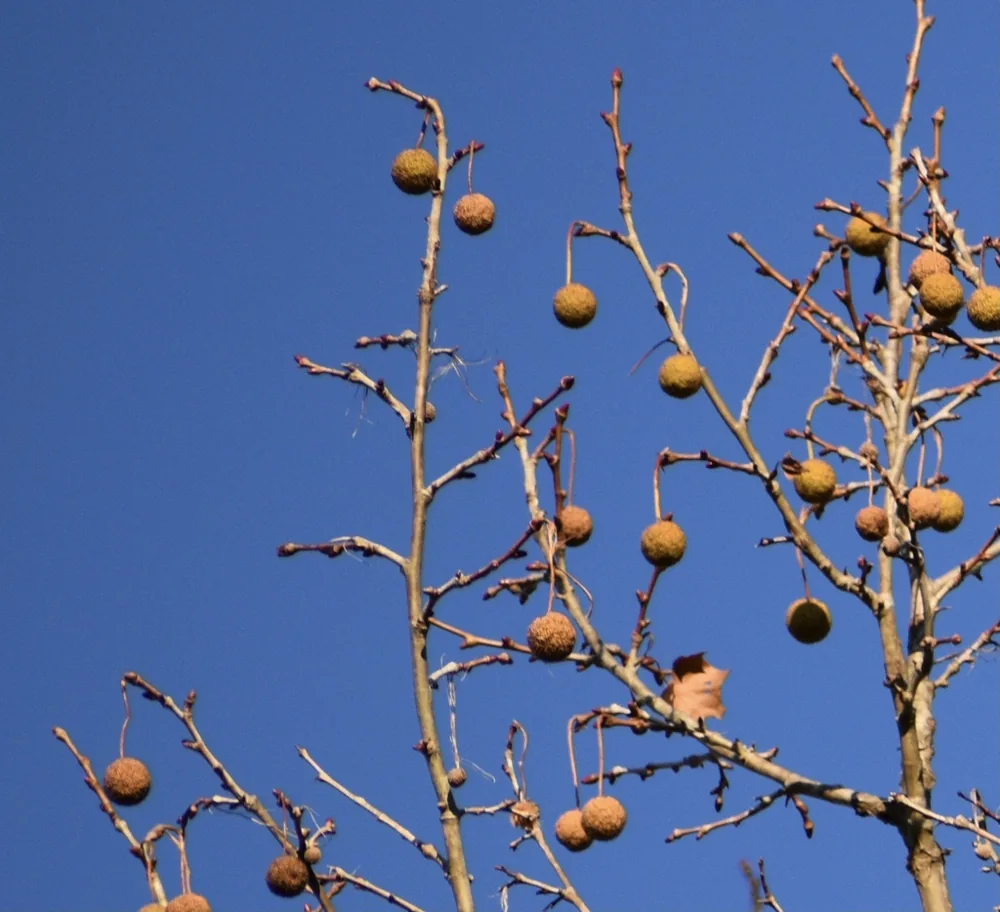
Broad leaves fill the crown in summer, then turn yellow or brown in autumn. Winter reveals pale branches and hanging seed balls. Look for new foliage in spring. The bark's pattern and the tree's surroundings can reward attention in any season.
Botanical reference: NC State Extension’s american sycamore profile. This is a starting point for observation, not a complete identification key.
02 · Energy & character
Three qualities to contemplate beside the tree. Begin with what you can observe, then see what meaning emerges for you.
These tree-specific associations are new contemplative interpretations for the digital school. “Energy” here describes felt experience and symbolism; it is not a measured healing field or a promise of a particular effect.
From a distance the trunk may look pale; nearer views reveal separate patches and edges.
A different viewpoint can change what you notice without making the earlier view worthless. Consider both detail and context.
What would a wider view help you understand?
The arrangement of bark patches differs along the trunk and between trees.
Notice a particular life rather than only its category. Your own experience also contains details that a label cannot capture.
What detail makes this encounter particular?
A spreading crown shares its setting with light, neighboring plants, and passing animals.
Consider how your distinct contribution participates in a wider place. Individuality and connection can grow together.
What are you part of today?
03 · Practice with this tree · About 5 minutes
A new observation practice beside American sycamore, moving attention between one bark detail and its surrounding landscape.
Open outdoor practice →Choose a permitted place on firm ground, clear of hazardous branches. Sit or stand with your usual supports; you can explore both scales from one position.
Choose a visible bark patch. Describe its color, edge, and neighboring texture without touching or peeling it.
Let your gaze include the trunk, then the crown and surrounding place. Keep your neck comfortable and breathing natural. Notice what the close view left out.
Think of one situation in your day that might benefit from attention to detail and context. Choose a useful question, then finish the visit.
Spend about five minutes, or less if that suits you. Keep your device available when needed. No touching, collecting, controlled breathing, or tree-supported movement is required; leave the tree and its surroundings undisturbed.
04 · Roots in the book
The book teaches attention and learning from trees. This page adds a species-specific encounter; it does not claim that the original book assigned these three energies to sycamore.
Chapter 3 introduces three pathways and choosing an appropriate setting.
Read the chapter companionOriginal: printed pp. 13–17Chapter 4 encourages a sustainable beginning with five or ten minutes.
Read the chapter companionOriginal: printed p. 28Presence, balance and optimization, and unconditional love connect this new practice with Chapter 6’s invitations to learn from trees.
Explore Wisdom and WonderOriginal: Chapter 6, printed pp. 96–12405 · Notice for yourself
Reflect quietly or write a sentence in your own notebook. On another visit, look at the same detail again. Your experience may fit these themes, suggest something different, or simply be a few minutes of looking.