Leaves
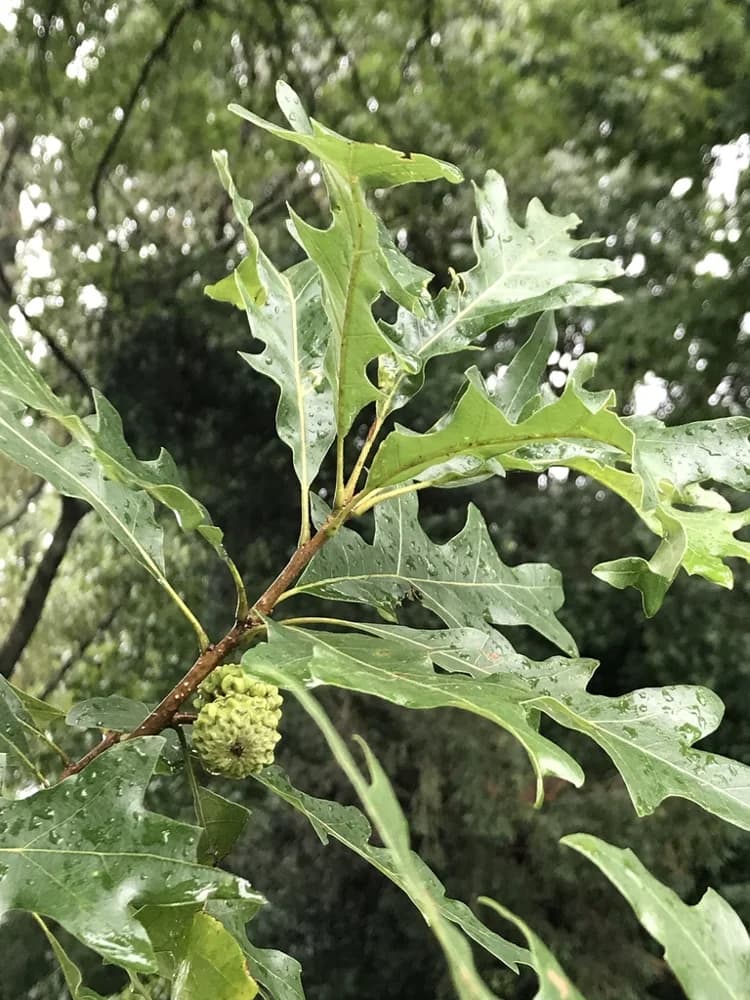
Alternate leaves have deep, rounded lobes, often with a wedge-shaped base. Pale, hairy undersides contrast with darker upper surfaces. Rounded lobes help place it in the white oak group.
Overcup Oak · Quercus lyrata
Notice what holds and protects, while making room for change.
01 · Meet the tree
Overcup oak is named for the generous cup around its acorn. Its life in wet bottomlands and its enclosing fruit offer a starting point for reflecting on shelter, changing conditions, and a patient response.
Alternate leaves have deep, rounded lobes, often with a wedge-shaped base. Pale, hairy undersides contrast with darker upper surfaces. Rounded lobes help place it in the white oak group.
The scaly cup encloses most of the acorn, the signature identification clue. Mature gray bark has deep furrows and scaly ridges or plates.
Native across the southeastern United States and adjoining regions, this oak is associated with floodplains and wet bottomlands. It tolerates seasonal flooding; observe from safe, dry ground.
Compare several features, and notice how age and season change their appearance. These photographs are starting points for observation; leave living leaves, needles, cones, and bark attached.
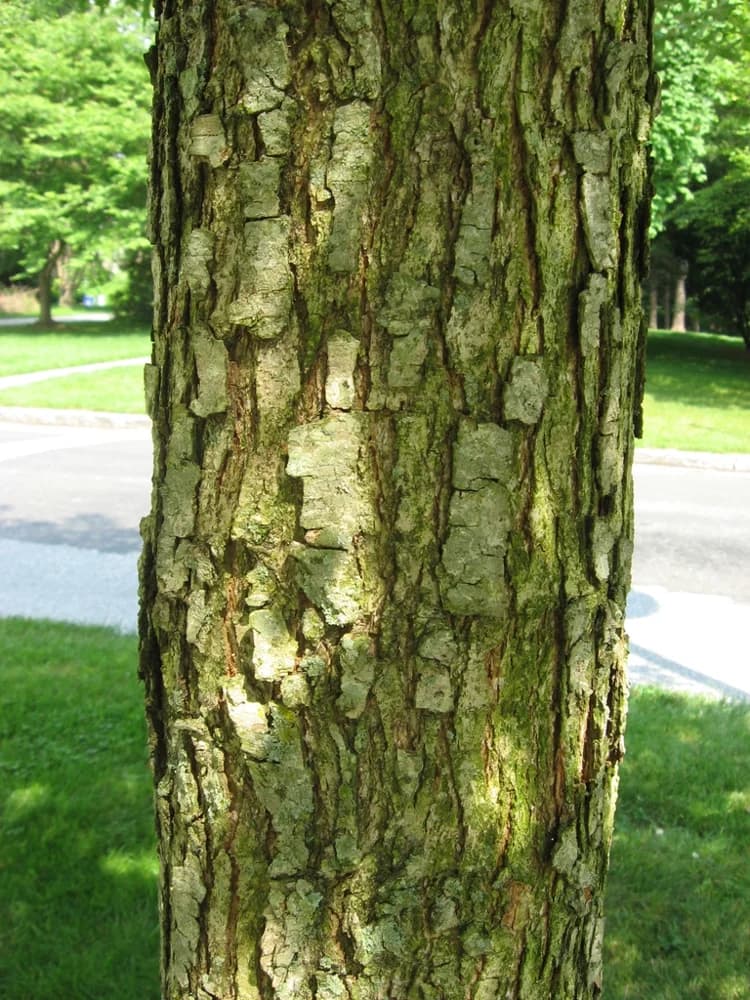
Spring brings flowers and new lobed leaves. Summer fills the rounded crown. Acorns develop within the growing season and fall in autumn, when foliage may turn yellow, brown, or red. Winter exposes the trunk and branching structure.
Chapter 4 invites a practice of returning across seasons. Read When and Where → Try the seasonal observation practice →
Botanical reference: NC State Extension’s overcup oak profile. This is a starting point for observation, not a complete identification key.
02 · Energy & character
Three qualities to contemplate beside the tree. Begin with what you can observe, then see what meaning emerges for you.
These tree-specific associations are new contemplative interpretations for the digital school. “Energy” here describes felt experience and symbolism; it is not a measured healing field or a promise of a particular effect.
Overcup oak tolerates changing water levels in bottomland habitat.
Responding to conditions can include changing pace or position.
What condition calls for a different response?
The acorn cup covers most of the nut.
Protection can create room for something to develop.
What would help a fragile beginning feel supported?
Acorns develop over a growing season.
Some forms of growth benefit from time and steady care.
What can I allow to develop at its own pace?
03 · Practice with this tree · About 5 minutes
An original five-minute observation practice. Read once, then give your attention to the tree; sitting, standing, or observing from a distance are equally welcome.
Open outdoor practice →Remain on a firm, dry path. View the tree from a distance if its habitat is wet or inaccessible.
Look for an acorn cup without collecting it, or study its photograph. Notice how much of the nut it surrounds.
If comfortable, cup your hands loosely in your lap. Consider one thing in your life that needs support rather than urgency.
Relax your hands. Notice the ground, sky, and nearby life. Choose one practical way to offer that support.
Spend about five minutes, or less if that suits you. Keep your device available when needed. No touching, collecting, controlled breathing, or tree-supported movement is required; leave the tree and its surroundings undisturbed.
04 · Roots in the book
The book teaches attention and learning from trees. This page adds a species-specific encounter; it does not claim that the original book assigned these three energies to overcup oak.
Chapter 3 introduces three pathways and choosing an appropriate setting.
Read the chapter companionOriginal: printed pp. 13–17Chapter 4 encourages a sustainable beginning with five or ten minutes.
Read the chapter companionOriginal: printed p. 28Adaptability, Shelter, Patience connect this new practice with Chapter 6’s invitations to learn from trees.
Explore Wisdom and WonderOriginal: Chapter 6, printed pp. 96–12405 · Notice for yourself
Reflect quietly or write a sentence in your own notebook. On another visit, look at the same detail again. Your experience may fit these themes, suggest something different, or simply be a few minutes of looking.