Leaves and buds
Alternate leaves have bristle-tipped lobes. Large end buds are hairy, giving a velvety appearance. Leaf shape varies; black oak belongs to the red oak group and can hybridize with related oaks.
Black oak · Quercus velutina
Look carefully before naming. Let a clear intention have time to develop.
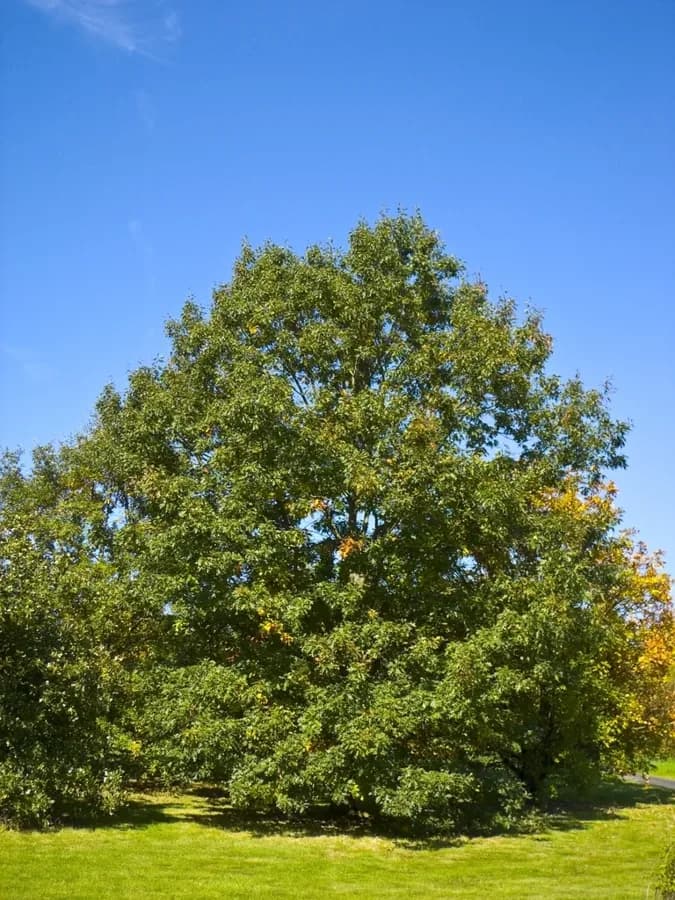
01 · Meet the tree
An oak's familiar outline can invite a quick conclusion. Slow down beside this particular tree. Notice a leaf edge, a trunk pattern, or a branch junction, allowing details to sharpen your first impression.
Alternate leaves have bristle-tipped lobes. Large end buds are hairy, giving a velvety appearance. Leaf shape varies; black oak belongs to the red oak group and can hybridize with related oaks.
Mature bark becomes dark and deeply furrowed. Acorn cups cover roughly half the nut. The yellow-orange inner bark is an identifying feature described in references; do not cut or peel bark to look for it.
Black oak is native to eastern and central North America, often on upland slopes and ridges. Acorns support wildlife. Compare several features with a local oak identification guide.
Compare several features, and notice how age and season change their appearance. These photographs are starting points for observation; leave living leaves, needles, cones, and bark attached.
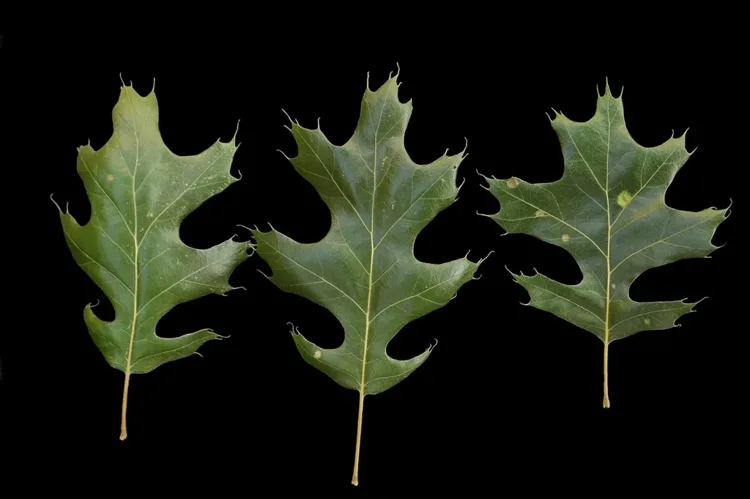
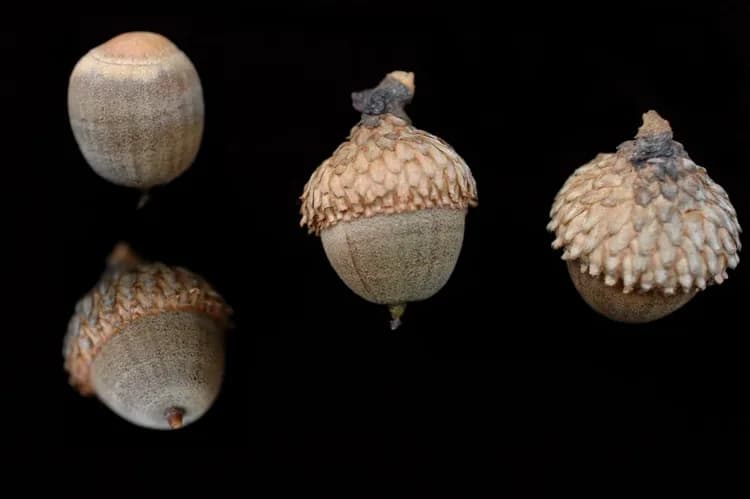
Spring brings catkins and unfolding leaves. Summer offers a fuller view of the lobes and developing acorns. Autumn foliage may be yellow-brown or dull red. Winter reveals the buds, branching, and mature bark; young trunks can look different.
Botanical reference: NC State Extension’s black oak profile. This is a starting point for observation, not a complete identification key.
02 · Energy & character
Three qualities to contemplate beside the tree. Begin with what you can observe, then see what meaning emerges for you.
These tree-specific associations are new contemplative interpretations for the digital school. “Energy” here describes felt experience and symbolism; it is not a measured healing field or a promise of a particular effect.
A branch junction shows several lines continuing from one trunk.
Use the form to consider a direction you want to follow. Resolve can be a modest decision you are willing to revisit.
Which intention deserves your continued effort?
Some useful identifying features may be absent in the current season.
Let an incomplete view make room for another visit. You can keep working without demanding an immediate conclusion.
What would benefit from more time?
One leaf or bark pattern may resemble those of another oak.
Practice holding an impression lightly while looking for further evidence. Careful attention can refine a confident first guess.
What detail could help you judge more carefully?
03 · Practice with this tree · About 5 minutes
An original five-minute practice joining close observation with patient resolve.
Open outdoor practice →Choose stable, permitted ground and a comfortable seat or stance. Keep clear of damaged branches and falling acorns. A view from a path is enough.
Describe a visible edge, color, or texture. Then notice any name or interpretation you have added. Allow the description to stand on its own for a moment.
Bring a worthwhile intention to mind. Name why it matters in a simple sentence, letting your breathing continue at its ordinary pace.
Choose a small action and a realistic time to do it. Leave room to learn more as you go. Return your attention to the tree before finishing.
Spend about five minutes, or less if that suits you. Keep your device available when needed. No touching, collecting, controlled breathing, or tree-supported movement is required; leave the tree and its surroundings undisturbed.
04 · Roots in the book
The book teaches attention and learning from trees. This page adds a species-specific encounter; it does not claim that the original book assigned these three energies to black oak.
Chapter 3 introduces three pathways and choosing an appropriate setting.
Read the chapter companionOriginal: printed pp. 13–17Chapter 4 encourages a sustainable beginning with five or ten minutes.
Read the chapter companionOriginal: printed p. 28Perseverance, one-pointed focus, and acceptance connect this new practice with Chapter 6’s invitations to learn from trees.
Explore Wisdom and WonderOriginal: Chapter 6, printed pp. 96–12405 · Notice for yourself
Reflect quietly or write a sentence in your own notebook. On another visit, look at the same detail again. Your experience may fit these themes, suggest something different, or simply be a few minutes of looking.