Leaf margins
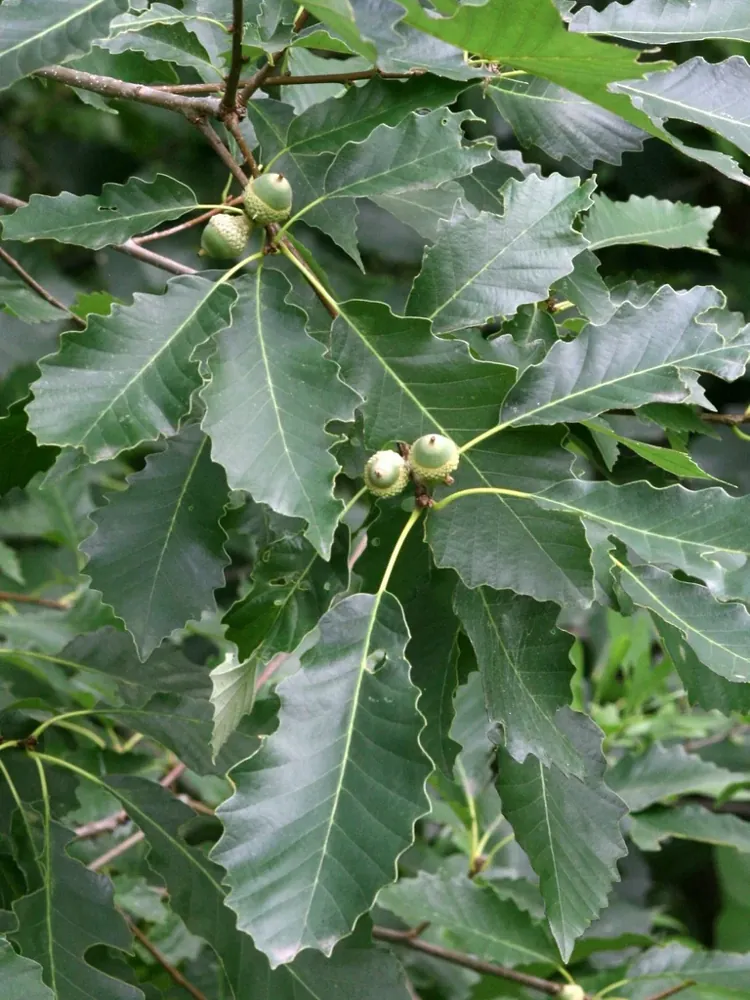
Alternate, elongated leaves have coarse, rounded teeth rather than deeply cut lobes. The upper surface is green; the underside is paler. Compare the entire leaf shape as well as its edge.
Chinkapin Oak · Quercus muehlenbergii
Look twice. Give one small detail enough attention to change your first impression.
01 · Meet the tree
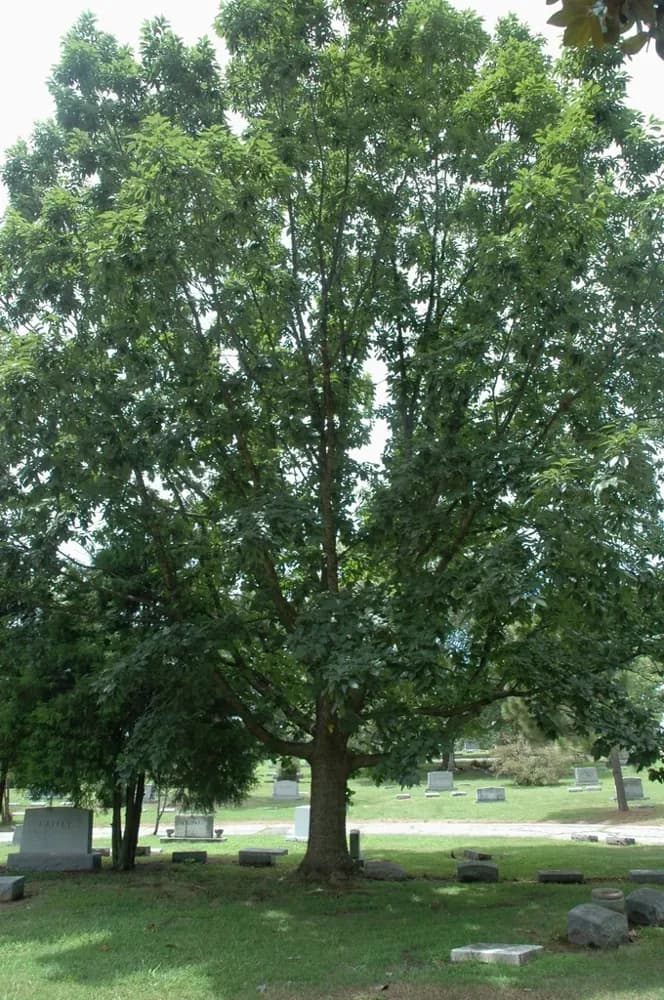
Chinkapin oak offers a practice in looking beyond the first resemblance. Its toothed leaves may surprise someone expecting the deep lobes of a familiar oak. Discernment begins with comparing what is actually visible and allowing uncertainty to remain while you look again.
Alternate, elongated leaves have coarse, rounded teeth rather than deeply cut lobes. The upper surface is green; the underside is paler. Compare the entire leaf shape as well as its edge.
Small acorns mature in one growing season and sit in gray, scaly cups. Bark is light gray and develops irregular fissures. Acorns and buds help distinguish this oak from similar-looking trees.
A member of the white oak group, chinkapin oak is native to eastern and central North America and often grows on limestone or rocky uplands. It is distinct from dwarf chinkapin oak; use a regional identification key.
Compare several features, and notice how age and season change their appearance. These photographs are starting points for observation; leave living leaves, needles, cones, and bark attached.
Spring can reveal hanging pollen catkins and new leaves. Acorns ripen by autumn; leaf color varies through yellow and brown tones. Winter exposes branch structure and pale bark. A feature missing on this visit may become visible on the next.
Botanical reference: NC State Extension’s chinkapin oak profile. This is a starting point for observation, not a complete identification key.
02 · Energy & character
Three qualities to contemplate beside the tree. Begin with what you can observe, then see what meaning emerges for you.
These tree-specific associations are new contemplative interpretations for the digital school. “Energy” here describes felt experience and symbolism; it is not a measured healing field or a promise of a particular effect.
Leaf teeth, acorn cups, and bark offer different identification clues.
Separate an observation from an assumption. Let several small clues guide you before settling on a conclusion.
What have you seen, and what have you assumed?
One tree remains your reference while you compare its details.
Return to something concrete when thoughts become complicated. A steady point can support careful decisions.
What can anchor your next decision?
A closer view reveals differences within a familiar-looking leaf.
Allow a first impression to become a question. Curiosity can soften the need to be immediately right.
What might another look reveal?
03 · Practice with this tree · About 5 minutes
An original observation practice for distinguishing what you notice from what you infer. A view from a path or bench is enough.
Open outdoor practice →Settle on stable, permitted ground with your usual supports. Find a leaf still attached to an accessible branch, or look at the bark from a distance. Leave living growth untouched.
Quietly name three visible qualities: an edge, a color, and a shape. Use ordinary words. If you cannot see a detail clearly, let it stay unknown.
Return to the same feature and notice one thing your first description missed. Then compare it with another feature of the tree. Keep breathing naturally.
Consider one decision in your day. Identify something you know and something you still need to learn. Choose a modest way to gather that missing information, then widen your attention and finish.
Spend about five minutes, or less if that suits you. Keep your device available when needed. No touching, collecting, controlled breathing, or tree-supported movement is required; leave the tree and its surroundings undisturbed.
04 · Roots in the book
The book teaches attention and learning from trees. This page adds a species-specific encounter; it does not claim that the original book assigned these three energies to chinkapin oak.
Chapter 3 introduces three pathways and choosing an appropriate setting.
Read the chapter companionOriginal: printed pp. 13–17Chapter 4 encourages a sustainable beginning with five or ten minutes.
Read the chapter companionOriginal: printed p. 28Presence, one-pointed focus, and curiosity connect this new practice with Chapter 6’s invitations to learn from trees.
Explore Wisdom and WonderOriginal: Chapter 6, printed pp. 96–12405 · Notice for yourself
Reflect quietly or write a sentence in your own notebook. On another visit, look at the same detail again. Your experience may fit these themes, suggest something different, or simply be a few minutes of looking.