Leaves
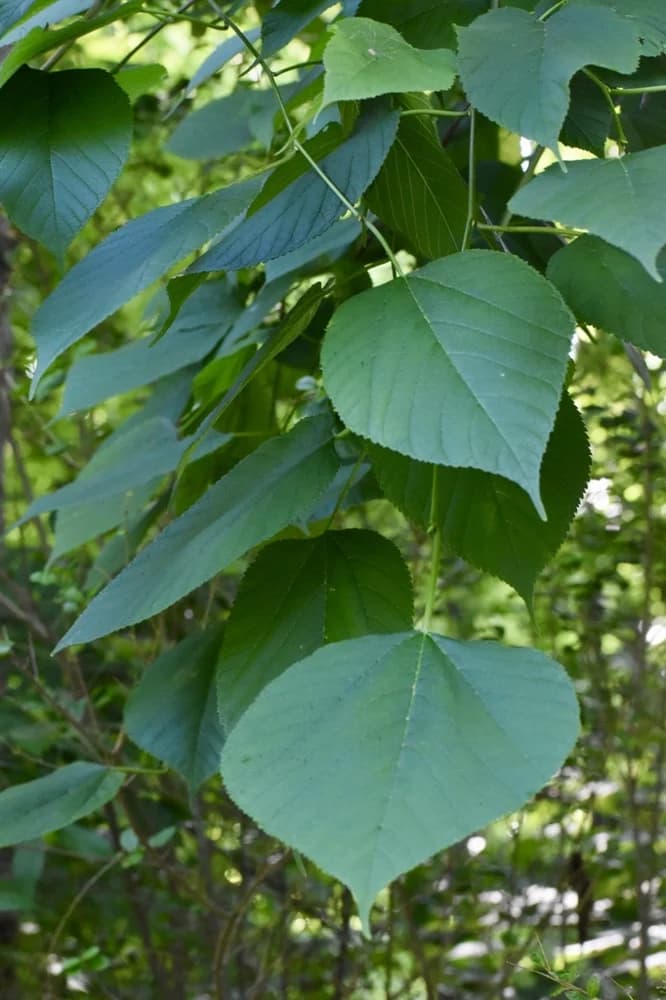
Alternate, toothed leaves may be unlobed or lobed on the same tree. Upper surfaces are typically rough, with soft hairs beneath. Observe without rubbing or picking.
Red Mulberry · Morus rubra
Notice what is offered, and what you can give in return.
01 · Meet the tree
Red mulberry belongs to a living neighborhood of leaves, birds, insects, and soil. Its fruit can invite reflection on generosity, but sharing begins with noticing who is already using the tree. Let reciprocity be one manageable act of care.
Alternate, toothed leaves may be unlobed or lobed on the same tree. Upper surfaces are typically rough, with soft hairs beneath. Observe without rubbing or picking.
Mulberry fruits resemble elongated blackberries and darken as they ripen. Red mulberry can resemble and hybridize with white mulberry; use several features and a regional key rather than fruit color alone.
Native to eastern North America, red mulberry grows in woodland and other settings. Fallen fruit can make paths slippery; choose secure footing and leave feeding birds undisturbed.
Compare several features, and notice how age and season change their appearance. These photographs are starting points for observation; leave living leaves, needles, cones, and bark attached.
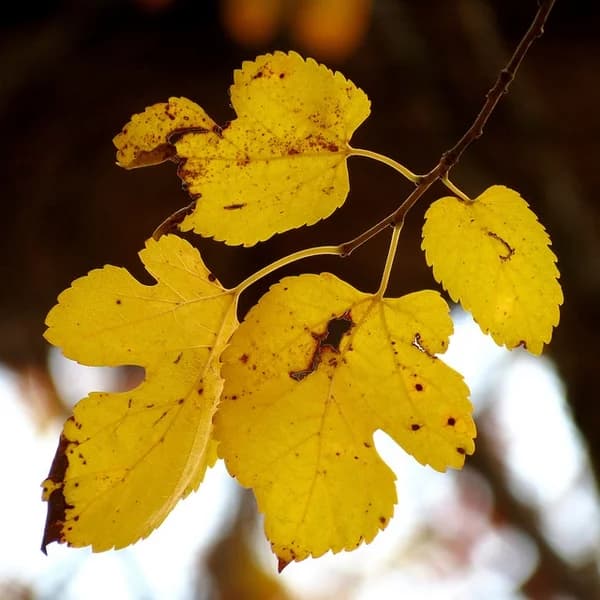
Spring brings new foliage and small flowers. Fruits ripen in late spring to summer, depending on place and weather. Leaves can turn yellow in autumn. Winter offers the crown outline; fruit need not be present for this practice.
Botanical reference: NC State Extension’s red mulberry profile. This is a starting point for observation, not a complete identification key.
02 · Energy & character
Three qualities to contemplate beside the tree. Begin with what you can observe, then see what meaning emerges for you.
These tree-specific associations are new contemplative interpretations for the digital school. “Energy” here describes felt experience and symbolism; it is not a measured healing field or a promise of a particular effect.
Fruit can feed birds and other wildlife.
Consider an offering that fits your resources rather than measuring generosity by its size.
What can you offer sustainably?
The tree exists among other living things.
Receiving support can prompt care in return without turning every relationship into an exchange.
What supports you, and how might you care for it?
A visitor may pause briefly among the branches.
Give another life room without approaching or interrupting it.
What becomes visible when you wait?
03 · Practice with this tree · About 5 minutes
An original five-minute observation practice. Read once, then give your attention to the tree; sitting, standing, or observing from a distance are equally welcome.
Open outdoor practice →Sit or stand on stable, permitted ground away from slippery fruit. Keep distance from wildlife and leave fruit and branches untouched.
Observe shade, a leaf, or a space where birds pause. Let your breathing stay ordinary.
Name something you have received today: time, help, shade, or company. Let appreciation take whatever form feels natural.
Choose one modest act of care for a person or place. Finish by including the surrounding scene in your attention.
Spend about five minutes, or less if that suits you. Keep your device available when needed. No touching, collecting, controlled breathing, or tree-supported movement is required; leave the tree and its surroundings undisturbed.
04 · Roots in the book
The book teaches attention and learning from trees. This page adds a species-specific encounter; it does not claim that the original book assigned these three energies to red mulberry.
Chapter 3 introduces three pathways and choosing an appropriate setting.
Read the chapter companionOriginal: printed pp. 13–17Chapter 4 encourages a sustainable beginning with five or ten minutes.
Read the chapter companionOriginal: printed p. 28Generosity, Reciprocity, Attention connect this new practice with Chapter 6’s invitations to learn from trees.
Explore Wisdom and WonderOriginal: Chapter 6, printed pp. 96–12405 · Notice for yourself
Reflect quietly or write a sentence in your own notebook. On another visit, look at the same detail again. Your experience may fit these themes, suggest something different, or simply be a few minutes of looking.