Leaves
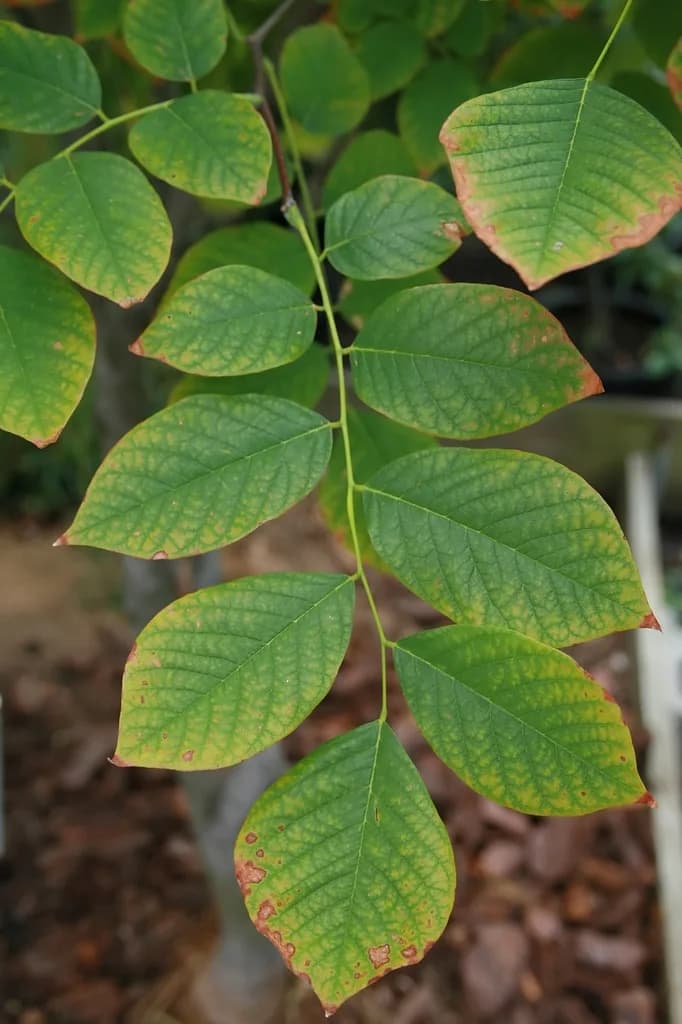
Whole leaves are alternate along the twig and pinnately compound, commonly with seven to nine leaflets. Leaflet margins are smooth rather than lobed. Follow a whole leaf to its attachment before deciding how it is arranged.
 Tree Yoga SchoolPractice with the living world
American yellowwood · Cladrastis kentukea
Let an ordinary detail be enough, whether or not the tree is in bloom.
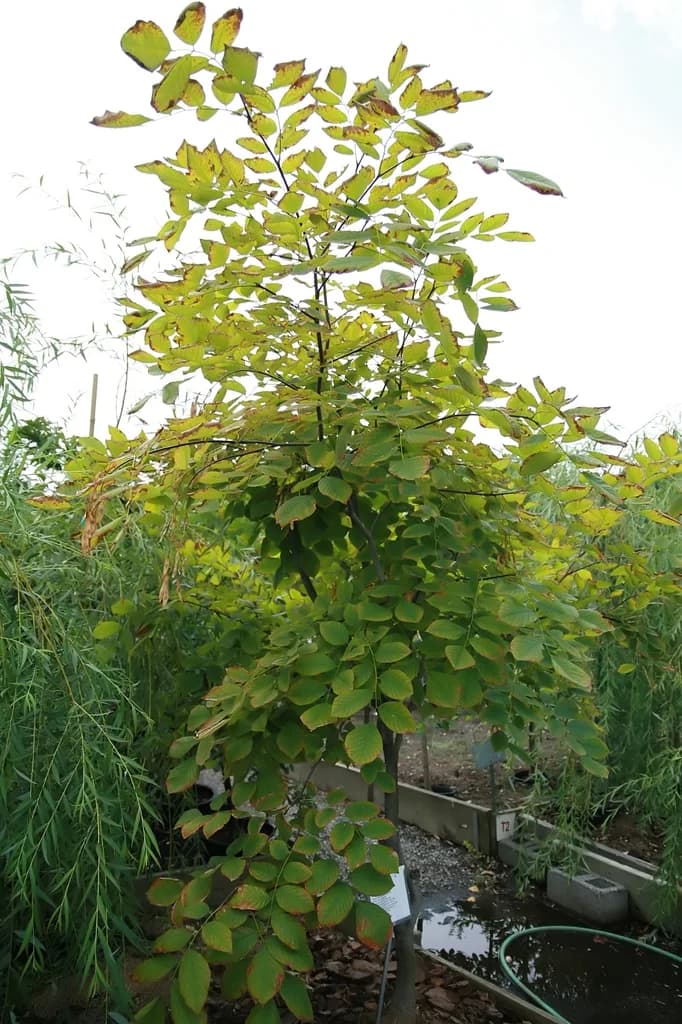
01 · Meet the tree
American yellowwood offers hanging white flowers in some seasons, a rounded canopy of compound leaves, and smooth gray bark. Its quieter days are worth meeting too. Begin with what is present rather than waiting for a flowering display.
Whole leaves are alternate along the twig and pinnately compound, commonly with seven to nine leaflets. Leaflet margins are smooth rather than lobed. Follow a whole leaf to its attachment before deciding how it is arranged.
Fragrant white flowers hang in long clusters in late spring or early summer; heavy flowering may occur only every few years. Flat seed pods follow. Gray bark is relatively smooth, sometimes becoming pebbly with age.
A tree native to parts of eastern North America, American yellowwood is also planted in parks and gardens beyond its native range. Cladrastis lutea is an older botanical name. Its name refers to yellow heartwood; there is no need to expose or damage wood to identify it.
Compare several features, and notice how age and season change their appearance. These photographs are starting points for observation; leave living leaves, needles, cones, and bark attached.
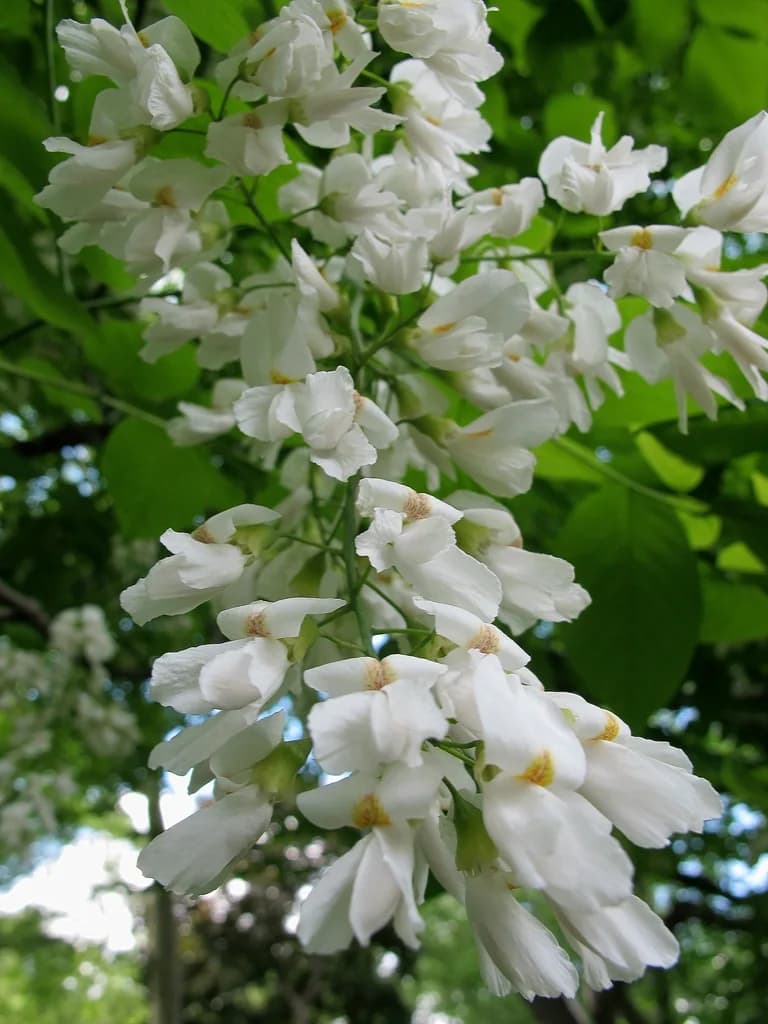
Watch leaves unfold and look for late-spring or early-summer flower clusters without expecting a large display every year. Pods may be visible later, followed by yellow to orange autumn foliage. Winter offers bark and branching to observe when leaves and flowers are absent.
Chapter 4 invites a practice of returning across seasons. Read When and Where Try the seasonal observation practice
Botanical reference: NC State Extension’s american yellowwood profile. This is a starting point for observation, not a complete identification key.
Out in the world
Choose a place to encounter american yellowwood. Each guide brings together arrival, walking, access information, and a practice. Check its dated visitor sources before travelling.
Park grounds
Marsh–Billings–Rockefeller National Historical Park · Woodstock, Vermont
Visitor sources checked .
Plan this visit02 · Energy & character
Three qualities to contemplate beside the tree. Begin with what you can observe, then see what meaning emerges for you.
These tree-specific associations are new contemplative interpretations for the digital school. “Energy” here describes felt experience and symbolism; it is not a measured healing field or a promise of a particular effect.
Large flower displays may be separated by quieter years.
An effort need not produce a visible result on every visit.
What can I tend without demanding a display?
Several leaflets form one compound leaf.
Look at how parts belong together before naming the pattern.
What becomes clearer when I follow a connection?
Flowers can offer nectar and pollen to visiting insects.
Consider a modest contribution that fits your circumstances.
What small thing can I offer today?
03 · Practice with this tree · About 5 minutes
A new five-minute practice of patient observation beside American yellowwood, connecting the book’s presence and perseverance with a tree in any season.
Open outdoor practiceSettle at a stable, permitted viewpoint with your usual supports. Let flowers, fallen leaves, bare branches, or bark each be a possible starting point.
Trace a visible leaf from its stalk toward its leaflets, or follow a branch line in winter. Leave living growth attached.
Notice any wish that the tree were flowering or more colorful. Return to one detail that is available now, with ordinary breathing.
Name something you can care for without needing an immediate result. Finish with a wider view of the place and a gentle intention to return.
Spend about five minutes, or less if that suits you. Keep your device available when needed. No touching, collecting, controlled breathing, or tree-supported movement is required; leave the tree and its surroundings undisturbed.
04 · Roots in the book
The book teaches attention and learning from trees. This page adds a species-specific encounter; it does not claim that the original book assigned these three energies to american yellowwood.
Chapter 3 introduces three pathways and choosing an appropriate setting.
Read the chapter companionOriginal: printed pp. 13–17Chapter 4 encourages a sustainable beginning with five or ten minutes.
Read the chapter companionOriginal: printed p. 28Presence, perseverance, and unconditional love connect this new practice with Chapter 6’s invitations to learn from trees.
Explore Wisdom and WonderOriginal: Chapter 6, printed pp. 96–12405 · Notice for yourself
Reflect quietly or write a sentence in your own notebook. On another visit, look at the same detail again. Your experience may fit these themes, suggest something different, or simply be a few minutes of looking.