Leaves
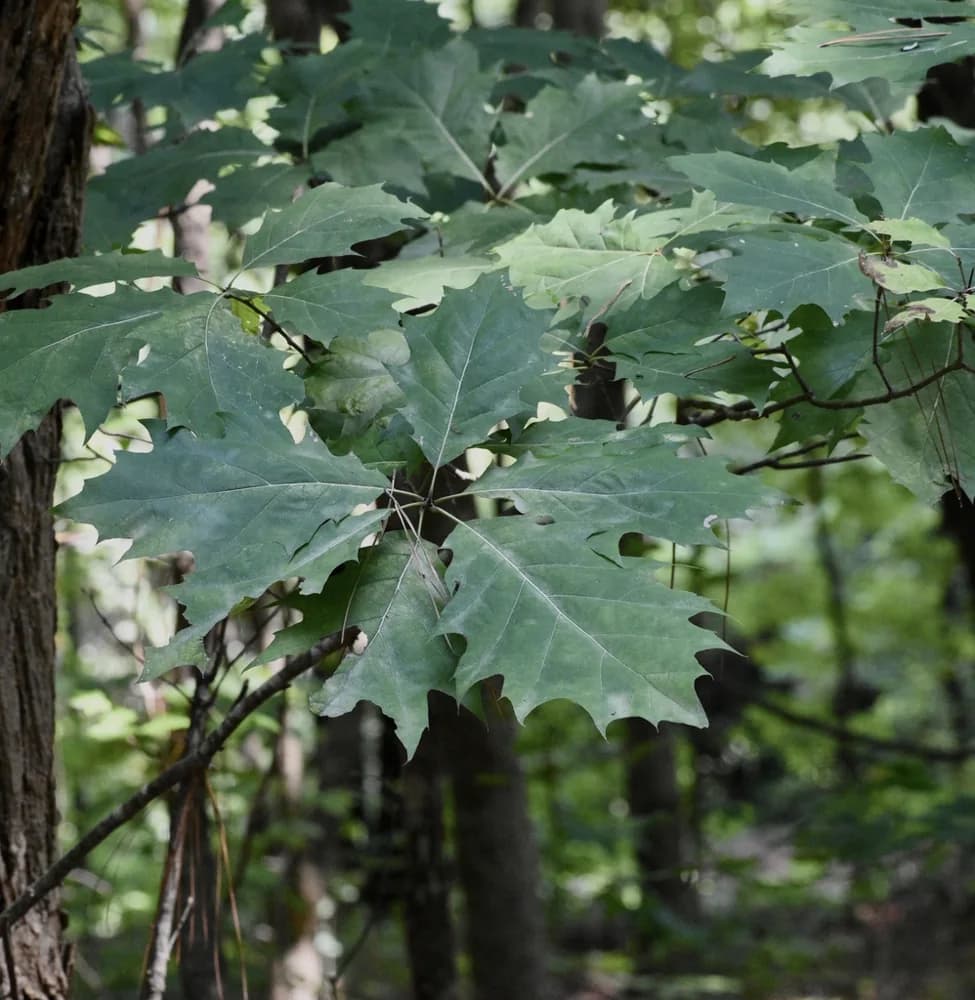
Northern red oak leaves usually have seven to eleven lobes ending in bristle tips. White oak has rounded lobes. Other red-oak-group species also have bristles, so this feature alone does not establish the species.
Northern red oak · Quercus rubra
Find a steady center. Leave room for the many lives and possibilities around it.
01 · Meet the tree
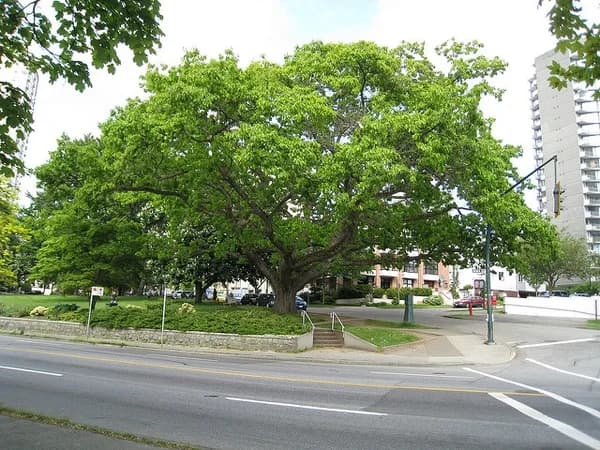
Northern red oak offers a different encounter from white oak. Look at the pointed leaf lobes, the shape of the crown, and the space beneath its branches. A tree's scale can invite reflection without requiring you to match it.
Northern red oak leaves usually have seven to eleven lobes ending in bristle tips. White oak has rounded lobes. Other red-oak-group species also have bristles, so this feature alone does not establish the species.
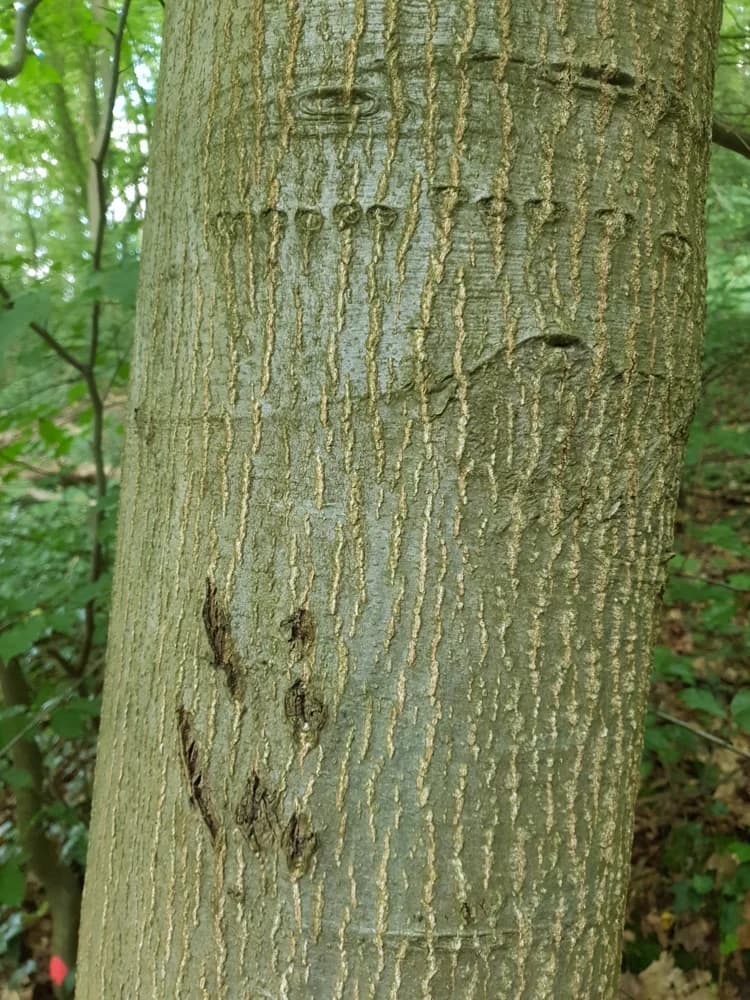
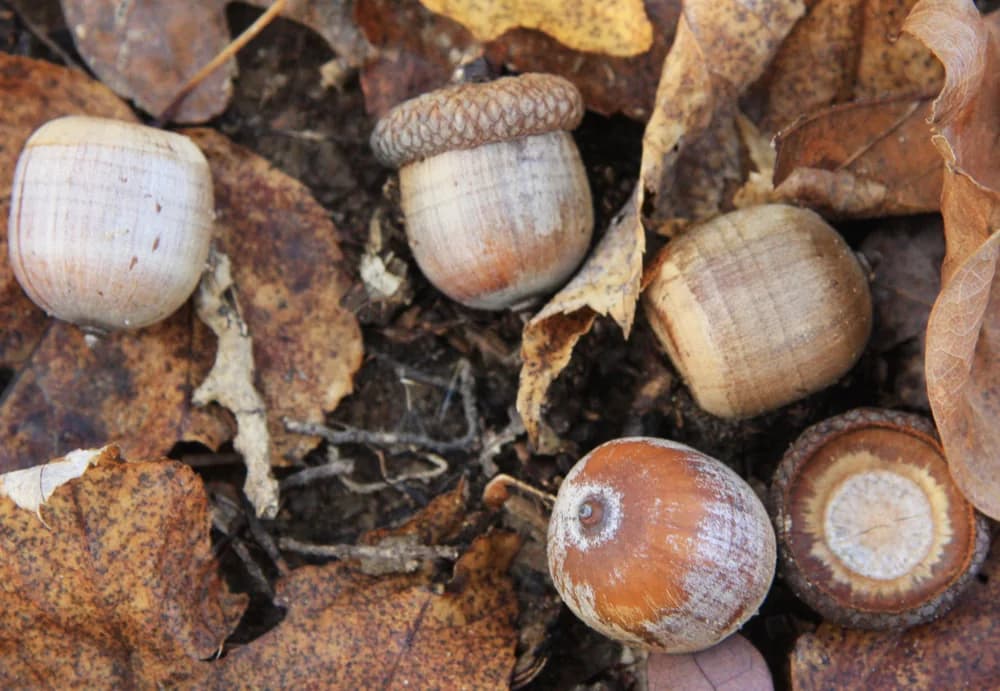
Mature gray bark develops broad ridges. The acorn has a shallow, saucer-like cap covering roughly a quarter of the nut. Look at naturally fallen material and leave it in place.
Native to eastern North America, northern red oak occurs in forests and planted landscapes. A woodland tree may have a narrower crown than an open-grown individual.
Compare several features, and notice how age and season change their appearance. These photographs are starting points for observation; leave living leaves, needles, cones, and bark attached.
Spring brings new leaves and catkins; summer fills the crown. Acorns ripen in autumn, and leaves may turn russet or red before falling. Winter makes branching easier to see. Acorn production varies, so the absence of fruit on a visit is not a complete identification test.
Botanical reference: NC State Extension’s northern red oak profile. This is a starting point for observation, not a complete identification key.
02 · Energy & character
Three qualities to contemplate beside the tree. Begin with what you can observe, then see what meaning emerges for you.
These tree-specific associations are new contemplative interpretations for the digital school. “Energy” here describes felt experience and symbolism; it is not a measured healing field or a promise of a particular effect.
A substantial trunk supports branches extending in several directions.
Explore a form of strength that supports a useful action. You do not need to become rigid to remain dependable.
What would steady support look like today?
Openings between branches remain visible even within a large crown.
Let attention include the spaces as well as the structures. A full life can still need room for rest or a new thought.
Where could you leave a little space?
An acorn on the ground belongs to the tree's surroundings and the animals that use them.
Consider care as an action that leaves something available for others. Looking closely does not require possession.
What could you care for by leaving it undisturbed?
03 · Practice with this tree · About 5 minutes
A new observation practice exploring strength and spaciousness beside northern red oak. The tree remains a subject of attention, without bearing your weight.
Open outdoor practice →Choose firm ground and a permitted viewpoint away from hazardous branches. Sit or stand with your usual supports and notice the surface beneath you.
Let your eyes travel from the trunk along one visible branch. Stop wherever the view is comfortable; there is no need to crane your neck.
Look at a patch of sky or light between branches. Let your attention include both the branch and the space beside it, with natural breathing.
Ask where steadiness would help your day and where more room would help. Choose one modest action, then allow the visit to end.
Spend about five minutes, or less if that suits you. Keep your device available when needed. No touching, collecting, controlled breathing, or tree-supported movement is required; leave the tree and its surroundings undisturbed.
04 · Roots in the book
The book teaches attention and learning from trees. This page adds a species-specific encounter; it does not claim that the original book assigned these three energies to red oak.
Chapter 3 introduces three pathways and choosing an appropriate setting.
Read the chapter companionOriginal: printed pp. 13–17Chapter 4 encourages a sustainable beginning with five or ten minutes.
Read the chapter companionOriginal: printed p. 28Strength, balance and optimization, and unconditional love connect this new practice with Chapter 6’s invitations to learn from trees.
Explore Wisdom and WonderOriginal: Chapter 6, printed pp. 96–12405 · Notice for yourself
Reflect quietly or write a sentence in your own notebook. On another visit, look at the same detail again. Your experience may fit these themes, suggest something different, or simply be a few minutes of looking.