Leaves
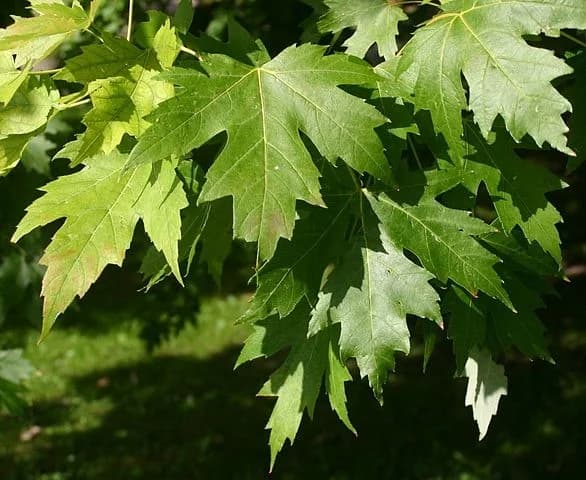
Opposite leaves have five deeply cut lobes and pale, silvery undersides. Compare several leaves and twigs; red maple has shallower cuts, and hybrids can complicate identification.
Silver maple · Acer saccharinum
Watch a familiar surface change. Allow another angle to add to what you know.
01 · Meet the tree
A moving leaf may offer two very different views in a moment. Begin with the light that reaches you, allowing the scene to change without having to follow every movement.
Opposite leaves have five deeply cut lobes and pale, silvery undersides. Compare several leaves and twigs; red maple has shallower cuts, and hybrids can complicate identification.
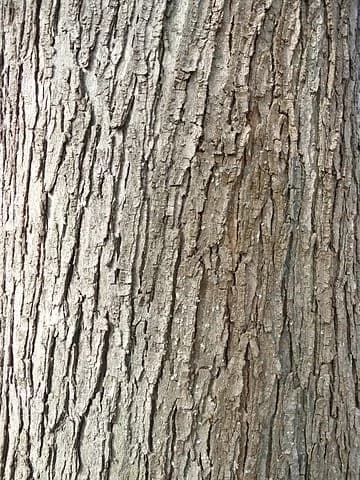
Older bark forms loose-looking strips. Paired winged fruits, called samaras, develop after early flowers. Observe fallen fruits in place when branches are out of reach.
Native to eastern and central North America, silver maple often grows near waterways and in floodplains. It is also planted as a shade tree.
Compare several features, and notice how age and season change their appearance. These photographs are starting points for observation; leave living leaves, needles, cones, and bark attached.
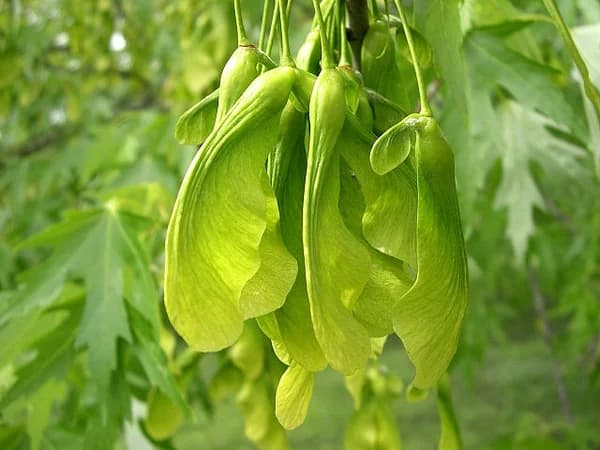
Flowers can appear in late winter or early spring before leaves. Winged fruits follow in spring. Summer breezes may reveal pale leaf undersides; autumn color is often yellow. Winter exposes the branching outline. Timing varies with location.
Botanical reference: NC State Extension’s silver maple profile. This is a starting point for observation, not a complete identification key.
02 · Energy & character
Three qualities to contemplate beside the tree. Begin with what you can observe, then see what meaning emerges for you.
These tree-specific associations are new contemplative interpretations for the digital school. “Energy” here describes felt experience and symbolism; it is not a measured healing field or a promise of a particular effect.
A turning leaf can show a darker upper surface and a paler underside.
Let a changing view remind you that an initial impression may be incomplete. One additional angle can improve your understanding.
What might another viewpoint add?
Leaves change position while the branch remains part of the same tree.
Use the movement as a prompt to adjust a method while remembering your purpose. A small revision can be enough.
Which part of your approach could be adjusted?
Some parts of the scene move while others appear still.
Notice both without chasing every change. Choose where your attention rests, and allow the rest of the scene to remain present.
What can you attend to without trying to manage everything?
03 · Practice with this tree · About 5 minutes
An original five-minute practice in perspective, using a changing view as a starting point for reflection.
Open outdoor practice →Choose calm weather and stable, permitted ground away from damaged or overhanging limbs. Use a comfortable seat or stance; a distant view is welcome.
Notice a leaf cluster as light or breeze changes it. In still weather or winter, compare a lit and shaded part of a branch without moving from your supported position.
Name two things you can see that belong to the same scene. Give both room in your description. Let your breath continue at its ordinary pace.
Think of a situation you have seen from one angle. Name a useful question you could ask or one detail you could check. Finish with that modest intention.
Spend about five minutes, or less if that suits you. Keep your device available when needed. No touching, collecting, controlled breathing, or tree-supported movement is required; leave the tree and its surroundings undisturbed.
04 · Roots in the book
The book teaches attention and learning from trees. This page adds a species-specific encounter; it does not claim that the original book assigned these three energies to silver maple.
Chapter 3 introduces three pathways and choosing an appropriate setting.
Read the chapter companionOriginal: printed pp. 13–17Chapter 4 encourages a sustainable beginning with five or ten minutes.
Read the chapter companionOriginal: printed p. 28Adaptability, balance and optimization, and presence connect this new practice with Chapter 6’s invitations to learn from trees.
Explore Wisdom and WonderOriginal: Chapter 6, printed pp. 96–12405 · Notice for yourself
Reflect quietly or write a sentence in your own notebook. On another visit, look at the same detail again. Your experience may fit these themes, suggest something different, or simply be a few minutes of looking.