Leaves
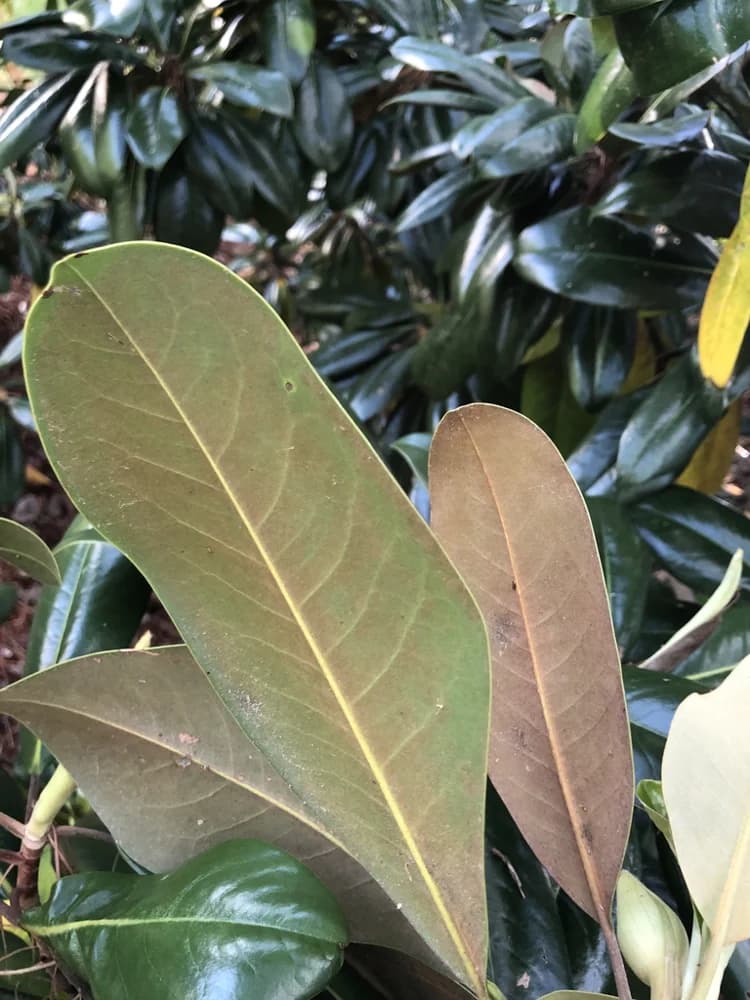
Broad evergreen leaves are leathery and glossy above, often with rusty-brown hairs beneath. Compare several features with other magnolias without picking or bending foliage.
Southern Magnolia · Magnolia grandiflora
Meet one generous detail without needing to take it home.
01 · Meet the tree
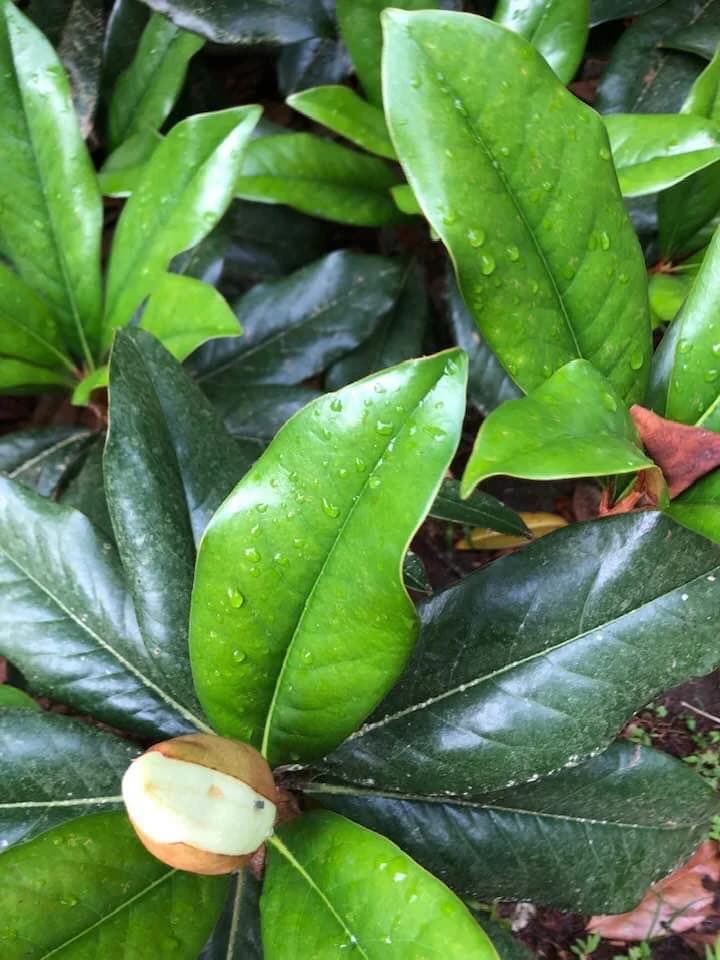
Southern magnolia offers glossy leaves, a layered crown, and flowers that can draw attention from across a garden. Presence begins with the season in front of you, even when no flower is visible. Give one detail time, then notice the shelter and life around it.
Broad evergreen leaves are leathery and glossy above, often with rusty-brown hairs beneath. Compare several features with other magnolias without picking or bending foliage.
Large, fragrant white flowers appear in summer. Cone-like fruit clusters later reveal red-coated seeds; these clusters are fruits, not conifer cones. Leave flowers and seeds attached.
Native to the southeastern United States, southern magnolia grows in moist woods and is widely planted. Dense lower branches can reach the ground; choose a clear view rather than entering the crown.
Compare several features, and notice how age and season change their appearance. These photographs are starting points for observation; leave living leaves, needles, cones, and bark attached.
Spring brings new growth among older leaves. Summer can offer large flowers, followed by developing fruit clusters and red-coated seeds in autumn. Green foliage remains through winter, while older leaves fall at different times. Evergreen does not mean unchanged.
Botanical reference: NC State Extension’s southern magnolia profile. This is a starting point for observation, not a complete identification key.
02 · Energy & character
Three qualities to contemplate beside the tree. Begin with what you can observe, then see what meaning emerges for you.
These tree-specific associations are new contemplative interpretations for the digital school. “Energy” here describes felt experience and symbolism; it is not a measured healing field or a promise of a particular effect.
A glossy leaf reflects the light available now.
Give your attention to something you can actually observe rather than a preferred version of the day.
What is here to notice?
A broad crown makes room for shade and other lives.
Consider a contribution that suits your capacity and leaves room for rest.
What could you offer with ease?
Layered foliage holds spaces within the crown.
Notice what makes a place supportive without needing to enter every part of it.
What helps you feel supported?
03 · Practice with this tree · About 5 minutes
An original five-minute observation practice. Read once, then give your attention to the tree; sitting, standing, or observing from a distance are equally welcome.
Open outdoor practice →Sit or stand with your usual supports on stable, permitted ground. Keep away from damaged limbs and leave low branches undisturbed.
Choose a visible leaf, flower, or patch of bark. Keep your breath natural and your head comfortable.
Widen your attention to shade, sounds, and openings between branches. Let wildlife remain at a distance.
Choose one small act of generosity that fits your day. Return to the whole scene before finishing.
Spend about five minutes, or less if that suits you. Keep your device available when needed. No touching, collecting, controlled breathing, or tree-supported movement is required; leave the tree and its surroundings undisturbed.
04 · Roots in the book
The book teaches attention and learning from trees. This page adds a species-specific encounter; it does not claim that the original book assigned these three energies to southern magnolia.
Chapter 3 introduces three pathways and choosing an appropriate setting.
Read the chapter companionOriginal: printed pp. 13–17Chapter 4 encourages a sustainable beginning with five or ten minutes.
Read the chapter companionOriginal: printed p. 28Presence, Generosity, Shelter connect this new practice with Chapter 6’s invitations to learn from trees.
Explore Wisdom and WonderOriginal: Chapter 6, printed pp. 96–12405 · Notice for yourself
Reflect quietly or write a sentence in your own notebook. On another visit, look at the same detail again. Your experience may fit these themes, suggest something different, or simply be a few minutes of looking.