Leaves
Alternate, simple leaves are large, oval to oblong, with pointed tips and unlobed margins. Compare several features with other magnolias.
Cucumber Magnolia · Magnolia acuminata
Look for what is easy to miss. Let a quiet detail be enough.
01 · Meet the tree
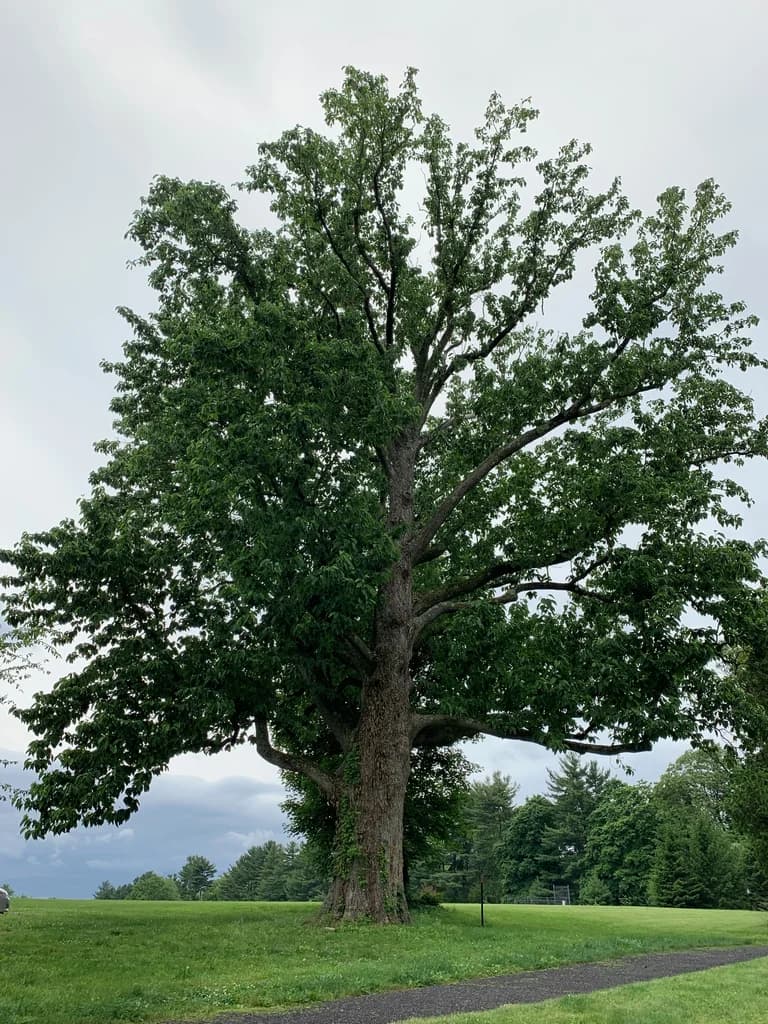
Not every magnolia announces itself with a dramatic flower display. Cucumber magnolia invites a quieter encounter with a leaf, a branch tip, or a developing fruit. Its ordinary details can be a place to practice curiosity before deciding what matters.
Alternate, simple leaves are large, oval to oblong, with pointed tips and unlobed margins. Compare several features with other magnolias.
Greenish-yellow flowers appear at twig tips in late spring. Young, cucumber-shaped fruit clusters later redden and reveal red-coated seeds. The common name describes their appearance, not an edible cucumber.
This deciduous magnolia is native to eastern North America, including Appalachian forests. It grows on wooded slopes and other sites with well-drained soil. Stay on established paths rather than searching beneath a distant crown.
Compare several features, and notice how age and season change their appearance. These photographs are starting points for observation; leave living leaves, needles, cones, and bark attached.
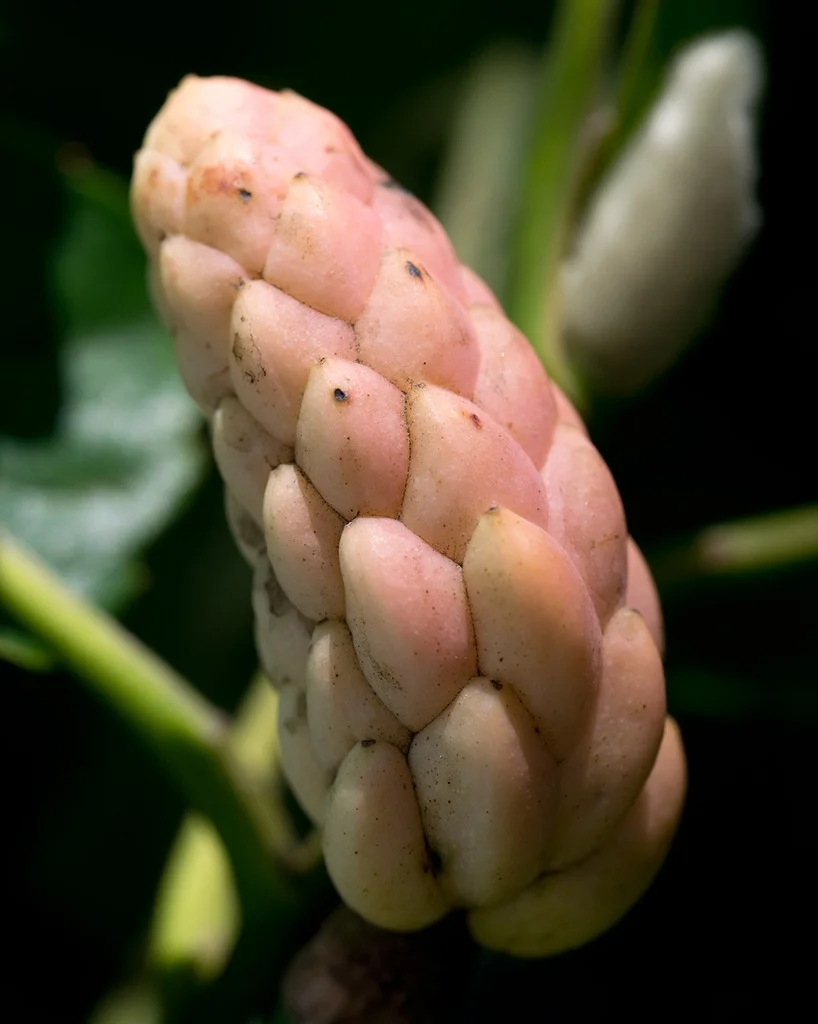
Spring brings leaves and subdued flowers. Summer offers developing fruit clusters; late summer can reveal red fruit and seeds. Leaves can turn yellow-gold in autumn. Winter offers bare branching and buds. Flowers high in a crown may remain out of view.
Botanical reference: NC State Extension’s cucumber magnolia profile. This is a starting point for observation, not a complete identification key.
02 · Energy & character
Three qualities to contemplate beside the tree. Begin with what you can observe, then see what meaning emerges for you.
These tree-specific associations are new contemplative interpretations for the digital school. “Energy” here describes felt experience and symbolism; it is not a measured healing field or a promise of a particular effect.
A subdued flower or a leaf edge can be overlooked at first.
Let a small detail prompt a question rather than a quick judgment.
What have you passed without noticing?
A fruit cluster changes appearance as it develops.
Allow understanding to arrive through repeated visits rather than one complete answer.
What could you learn by returning?
Some details remain high above or hidden behind leaves.
Let a partial view be sufficient. You need not disturb the tree to satisfy curiosity.
What can remain unknown today?
03 · Practice with this tree · About 5 minutes
An original five-minute observation practice. Read once, then give your attention to the tree; sitting, standing, or observing from a distance are equally welcome.
Open outdoor practice →Observe from stable, permitted ground using your usual seat or supports. Leave the canopy, fruit, and roots undisturbed.
Choose one visible leaf or twig. Silently describe its shape, color, or edge without deciding what it means.
Notice one thing you cannot see clearly. Let curiosity remain a question, with natural breathing and no need to move closer.
Choose a detail you might observe on another visit. Widen your attention and take one unhurried look before finishing.
Spend about five minutes, or less if that suits you. Keep your device available when needed. No touching, collecting, controlled breathing, or tree-supported movement is required; leave the tree and its surroundings undisturbed.
04 · Roots in the book
The book teaches attention and learning from trees. This page adds a species-specific encounter; it does not claim that the original book assigned these three energies to cucumber magnolia.
Chapter 3 introduces three pathways and choosing an appropriate setting.
Read the chapter companionOriginal: printed pp. 13–17Chapter 4 encourages a sustainable beginning with five or ten minutes.
Read the chapter companionOriginal: printed p. 28Discernment, patience, and wonder connect this new practice with Chapter 6’s invitations to learn from trees.
Explore Wisdom and WonderOriginal: Chapter 6, printed pp. 96–12405 · Notice for yourself
Reflect quietly or write a sentence in your own notebook. On another visit, look at the same detail again. Your experience may fit these themes, suggest something different, or simply be a few minutes of looking.