Leaves
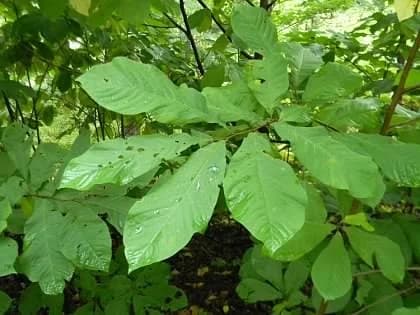
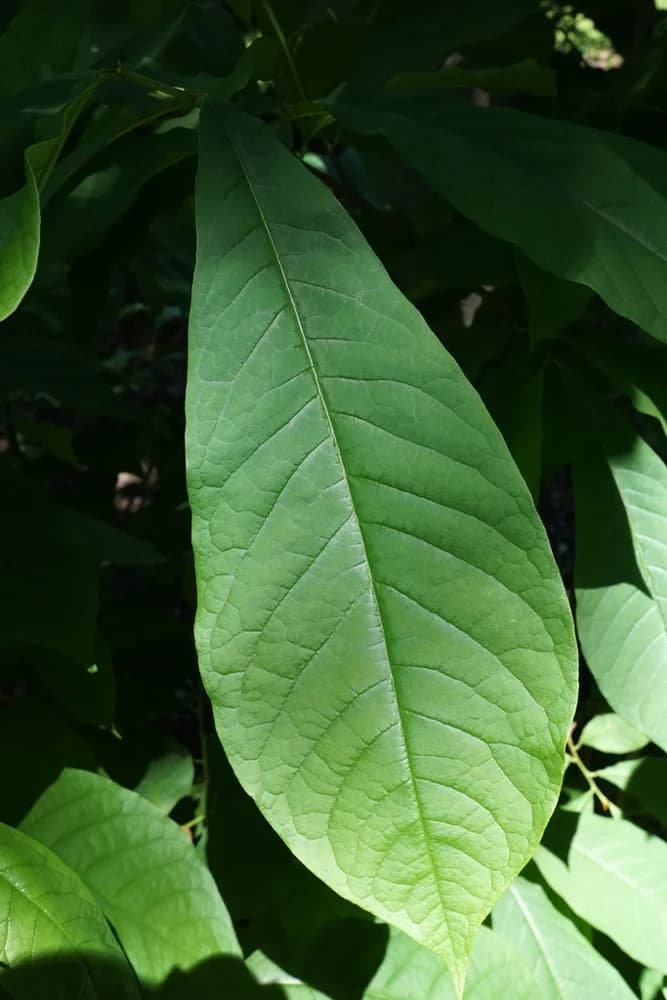
Large, alternate, simple leaves have unlobed margins and often broaden toward their tips. Compare several features without crushing foliage.
Pawpaw · Asimina triloba
Let one unfamiliar detail become an open question.
01 · Meet the tree
Pawpaw offers large leaves and a quieter world beneath a woodland canopy. Discovery can begin with a shape or a shadow rather than finding fruit. Let curiosity lead to careful observation, leaving the tree and its surroundings as you found them.
Large, alternate, simple leaves have unlobed margins and often broaden toward their tips. Compare several features without crushing foliage.
Purplish-brown, six-petaled flowers appear in spring before leaves. Green fruits develop later; pawpaw is distinct from tropical papaya. This practice asks you to observe rather than forage.
Native to eastern North America, pawpaw often grows as an understory tree in moist woods. Root suckers can form patches; stay on established paths rather than searching through a grove.
Compare several features, and notice how age and season change their appearance. These photographs are starting points for observation; leave living leaves, needles, cones, and bark attached.
Spring offers dark flowers and unfolding leaves. Summer brings broad foliage and developing fruit; late summer to early autumn can bring ripe fruit. Leaves turn yellow before falling. In winter, notice the branching you can see from a path.
Botanical reference: NC State Extension’s pawpaw profile. This is a starting point for observation, not a complete identification key.
02 · Energy & character
Three qualities to contemplate beside the tree. Begin with what you can observe, then see what meaning emerges for you.
These tree-specific associations are new contemplative interpretations for the digital school. “Energy” here describes felt experience and symbolism; it is not a measured healing field or a promise of a particular effect.
A large leaf offers edges, veins, and shadows to notice.
Begin with a description before settling on an explanation.
What question does this detail invite?
Different features appear on visits in different seasons.
Let understanding grow through returning rather than collecting everything at once.
What might another visit reveal?
Some of the tree remains hidden in surrounding foliage.
Allow a partial view to hold your interest.
Can something remain unknown today?
03 · Practice with this tree · About 5 minutes
An original five-minute observation practice. Read once, then give your attention to the tree; sitting, standing, or observing from a distance are equally welcome.
Open outdoor practice →Choose stable, permitted ground on an established path. Sit or stand comfortably and leave leaves, flowers, and fruit untouched.
Observe an accessible leaf, branch, or shadow. Name its shape and color before assigning meaning.
Notice something you cannot yet explain. Let breathing continue naturally while allowing the question to remain.
Name one detail you might revisit in another season. Widen your attention and finish without needing a discovery to report.
Spend about five minutes, or less if that suits you. Keep your device available when needed. No touching, collecting, controlled breathing, or tree-supported movement is required; leave the tree and its surroundings undisturbed.
04 · Roots in the book
The book teaches attention and learning from trees. This page adds a species-specific encounter; it does not claim that the original book assigned these three energies to pawpaw.
Chapter 3 introduces three pathways and choosing an appropriate setting.
Read the chapter companionOriginal: printed pp. 13–17Chapter 4 encourages a sustainable beginning with five or ten minutes.
Read the chapter companionOriginal: printed p. 28Curiosity, Discovery, Wonder connect this new practice with Chapter 6’s invitations to learn from trees.
Explore Wisdom and WonderOriginal: Chapter 6, printed pp. 96–12405 · Notice for yourself
Reflect quietly or write a sentence in your own notebook. On another visit, look at the same detail again. Your experience may fit these themes, suggest something different, or simply be a few minutes of looking.