Leaves and flowers
Alternate, pinnately compound leaves have numerous oval leaflets. Hanging clusters of white, pea-like flowers appear in spring to early summer.
Black Locust · Robinia pseudoacacia
Recognize persistence. Choose carefully where to direct it.
01 · Meet the tree
Black locust can grow and spread in difficult conditions. That persistence offers a prompt for resilience, while its thorns and vigorous spreading invite discernment. Strength becomes useful when you consider the effects of your next step on the surrounding community.
Alternate, pinnately compound leaves have numerous oval leaflets. Hanging clusters of white, pea-like flowers appear in spring to early summer.
Mature bark is deeply furrowed; flat seed pods follow flowers. Twigs may bear paired spines. Keep hands away from thorns, leave all parts untasted, and observe clear of damaged branches.
Native to parts of eastern North America and widely introduced elsewhere, black locust can spread through root suckers and become invasive outside its native range. An observation practice is not a recommendation to plant it.
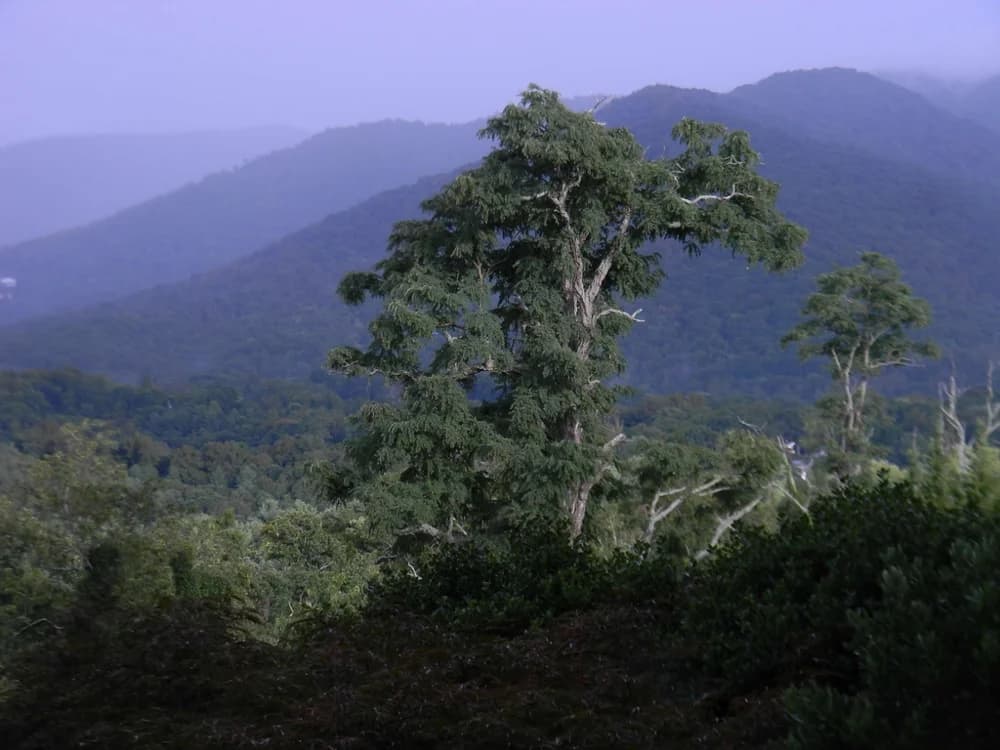
Compare several features, and notice how age and season change their appearance. These photographs are starting points for observation; leave living leaves, needles, cones, and bark attached.
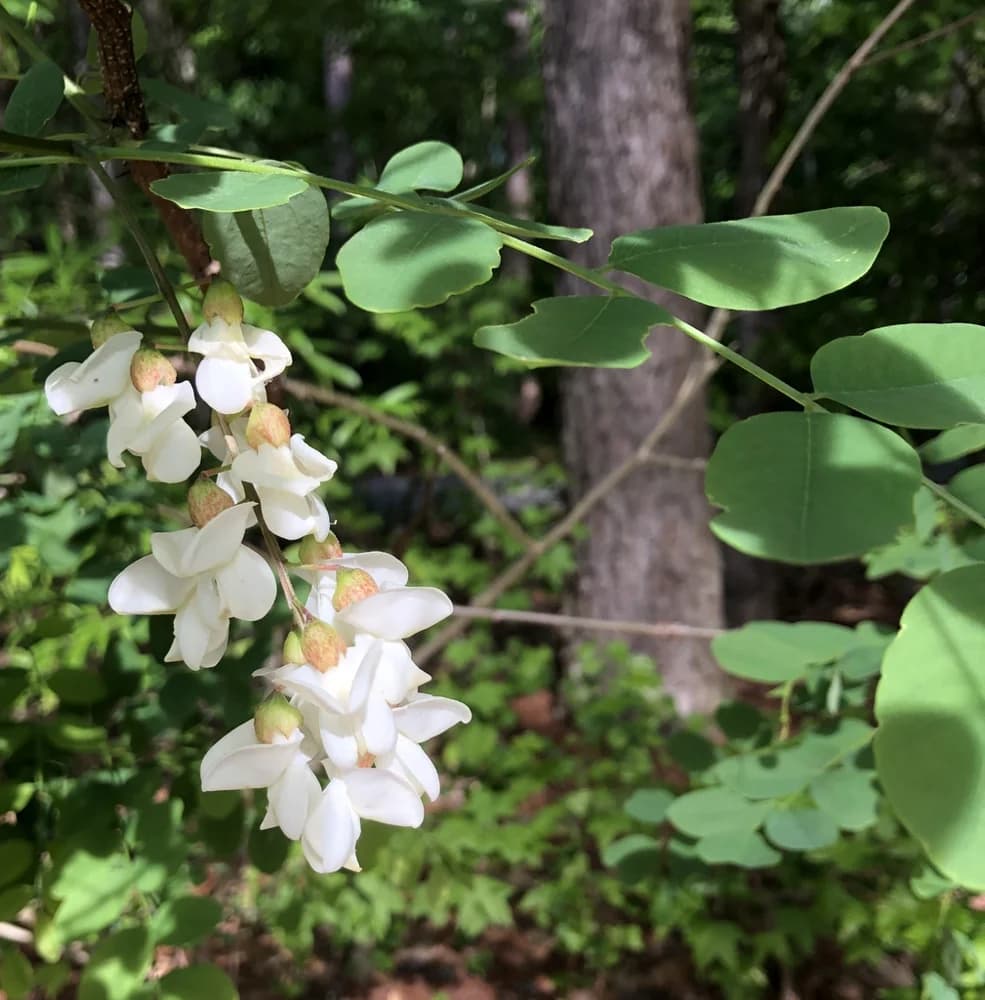
Spring to early summer brings fragrant flower clusters. Summer reveals compound foliage and developing pods; autumn leaves can turn yellow. Pods may persist on winter branches. Avoid a visit beneath the crown during strong winds or after storm damage.
Botanical reference: NC State Extension’s black locust profile. This is a starting point for observation, not a complete identification key.
02 · Energy & character
Three qualities to contemplate beside the tree. Begin with what you can observe, then see what meaning emerges for you.
These tree-specific associations are new contemplative interpretations for the digital school. “Energy” here describes felt experience and symbolism; it is not a measured healing field or a promise of a particular effect.
The tree can establish on challenging sites.
Identify a support that helps you continue, rather than requiring yourself to endure everything.
What makes persistence sustainable?
Growth can extend beyond one trunk through root suckers.
Consider where an effort helps and where it may need a limit.
Where would a careful boundary improve your next step?
A tree’s growth affects neighboring plants.
Include the consequences for others when choosing a resilient response.
Who else is affected by your choice?
03 · Practice with this tree · About 5 minutes
An original five-minute observation practice. Read once, then give your attention to the tree; sitting, standing, or observing from a distance are equally welcome.
Open outdoor practice →Use stable, permitted ground away from thorny growth and hazardous branches. Sitting or a distant view is welcome.
Find one compound leaf or ridge of bark. Describe its form without touching the tree or changing your breathing.
Bring to mind a task you are pursuing. Notice both what keeps you going and what that effort asks of others.
Select one sustainable action and one limit that supports it. Return to the whole scene before finishing.
Spend about five minutes, or less if that suits you. Keep your device available when needed. No touching, collecting, controlled breathing, or tree-supported movement is required; leave the tree and its surroundings undisturbed.
04 · Roots in the book
The book teaches attention and learning from trees. This page adds a species-specific encounter; it does not claim that the original book assigned these three energies to black locust.
Chapter 3 introduces three pathways and choosing an appropriate setting.
Read the chapter companionOriginal: printed pp. 13–17Chapter 4 encourages a sustainable beginning with five or ten minutes.
Read the chapter companionOriginal: printed p. 28Resilience, Discernment, Responsibility connect this new practice with Chapter 6’s invitations to learn from trees.
Explore Wisdom and WonderOriginal: Chapter 6, printed pp. 96–12405 · Notice for yourself
Reflect quietly or write a sentence in your own notebook. On another visit, look at the same detail again. Your experience may fit these themes, suggest something different, or simply be a few minutes of looking.