Foliage
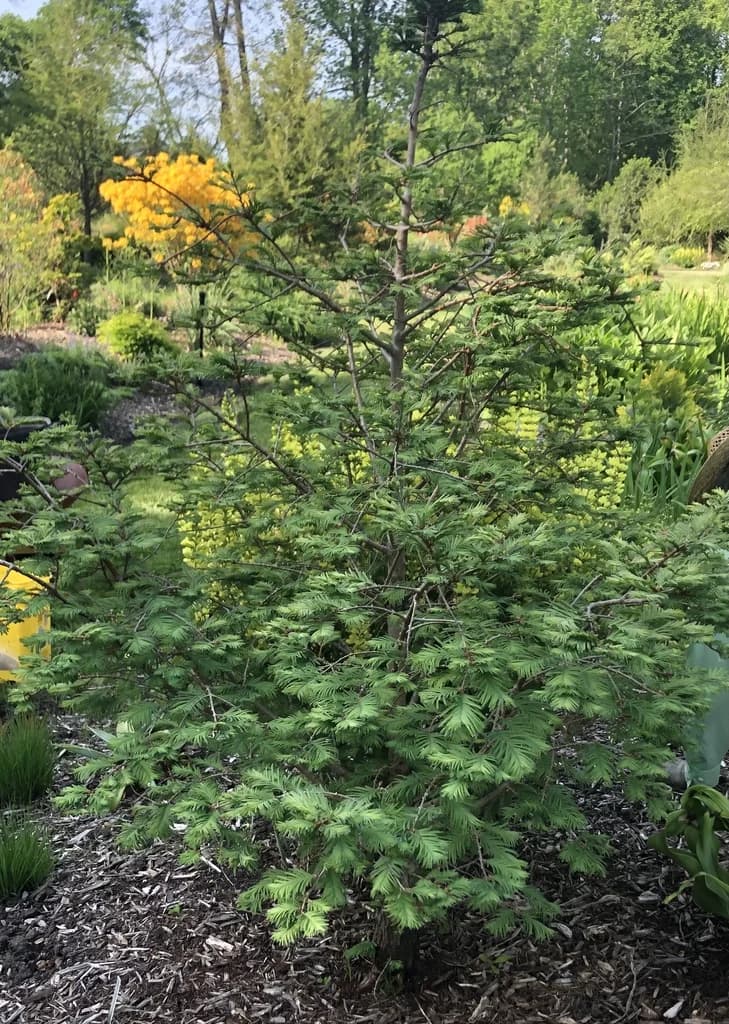
Dawn redwood is a deciduous conifer. Its soft, flat needles and small branchlets are arranged oppositely; bald cypress has an alternate arrangement. Compare several features.
Dawn redwood · Metasequoia glyptostroboides
Notice what this season holds. Let change have a place in continuity.
01 · Meet the tree
Meet the tree in the season you actually have. A full crown, a changing branch, or bare twigs each offer a complete starting point. Your encounter does not need to match a photograph.
Dawn redwood is a deciduous conifer. Its soft, flat needles and small branchlets are arranged oppositely; bald cypress has an alternate arrangement. Compare several features.
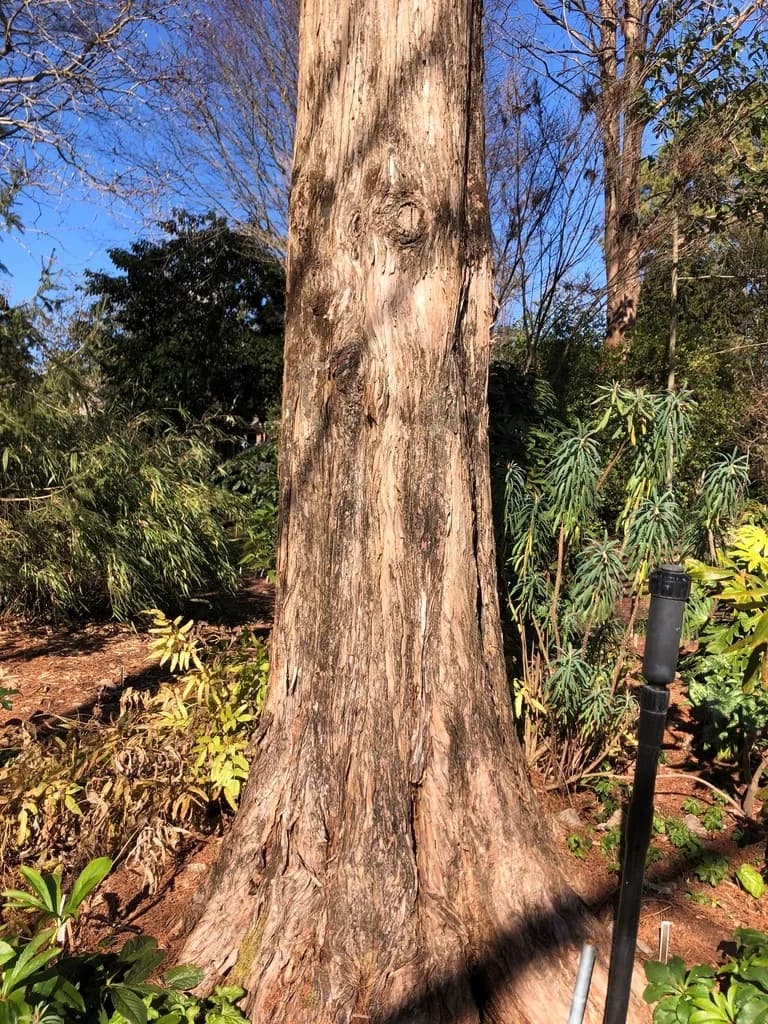
Look for reddish-brown, furrowed bark and small rounded cones. A mature tree can develop a broad, fluted trunk base.
Native to China, dawn redwood is planted in parks and gardens elsewhere. It is distinct from coast redwood and giant sequoia. A planted specimen can still be a place for attentive practice.
Compare several features, and notice how age and season change their appearance. These photographs are starting points for observation; leave living leaves, needles, cones, and bark attached.
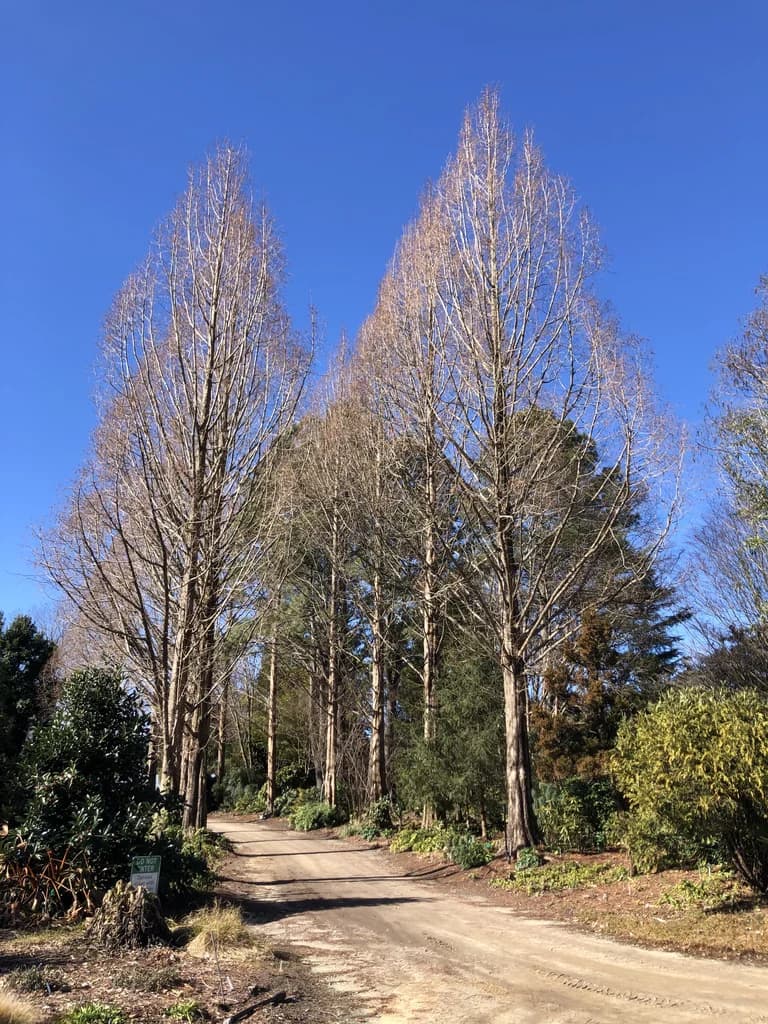
Fresh foliage appears in spring. Needles turn coppery brown in autumn and fall, leaving the winter branch structure visible. Seasonal needle loss is part of this conifer's normal cycle.
Botanical reference: NC State Extension’s dawn redwood profile. This is a starting point for observation, not a complete identification key.
02 · Energy & character
Three qualities to contemplate beside the tree. Begin with what you can observe, then see what meaning emerges for you.
These tree-specific associations are new contemplative interpretations for the digital school. “Energy” here describes felt experience and symbolism; it is not a measured healing field or a promise of a particular effect.
Autumn needle fall leaves branches with a different outline.
Use the seasonal change as a prompt to consider one effort you could set down. This is an invitation, not a demand to let go.
What could you stop carrying for today?
Return visits can reveal foliage where a winter view showed bare twigs.
Make room for beginning again without requiring a dramatic transformation. A repeated small practice is enough.
What would a gentle new beginning look like?
Paired foliage offers a visible pattern to compare.
Consider how effort and rest fit your own circumstances. Balance need not mean equal amounts at every moment.
What needs a little more room in your day?
03 · Practice with this tree · About 5 minutes
A new five-minute contemplation connecting release and renewal with the tree's visible seasonal condition.
Open outdoor practice →Use a permitted viewpoint on stable ground. Sit or stand with your usual supports and leave the trunk and roots undisturbed.
Observe foliage, twigs, cones, or bark. Describe what you actually see without needing the tree to look a different way.
With natural breathing, ask whether today calls for a small effort, a pause, or simply continued attention. No particular answer is required.
Choose one manageable response and end at your own pace. If useful, plan to return and notice what changes.
Spend about five minutes, or less if that suits you. Keep your device available when needed. No touching, collecting, controlled breathing, or tree-supported movement is required; leave the tree and its surroundings undisturbed.
04 · Roots in the book
The book teaches attention and learning from trees. This page adds a species-specific encounter; it does not claim that the original book assigned these three energies to dawn redwood.
Chapter 3 introduces three pathways and choosing an appropriate setting.
Read the chapter companionOriginal: printed pp. 13–17Chapter 4 encourages a sustainable beginning with five or ten minutes.
Read the chapter companionOriginal: printed p. 28Release, adaptability, and balance and optimization connect this new practice with Chapter 6’s invitations to learn from trees.
Explore Wisdom and WonderOriginal: Chapter 6, printed pp. 96–12405 · Notice for yourself
Reflect quietly or write a sentence in your own notebook. On another visit, look at the same detail again. Your experience may fit these themes, suggest something different, or simply be a few minutes of looking.