Bark
Paper birch is known for white bark that naturally peels in thin layers, with darker markings on mature trunks. Leave every layer attached.
Paper birch · Betula papyrifera
Look again. Let a familiar place become the beginning of a new encounter.
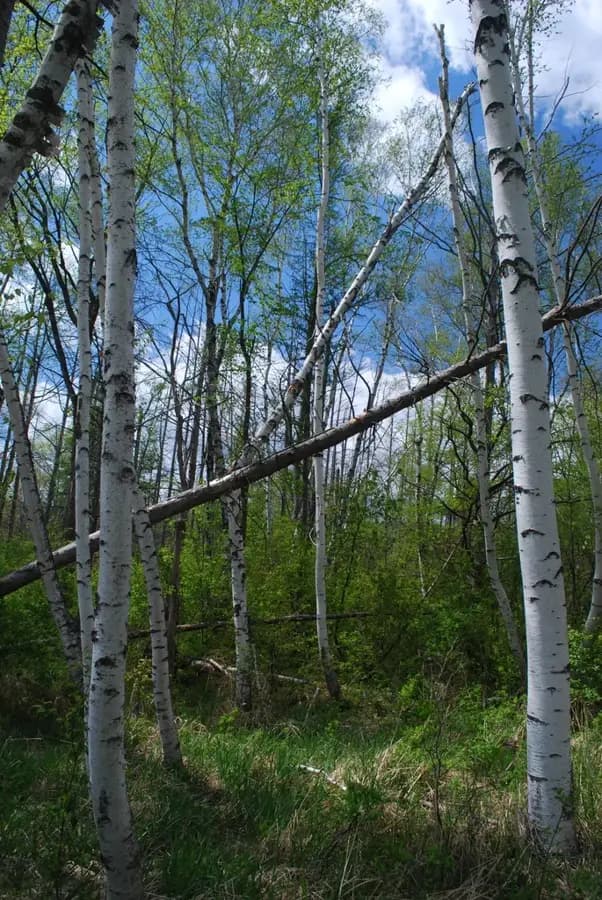
01 · Meet the tree
Look again. Let a familiar place become the beginning of a new encounter. Begin with this individual tree: its form, its setting, and what you can observe today. Let the encounter come before the meaning.
Paper birch is known for white bark that naturally peels in thin layers, with darker markings on mature trunks. Leave every layer attached.
Trees may have one trunk or several. Their young outline is often pyramidal, becoming more rounded or irregular with age.
Paper birch belongs to cool northern landscapes. It is a pioneer tree, often growing quickly when young.
Compare several features, and notice how age and season change their appearance. These photographs are starting points for observation; leave living leaves, needles, cones, and bark attached.
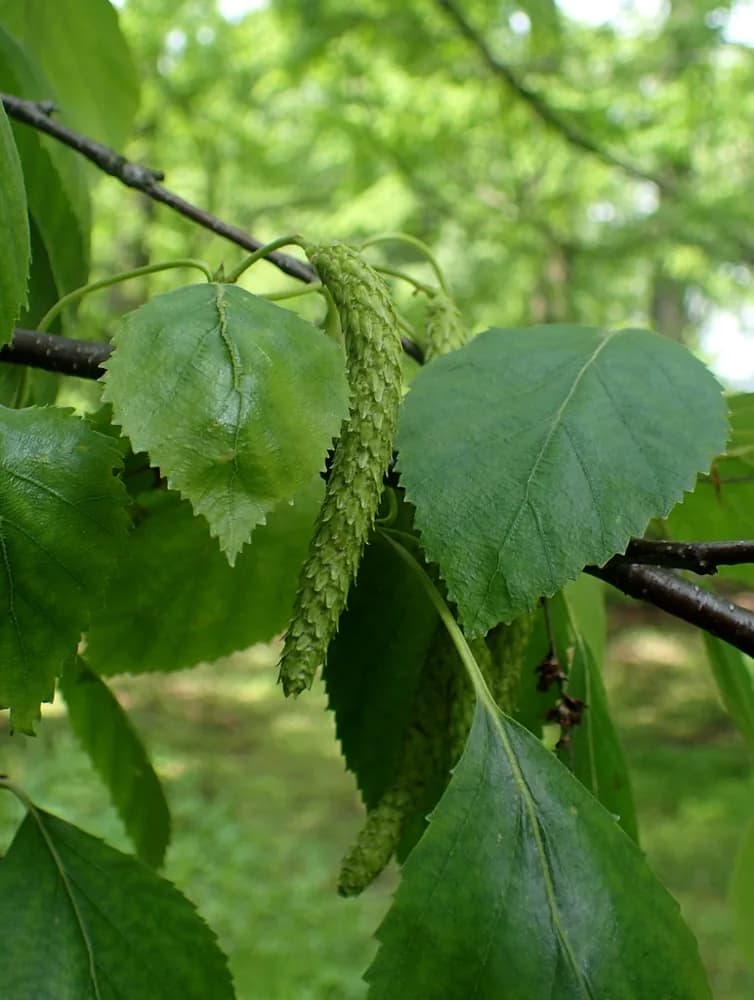
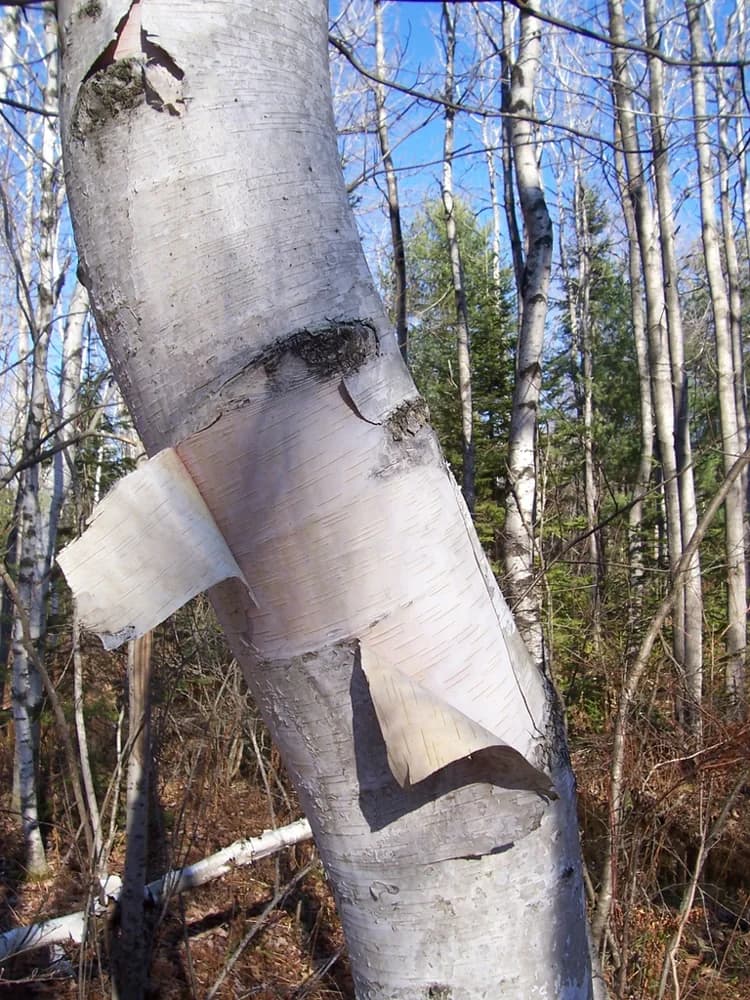
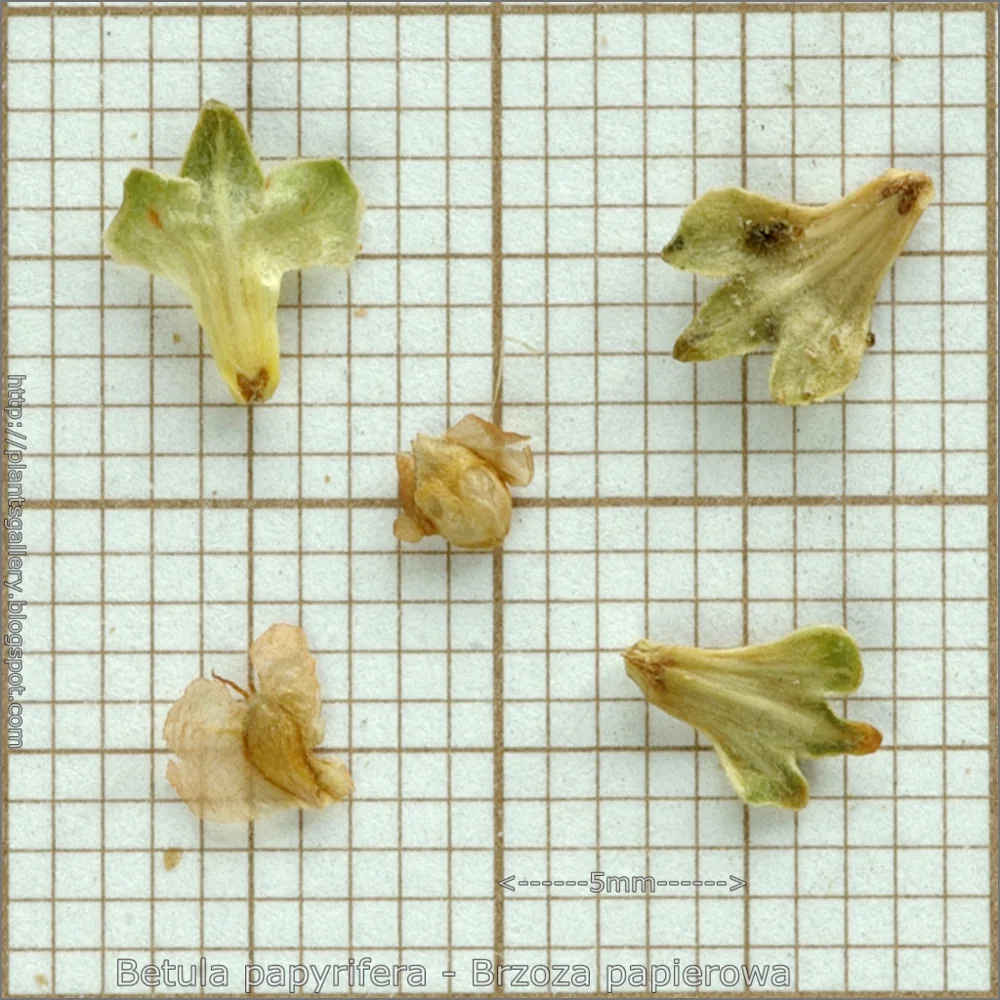
Observe spring catkins, summer leaves, autumn yellow, and bark revealed in winter. Renewal is an invitation to look closely, not a demand that every season feel like a fresh start.
Botanical reference: NC State Extension’s paper birch profile. This is a starting point for observation, not a complete identification key.
02 · Energy & character
Three qualities to contemplate beside the tree. Begin with what you can observe, then see what meaning emerges for you.
These tree-specific associations are new contemplative interpretations for the digital school. “Energy” here describes felt experience and symbolism; it is not a measured healing field or a promise of a particular effect.
Papery bark reveals layers of different colors.
Let renewal mean noticing what is already unfolding, without stripping anything away.
What is beginning quietly?
Light passes between small branches and leaves.
Leave a little space for an unfamiliar thought or a different view.
What could you meet with curiosity?
Young paper birches can grow quickly in suitable places.
A beginning can be modest and imperfect. You can start from the conditions you have.
What is one possible first step?
03 · Practice with this tree · About 5 minutes
A new observation practice exploring renewal, openness, beginnings beside paper birch. Read once, then spend a few minutes with the tree.
Open outdoor practice →Choose a birch you can observe from a permitted path or stable seat. Let this be a visit without a task to complete.
Notice a line in the bark, a branch angle, and the light around a leaf or twig. Keep the bark intact.
When you think “I know this,” look for a detail the label did not capture. Let curiosity take its time.
Choose one familiar part of your day to approach with this same attention. A fresh question is enough.
Spend about five minutes, or less if that suits you. Keep your device available when needed. No touching, collecting, controlled breathing, or tree-supported movement is required; leave the tree and its surroundings undisturbed.
04 · Roots in the book
The book teaches attention and learning from trees. This page adds a species-specific encounter; it does not claim that the original book assigned these three energies to birch.
Chapter 3 introduces three pathways and choosing an appropriate setting.
Read the chapter companionOriginal: printed pp. 13–17Chapter 4 encourages a sustainable beginning with five or ten minutes.
Read the chapter companionOriginal: printed p. 28Acceptance, adaptability, and presence connect this new practice with Chapter 6’s invitations to learn from trees.
Explore Wisdom and WonderOriginal: Chapter 6, printed pp. 96–12405 · Notice for yourself
Reflect quietly or write a sentence in your own notebook. On another visit, look at the same detail again. Your experience may fit these themes, suggest something different, or simply be a few minutes of looking.