Leaves
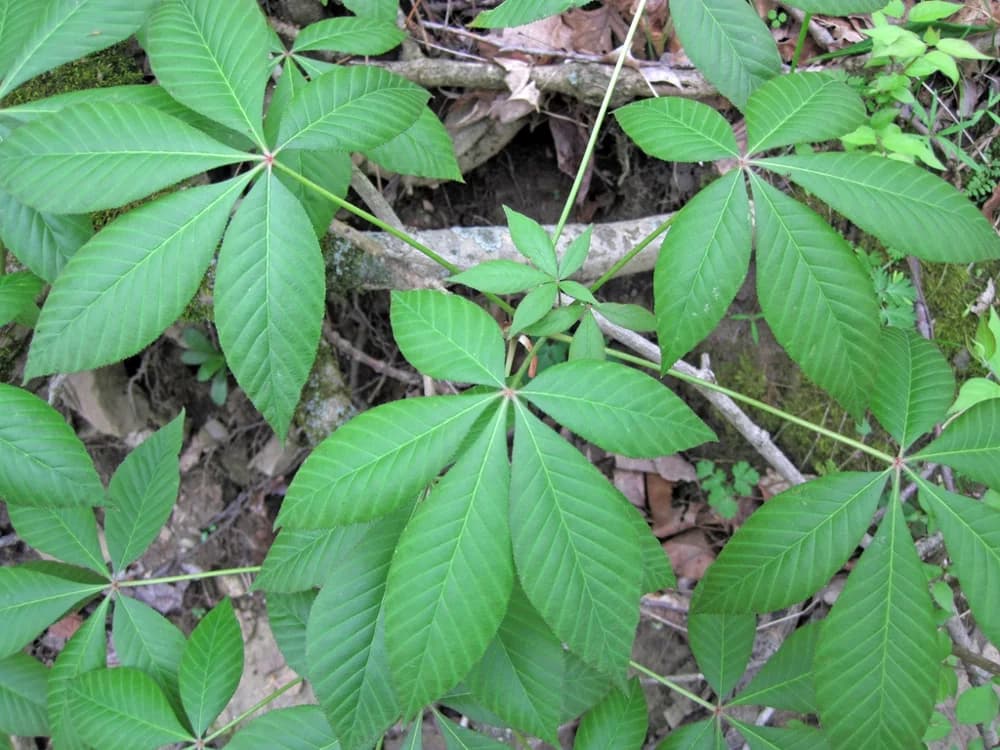
Opposite leaves usually have five to seven toothed leaflets radiating from one point. Unlike hickory, the leaflets form a fan rather than a row along a central stalk.
Ohio Buckeye · Aesculus glabra
Let an open leaf invite a little more room for attention.
01 · Meet the tree
Ohio buckeye offers a lesson in looking closely: a fan of leaflets, a rounded canopy, and a glossy seed held within a rough capsule. Its open-handed appearance becomes an invitation to curiosity and care.
Opposite leaves usually have five to seven toothed leaflets radiating from one point. Unlike hickory, the leaflets form a fan rather than a row along a central stalk.
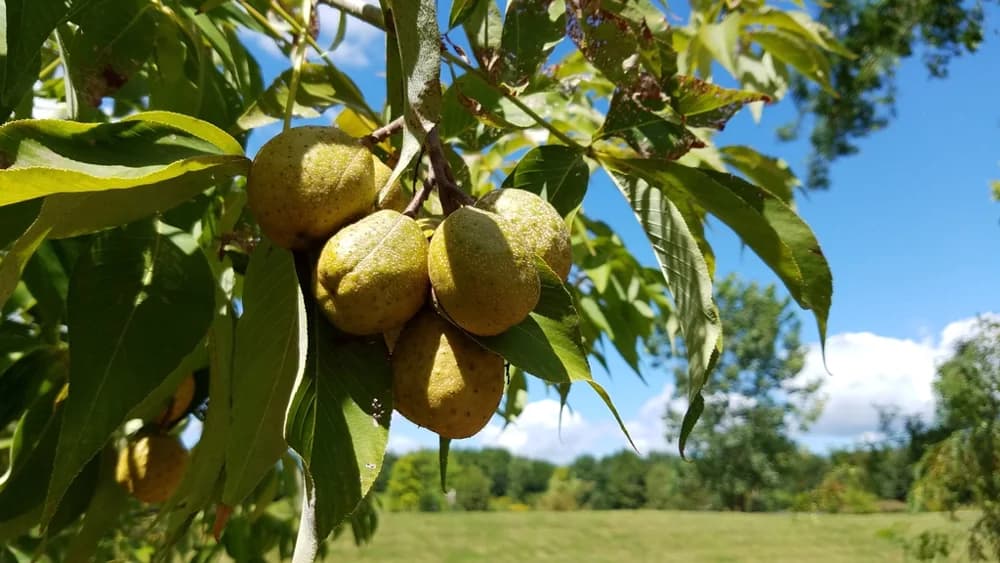
Upright clusters of yellow-green flowers appear in spring. Warty or prickly capsules hold shiny brown seeds with pale scars. Seeds, leaves, and bark are poisonous; observe without tasting.
Look in rich woodland soils across the Ohio River valley, Great Plains, and southern Appalachians. Gray, corky bark and a broad crown offer additional clues.
Compare several features, and notice how age and season change their appearance. These photographs are starting points for observation; leave living leaves, needles, cones, and bark attached.
Watch for expanding leaf fans and flower clusters in spring, a full canopy in summer, and variable yellow, orange, or red autumn color. Capsules mature in fall. In winter, follow the opposite branching pattern.
Chapter 4 invites a practice of returning across seasons. Read When and Where → Try the seasonal observation practice →
Botanical reference: NC State Extension’s ohio buckeye profile. This is a starting point for observation, not a complete identification key.
02 · Energy & character
Three qualities to contemplate beside the tree. Begin with what you can observe, then see what meaning emerges for you.
These tree-specific associations are new contemplative interpretations for the digital school. “Energy” here describes felt experience and symbolism; it is not a measured healing field or a promise of a particular effect.
Leaflets radiate from a shared point.
An open shape can invite a receptive attitude without asking you to agree with everything.
What could I meet with a little more curiosity?
A beautiful seed is also poisonous.
Appreciation and careful boundaries can belong together.
Where would care benefit from a clearer boundary?
New leaves unfold from buds each spring.
Beginning can be a gradual opening.
What small beginning is available today?
03 · Practice with this tree · About 5 minutes
An original five-minute observation practice. Read once, then give your attention to the tree; sitting, standing, or observing from a distance are equally welcome.
Open outdoor practice →Choose stable ground where you can see a branch. Leave seeds and leaves in place. Sit or stand comfortably.
Let your eyes trace the leaflets outward from their shared point. If comfortable, open your hands gently in your lap.
Notice a color, edge, or movement that you had not seen before. Let your breathing remain easy.
Rest your hands again. Name one thing you welcome and one boundary that supports you. Leave the tree undisturbed.
Spend about five minutes, or less if that suits you. Keep your device available when needed. No touching, collecting, controlled breathing, or tree-supported movement is required; leave the tree and its surroundings undisturbed.
04 · Roots in the book
The book teaches attention and learning from trees. This page adds a species-specific encounter; it does not claim that the original book assigned these three energies to ohio buckeye.
Chapter 3 introduces three pathways and choosing an appropriate setting.
Read the chapter companionOriginal: printed pp. 13–17Chapter 4 encourages a sustainable beginning with five or ten minutes.
Read the chapter companionOriginal: printed p. 28Openness, Discernment, Renewal connect this new practice with Chapter 6’s invitations to learn from trees.
Explore Wisdom and WonderOriginal: Chapter 6, printed pp. 96–12405 · Notice for yourself
Reflect quietly or write a sentence in your own notebook. On another visit, look at the same detail again. Your experience may fit these themes, suggest something different, or simply be a few minutes of looking.