Leaves
Simple, rounded to heart-shaped leaves have finely rounded teeth. Leaves on short shoots are opposite or nearly opposite; other shoots can show alternate leaves. Compare a whole twig rather than one isolated leaf.
 Tree Yoga SchoolPractice with the living world
Katsura · Cercidiphyllum japonicum
Notice what a season brings, without asking it to stay.
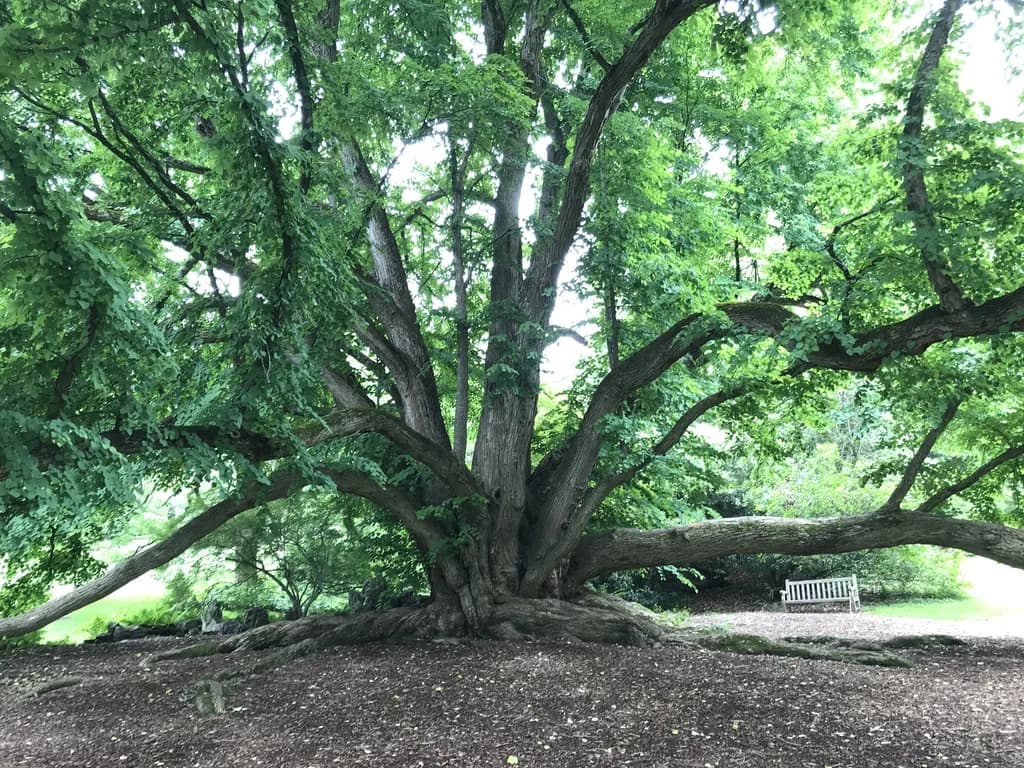
01 · Meet the tree
A Katsura can make an ordinary garden visit feel newly vivid: rounded leaves, an intricate crown, and autumn color worth returning to. Start with the tree in front of you, whether it has an upright outline or the cascading branches of a weeping cultivar.
Simple, rounded to heart-shaped leaves have finely rounded teeth. Leaves on short shoots are opposite or nearly opposite; other shoots can show alternate leaves. Compare a whole twig rather than one isolated leaf.
Young bark is relatively smooth, while older trunks become shaggy and scaly. Weeping cultivars have drooping branches, but that shape alone does not establish the species or cultivar.
Native to China and Japan, Katsura is planted in New England gardens and arboreta. It is an ornamental encounter here, not a native New England woodland species. Falling and decaying autumn leaves can have a sweet, burnt-sugar scent; its strength varies.
Compare several features, and notice how age and season change their appearance. These photographs are starting points for observation; leave living leaves, needles, cones, and bark attached.
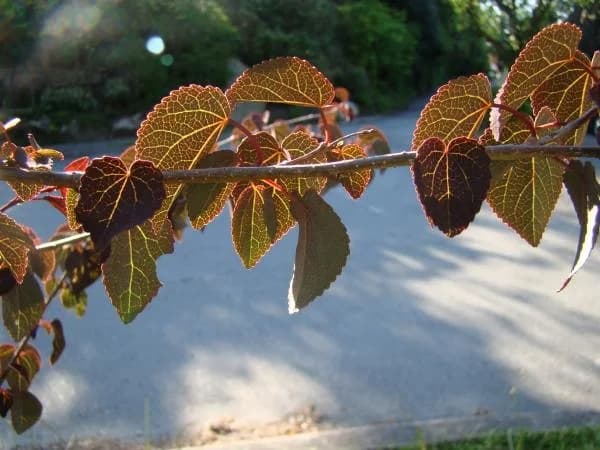
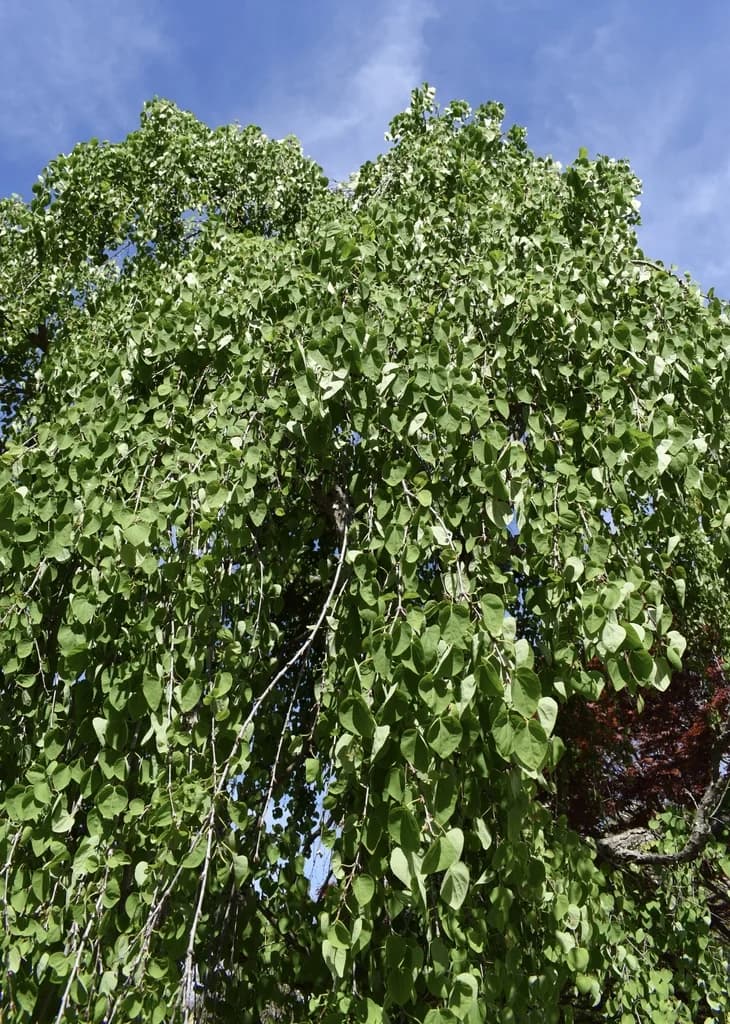
Look for reddish new leaves in spring, a blue-green summer canopy, and yellow to orange autumn color. If a sweet scent is noticeable from fallen leaves, let it be part of the visit without picking or crushing foliage. In winter, trace the exposed branching. Weeping form varies by cultivar.
Chapter 4 invites a practice of returning across seasons. Read When and Where Try the seasonal observation practice
Botanical reference: NC State Extension’s katsura profile. This is a starting point for observation, not a complete identification key.
02 · Energy & character
Three qualities to contemplate beside the tree. Begin with what you can observe, then see what meaning emerges for you.
These tree-specific associations are new contemplative interpretations for the digital school. “Energy” here describes felt experience and symbolism; it is not a measured healing field or a promise of a particular effect.
A rounded leaf carries a network of visible veins.
A familiar shape can reward a second look.
What have I been passing without noticing?
Leaves shift in color before they fall.
Allow a changing season to suggest movement without demanding that you feel ready.
What is changing at its own pace?
Autumn leaves may bring a fleeting sweetness to the air.
Appreciation can begin with one small detail, whether or not there is a scent today.
What can I appreciate as it is?
03 · Practice with this tree · About 5 minutes
A new five-minute sensory observation practice connecting attention and appreciation to an encounter with Katsura. Read once, then let the screen rest.
Open outdoor practiceChoose a permitted, comfortable viewpoint with your usual supports. An upright tree, a weeping specimen, or a winter silhouette can all be a starting point.
Choose a leaf, a branch curve, or a patch of bark. Follow its outline slowly with your eyes, without pulling foliage toward you.
Notice light, nearby sounds, and any scent already present. There is no need to touch the tree or search for an autumn fragrance. A quiet, unscented visit is complete.
Choose one detail you would like to remember. Let the tree remain as it is, then carry a little of that attention into your next activity.
Spend about five minutes, or less if that suits you. Keep your device available when needed. No touching, collecting, controlled breathing, or tree-supported movement is required; leave the tree and its surroundings undisturbed.
04 · Roots in the book
The book teaches attention and learning from trees. This page adds a species-specific encounter; it does not claim that the original book assigned these three energies to katsura.
Chapter 3 introduces three pathways and choosing an appropriate setting.
Read the chapter companionOriginal: printed pp. 13–17Chapter 4 encourages a sustainable beginning with five or ten minutes.
Read the chapter companionOriginal: printed p. 28Presence, release, and unconditional love connect this new practice with Chapter 6’s invitations to learn from trees.
Explore Wisdom and WonderOriginal: Chapter 6, printed pp. 96–12405 · Notice for yourself
Reflect quietly or write a sentence in your own notebook. On another visit, look at the same detail again. Your experience may fit these themes, suggest something different, or simply be a few minutes of looking.