Leaves
Broad, simple, alternate leaves are oval, thick, and leathery, glossy green above and paler beneath. Margins are generally unlobed. Being evergreen does not mean the same individual leaves stay indefinitely.
 Tree Yoga SchoolPractice with the living world
Pacific madrone · Arbutus menziesii
Notice the surface as it changes. Leave the tree free to reveal its own season.
Optional · saved in this browser on this device.
01 · Meet the tree
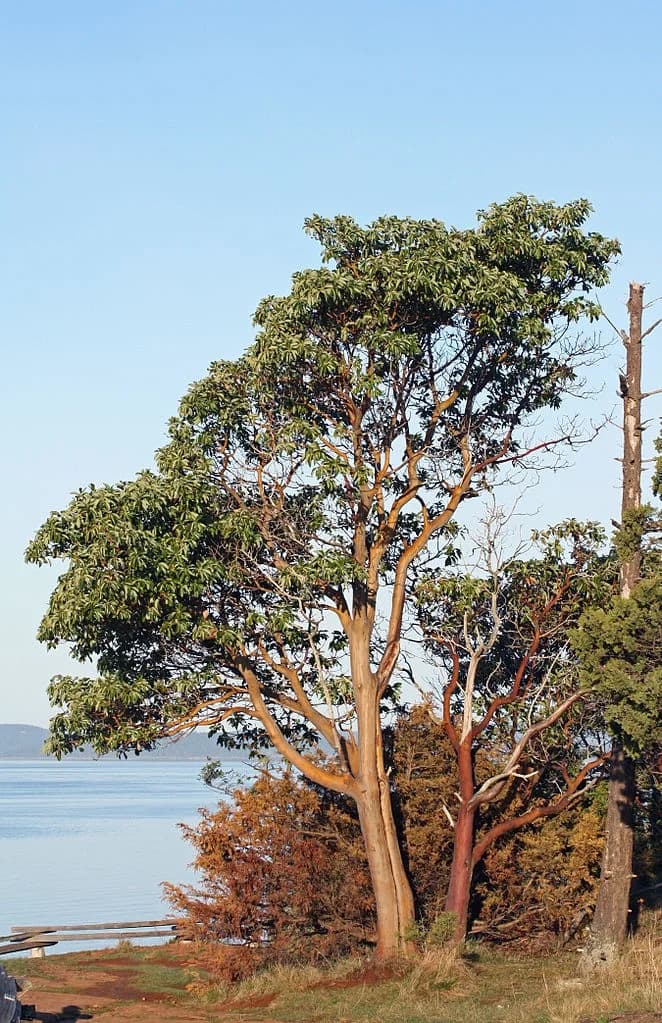
Pacific madrone combines leathery evergreen leaves with reddish bark that naturally peels to expose smoother surfaces. The changing colors and curves can invite appreciation without needing to remove a single piece.
Broad, simple, alternate leaves are oval, thick, and leathery, glossy green above and paler beneath. Margins are generally unlobed. Being evergreen does not mean the same individual leaves stay indefinitely.
Reddish-brown outer bark exfoliates naturally, exposing smoother surfaces. Older lower trunks can become rougher and fissured. Observe the contrast without pulling loose edges or rubbing the trunk.
Clusters of small white urn-shaped flowers are followed by orange-red fruits. Pacific madrone is native along the Pacific region from the Pacific Northwest into California. It is a different species from the Mediterranean strawberry tree, Arbutus unedo.
Compare several features, and notice how age and season change their appearance. These photographs are starting points for observation; leave living leaves, needles, cones, and bark attached.
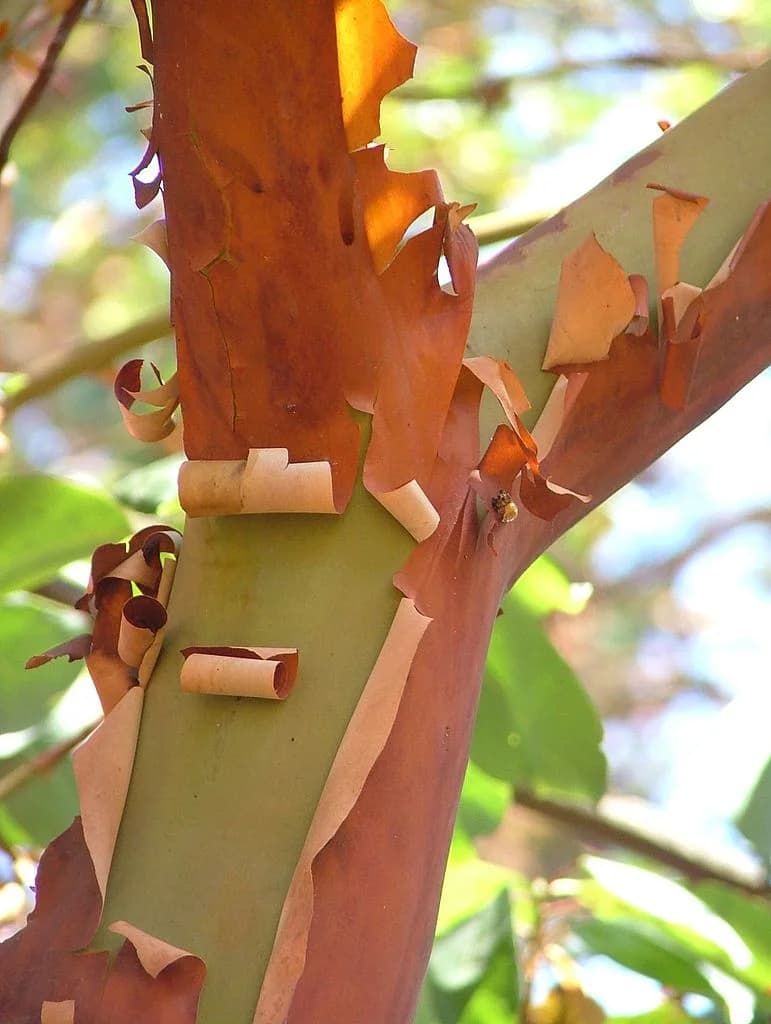
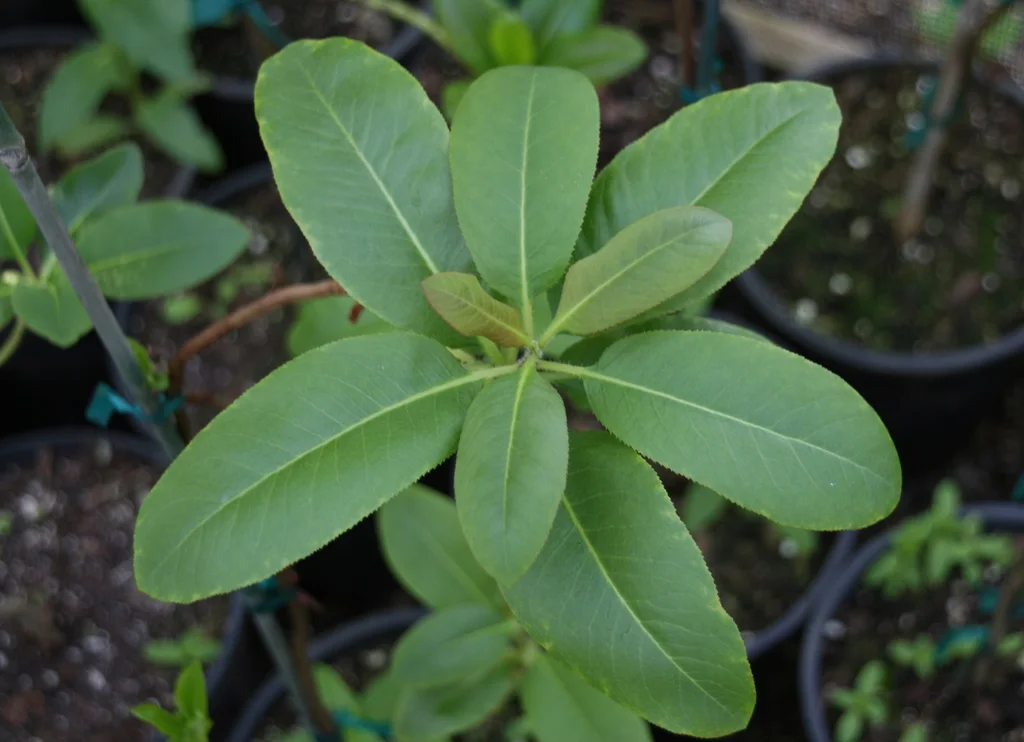
Notice spring flower clusters when present, later fruits, and changes in the bark surface through suitable return visits. Leaves and bark may be shed irregularly. Observe naturally loosened layers without peeling them; no particular seasonal display is required for a worthwhile encounter.
Chapter 4 invites a practice of returning across seasons. Read When and Where Try the seasonal observation practice
Botanical reference: NC State Extension’s pacific madrone profile. This is a starting point for observation, not a complete identification key.
Explore the habitat: Oregon State University: Pacific madrone identification and native range.
02 · Energy & character
Three qualities to contemplate beside the tree. Begin with what you can observe, then see what meaning emerges for you.
These tree-specific associations are new contemplative interpretations for the digital school. “Energy” here describes felt experience and symbolism; it is not a measured healing field or a promise of a particular effect.
Naturally shedding bark reveals a different surface.
Use the changing appearance as a prompt to notice rather than force a transition.
What is changing without my direction?
Smooth and rough textures can occur on one tree.
Let appreciation include more than one appearance.
What detail can I value today?
Older bark separates in its own time.
Reflection on release need not become a demand to let go immediately.
What could I allow to unfold at its own pace?
03 · Practice with this tree · About 5 minutes
A new five-minute observation practice exploring change and appreciation beside Pacific madrone. Bark stays attached throughout the practice.
Open outdoor practiceChoose a permitted, stable viewpoint with your usual seat or supports. Avoid stepping onto roots or into planted areas to get closer.
Trace a visible border between bark colors or textures with your eyes. If bark is distant, choose a leaf or branching curve.
Let a few natural breaths pass while you observe. There is no need to touch, rub, or remove bark to understand the pattern.
Name one detail to remember and one change you can allow to take its own time. Widen your view and end at your own pace.
Spend about five minutes, or less if that suits you. Keep your device available when needed. No touching, collecting, controlled breathing, or tree-supported movement is required; leave the tree and its surroundings undisturbed.
04 · Roots in the book
The book teaches attention and learning from trees. This page adds a species-specific encounter; it does not claim that the original book assigned these three energies to pacific madrone.
Chapter 3 introduces three pathways and choosing an appropriate setting.
Read the chapter companionOriginal: printed pp. 13–17Chapter 4 encourages a sustainable beginning with five or ten minutes.
Read the chapter companionOriginal: printed p. 28Presence, release, and acceptance connect this new practice with Chapter 6’s invitations to learn from trees.
Explore Wisdom and WonderOriginal: Chapter 6, printed pp. 96–12405 · Notice for yourself
Reflect quietly or write a sentence in your own notebook. On another visit, look at the same detail again. Your experience may fit these themes, suggest something different, or simply be a few minutes of looking.