Needles
Soft, short needles occur in clusters on short shoots and singly on new long shoots. They turn yellow before falling in autumn. Other larches share this habit; needle loss alone does not identify tamarack.
Tamarack · Larix laricina
Notice what a season asks you to keep and what it asks you to let go. Leave room for another return.
01 · Meet the tree
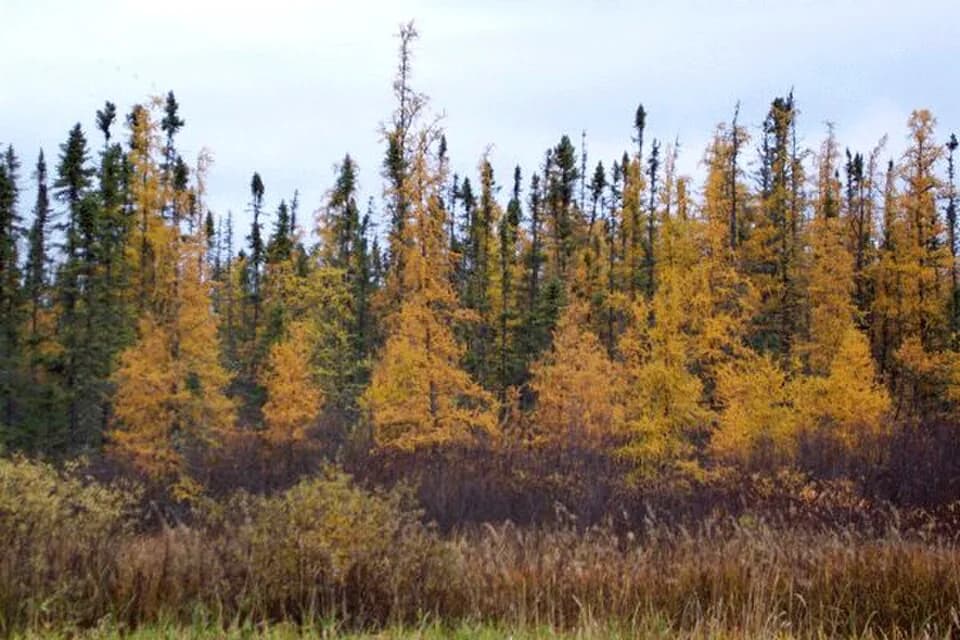
A conifer need not remain green through winter. Tamarack turns gold and sheds its needles, offering a striking encounter with seasonal change. Begin with the tree you find today, whether green, golden, or bare.
Soft, short needles occur in clusters on short shoots and singly on new long shoots. They turn yellow before falling in autumn. Other larches share this habit; needle loss alone does not identify tamarack.
Small, upright seed cones ripen brown and may remain attached after releasing seeds. Bark becomes reddish brown and scaly with age. Observe accessible details without picking cones or removing bark.
Native across northern North America, tamarack often grows in bogs and other wet settings, but also occurs on upland sites. Use a permitted boardwalk or stable viewpoint rather than entering wet ground for a closer look.
Compare several features, and notice how age and season change their appearance. These photographs are starting points for observation; leave living leaves, needles, cones, and bark attached.
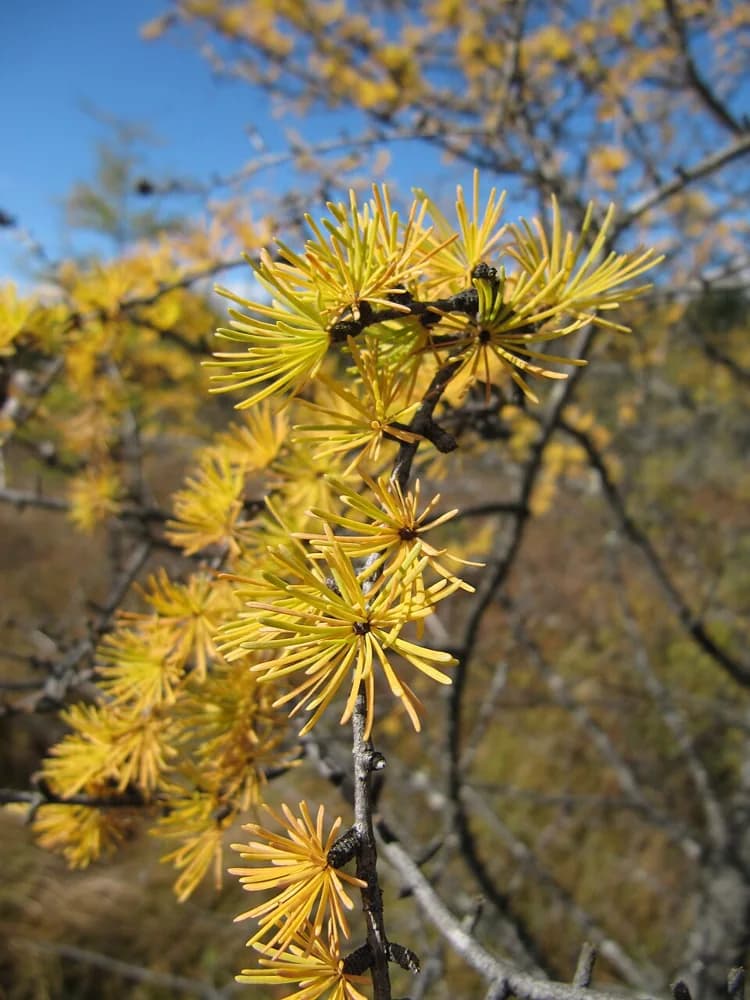
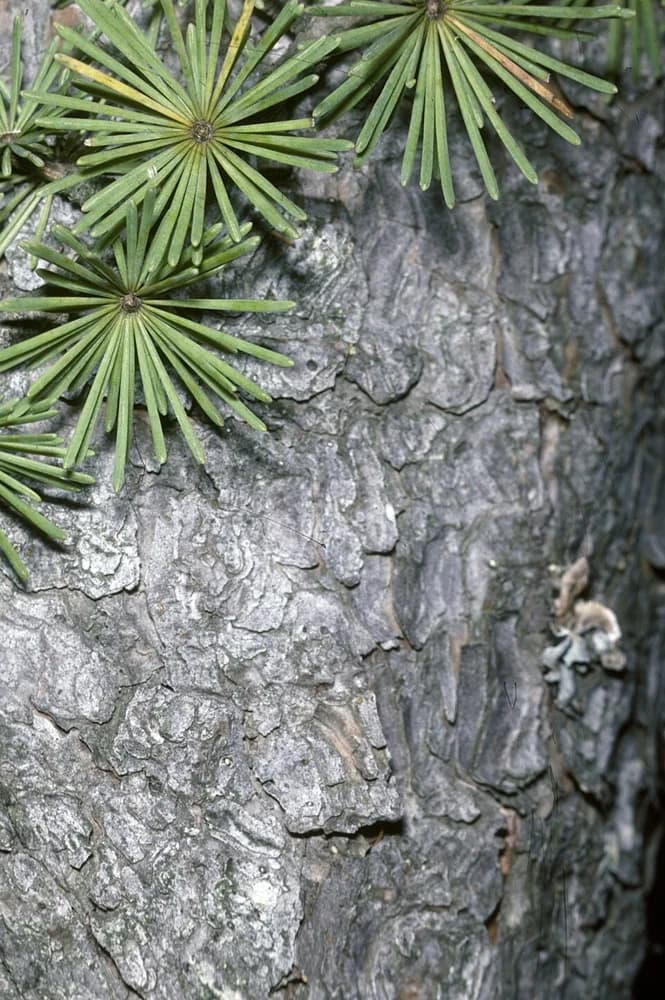
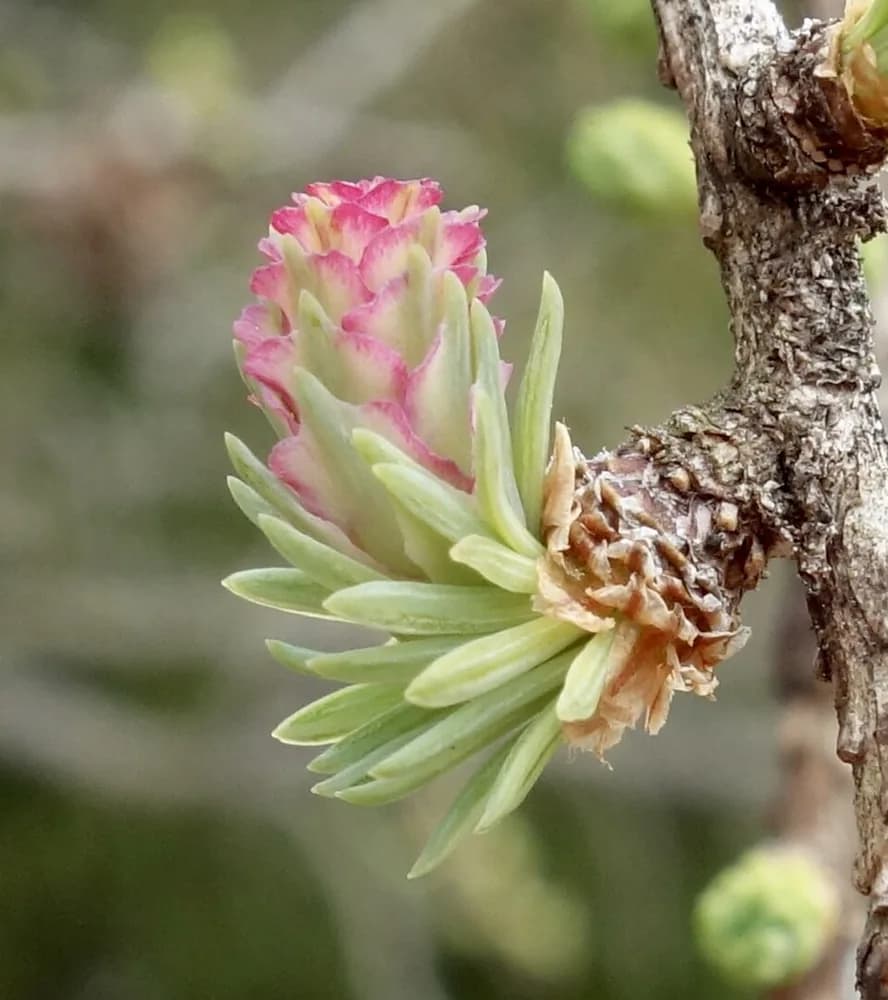
Fresh green needles emerge in spring, fill the branches in summer, and turn golden before autumn shedding. Winter exposes the fine branching and retained cones. Local conditions affect timing. Bare winter branches are part of this deciduous conifer's normal annual cycle.
Botanical reference: US Forest Service's Tamarack profile. This is a starting point for observation, not a complete identification key.
02 · Energy & character
Three qualities to contemplate beside the tree. Begin with what you can observe, then see what meaning emerges for you.
These tree-specific associations are new contemplative interpretations for the digital school. “Energy” here describes felt experience and symbolism; it is not a measured healing field or a promise of a particular effect.
The same crown can be green, golden, or bare at different times of year.
Let a change be visible before deciding whether it is good or bad. Different seasons can ask for different ways of participating.
What season are you meeting in your own life?
Needles fall while the tree's branching structure remains.
Consider one demand or habit you could set down while keeping what matters. Release can be selective and practical.
What could you put down for now?
New needles emerge after a bare winter.
Reflect on a practice you can return to when conditions allow. A pause does not have to erase a commitment.
What would you like to return to in time?
03 · Practice with this tree · About 5 minutes
A new five-minute contemplation beside tamarack, using its visible seasonal form as a starting point for exploring release and perseverance.
Open outdoor practice →Choose a stable, permitted viewpoint with your usual supports. Name what you actually see: green needles, gold, bare twigs, cones, or another detail.
Follow one visible branch. Notice the structure beneath today's foliage, without assuming every loss or change has the same meaning.
With natural breathing, ask whether there is one unnecessary demand you could set down today. Let the question stay modest; no major decision is needed.
Name something worthwhile you would like to revisit, whether this tree or a practice in your day. Finish without making a deadline or a streak.
Spend about five minutes, or less if that suits you. Keep your device available when needed. No touching, collecting, controlled breathing, or tree-supported movement is required; leave the tree and its surroundings undisturbed.
04 · Roots in the book
The book teaches attention and learning from trees. This page adds a species-specific encounter; it does not claim that the original book assigned these three energies to tamarack.
Chapter 3 introduces three pathways and choosing an appropriate setting.
Read the chapter companionOriginal: printed pp. 13–17Chapter 4 encourages a sustainable beginning with five or ten minutes.
Read the chapter companionOriginal: printed p. 28Release, adaptability, and perseverance connect this new practice with Chapter 6’s invitations to learn from trees.
Explore Wisdom and WonderOriginal: Chapter 6, printed pp. 96–12405 · Notice for yourself
Reflect quietly or write a sentence in your own notebook. On another visit, look at the same detail again. Your experience may fit these themes, suggest something different, or simply be a few minutes of looking.