Needles
Flat needles grow singly along twigs and usually have rounded or slightly notched tips. Two pale bands appear underneath. Spruce needles are more angular; compare several features without pulling needles from a living branch.
Balsam fir · Abies balsamea
Allow a quiet encounter. Give one small detail your attention without asking it to change your mood.
01 · Meet the tree
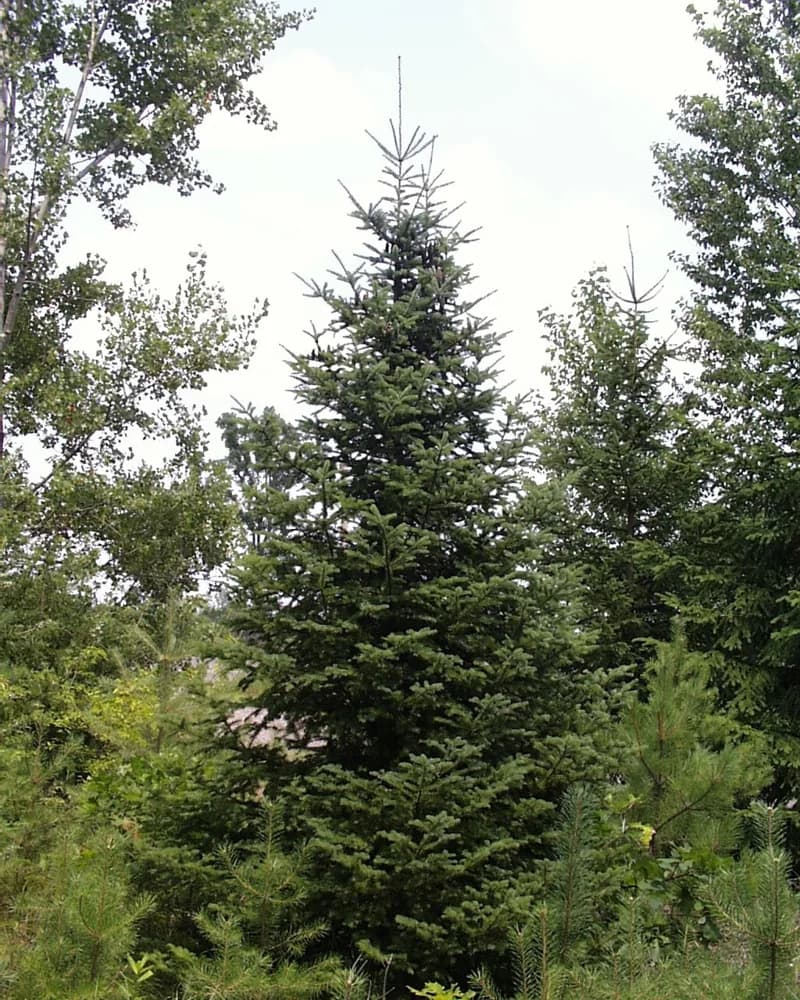
Balsam fir is a northern evergreen with much to notice at a small scale. A visible twig, the underside of a fallen needle, or the outline of a crown can be enough for a visit. Let the tree's presence come before an expectation of calm.
Flat needles grow singly along twigs and usually have rounded or slightly notched tips. Two pale bands appear underneath. Spruce needles are more angular; compare several features without pulling needles from a living branch.
Young bark is smooth and gray with resin blisters; older bark becomes rougher. Seed cones stand upright near the upper crown and break apart on the tree, so intact fallen cones are not usually available.
Native to northern North America, balsam fir occurs in cool forests. Its usually narrow, conical outline can differ with age, wind exposure, and growing conditions.
Compare several features, and notice how age and season change their appearance. These photographs are starting points for observation; leave living leaves, needles, cones, and bark attached.
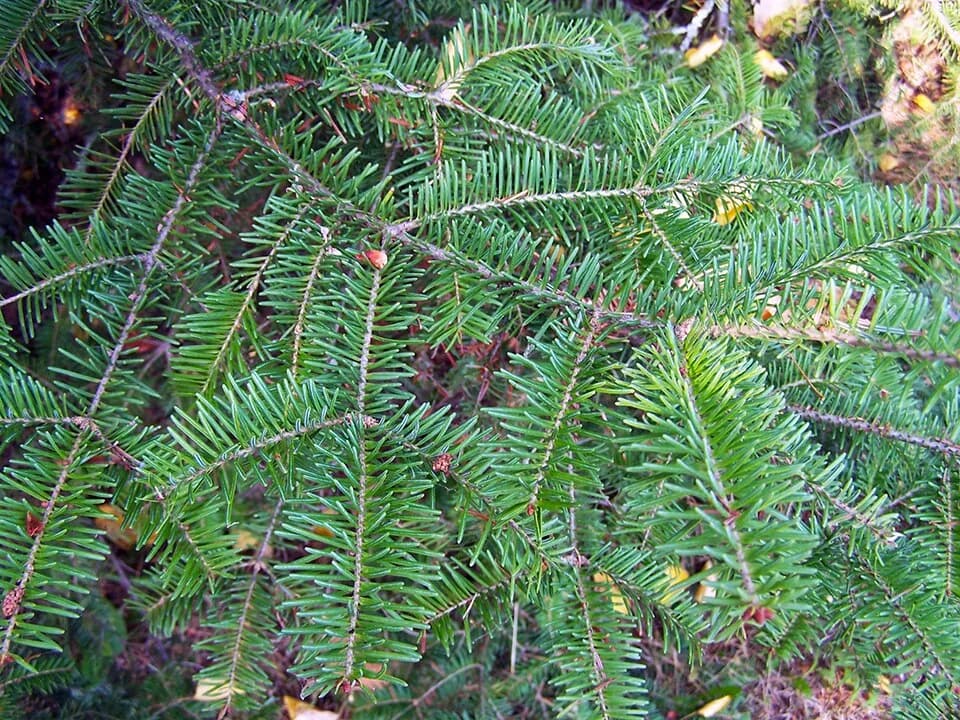
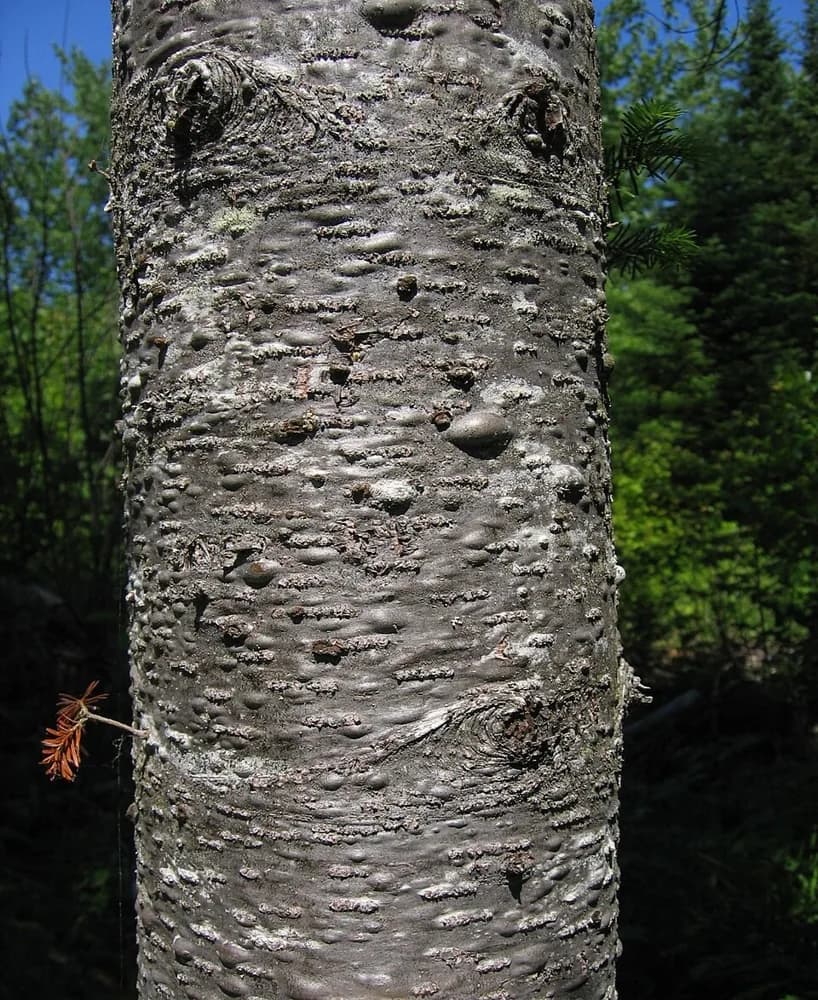
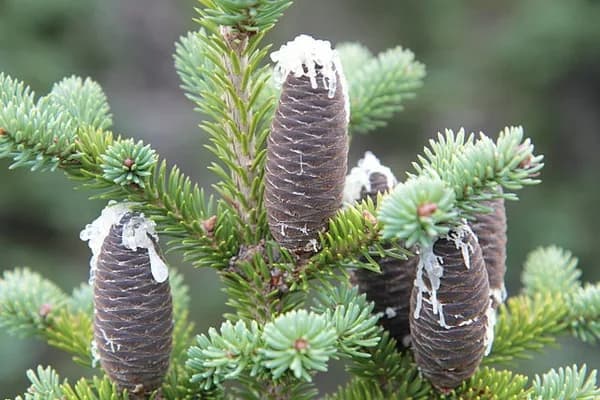
Green needles remain through winter while individual needles are eventually replaced. Notice fresh growth, cone development when visible, and changing light around the crown. Do not puncture resin blisters or crush foliage to seek a scent; visual observation is enough.
Botanical reference: NC State Extension’s balsam fir profile. This is a starting point for observation, not a complete identification key.
02 · Energy & character
Three qualities to contemplate beside the tree. Begin with what you can observe, then see what meaning emerges for you.
These tree-specific associations are new contemplative interpretations for the digital school. “Energy” here describes felt experience and symbolism; it is not a measured healing field or a promise of a particular effect.
An evergreen crown remains a visible form even when surrounding deciduous trees are bare.
Explore pausing within changing circumstances. Stillness can be a brief choice, without requiring a quiet mind.
Where could you allow a small pause?
A needle's upper and lower surfaces have different appearances.
Let one detail reveal more than your first glance. Attention can deepen without becoming effortful.
What deserves a second look?
Young bark carries resin blisters that can be observed without touching them.
Consider an approach that learns without pressing or taking. Care can be quiet and specific.
What would a gentler approach change?
03 · Practice with this tree · About 5 minutes
A new observation meditation beside balsam fir, connecting one-pointed focus with a gentle way of returning attention.
Open outdoor practice →Choose a safe, permitted viewpoint with your usual supports. Allow your present mood to be part of the visit; no particular feeling is required.
Rest your gaze on a twig, a patch of bark, or the crown's outline. Keep eyes open and breathe naturally.
When a sound or thought draws your attention away, notice it and return to the detail. Change your position or anchor whenever comfort requires it.
Widen your attention to the surrounding forest or landscape. Carry one gentle intention into your next activity, then end at your own pace.
Spend about five minutes, or less if that suits you. Keep your device available when needed. No touching, collecting, controlled breathing, or tree-supported movement is required; leave the tree and its surroundings undisturbed.
04 · Roots in the book
The book teaches attention and learning from trees. This page adds a species-specific encounter; it does not claim that the original book assigned these three energies to balsam fir.
Chapter 3 introduces three pathways and choosing an appropriate setting.
Read the chapter companionOriginal: printed pp. 13–17Chapter 4 encourages a sustainable beginning with five or ten minutes.
Read the chapter companionOriginal: printed p. 28One-pointed focus, acceptance, and unconditional love connect this new practice with Chapter 6’s invitations to learn from trees.
Explore Wisdom and WonderOriginal: Chapter 6, printed pp. 96–12405 · Notice for yourself
Reflect quietly or write a sentence in your own notebook. On another visit, look at the same detail again. Your experience may fit these themes, suggest something different, or simply be a few minutes of looking.