Needles
Eastern hemlock has short, flat needles, with two pale bands on their undersides. Observe an accessible branch without pulling it toward you.
Eastern hemlock · Tsuga canadensis
Listen beneath the branches. Make room for nearby sounds and your own response.
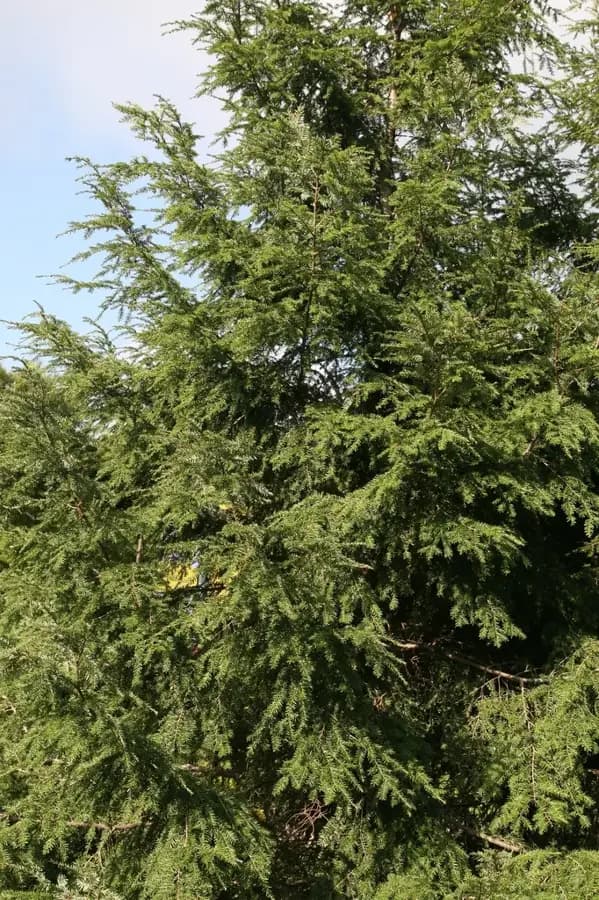
01 · Meet the tree
Listen beneath the branches. Make room for nearby sounds and your own response. Begin with this individual tree: its form, its setting, and what you can observe today. Let the encounter come before the meaning.
Eastern hemlock has short, flat needles, with two pale bands on their undersides. Observe an accessible branch without pulling it toward you.
Small hanging cones and gently drooping branches help distinguish this evergreen. Compare several visible features.
Native to eastern North America, eastern hemlock favors cool, moist conditions. Its health is threatened in many places by hemlock woolly adelgid.
Compare several features, and notice how age and season change their appearance. These photographs are starting points for observation; leave living leaves, needles, cones, and bark attached.
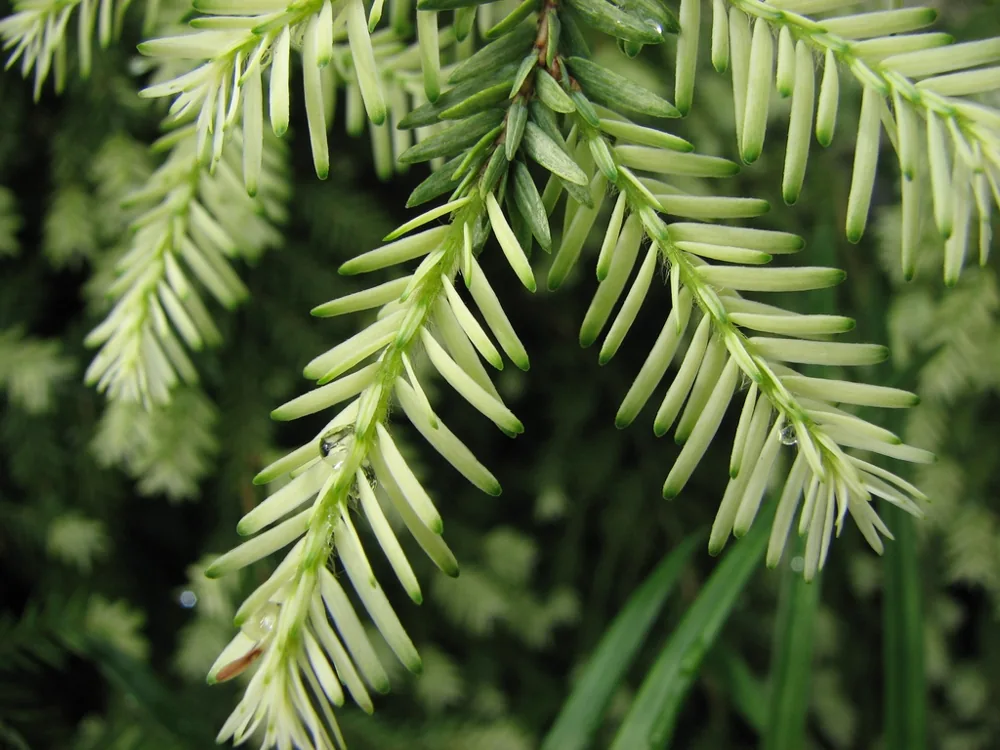
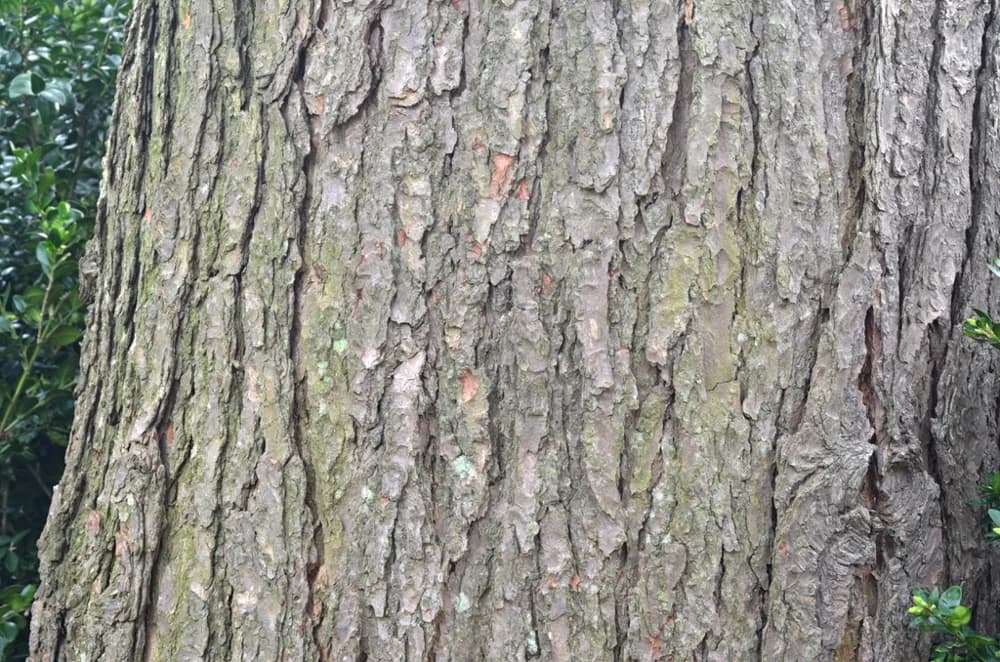
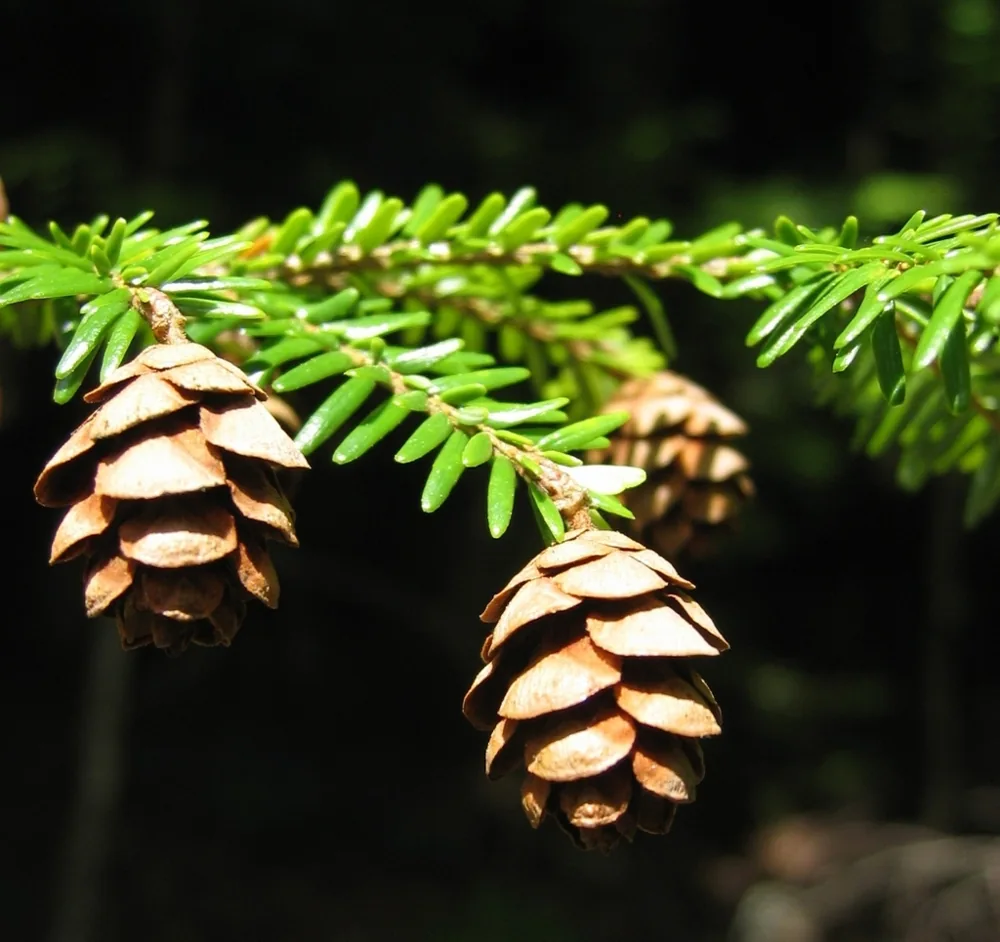
Green needles persist through the year, while new growth, cones, and light change. Observe the actual tree’s condition; a thinning crown need not match an idealized picture of shelter.
Botanical reference: NC State Extension’s eastern hemlock profile. This is a starting point for observation, not a complete identification key.
02 · Energy & character
Three qualities to contemplate beside the tree. Begin with what you can observe, then see what meaning emerges for you.
These tree-specific associations are new contemplative interpretations for the digital school. “Energy” here describes felt experience and symbolism; it is not a measured healing field or a promise of a particular effect.
Fine branches offer a place to rest the gaze.
Stillness can mean pausing your next action while life continues around you.
What happens when you pause?
Evergreen branches shape shade and cover.
Reflect on the conditions that help you feel supported. Use a safe nearby viewpoint rather than standing beneath hazardous limbs.
What helps you feel at ease?
A leafy or needled setting has its own changing soundscape.
Let attention receive a sound without immediately explaining it. If hearing is unavailable, receive changes in light or movement.
What have you not yet attended to?
03 · Practice with this tree · About 5 minutes
A new observation practice exploring stillness, shelter, listening beside eastern hemlock. Read once, then spend a few minutes with the tree.
Open outdoor practice →Sit or stand with your usual supports where branches and ground are safe. You can remain on a path at a distance.
Notice a nearby sound, then one farther away. If you prefer, observe near and distant movements or patches of light.
Notice changes and pauses without trying to create silence. Include your own thoughts as part of the encounter.
Reflect on a conversation or situation that could use more attention. Choose one way to listen before responding.
Spend about five minutes, or less if that suits you. Keep your device available when needed. No touching, collecting, controlled breathing, or tree-supported movement is required; leave the tree and its surroundings undisturbed.
04 · Roots in the book
The book teaches attention and learning from trees. This page adds a species-specific encounter; it does not claim that the original book assigned these three energies to hemlock.
Chapter 3 introduces three pathways and choosing an appropriate setting.
Read the chapter companionOriginal: printed pp. 13–17Chapter 4 encourages a sustainable beginning with five or ten minutes.
Read the chapter companionOriginal: printed p. 28Presence, acceptance, and one-pointed focus connect this new practice with Chapter 6’s invitations to learn from trees.
Explore Wisdom and WonderOriginal: Chapter 6, printed pp. 96–12405 · Notice for yourself
Reflect quietly or write a sentence in your own notebook. On another visit, look at the same detail again. Your experience may fit these themes, suggest something different, or simply be a few minutes of looking.