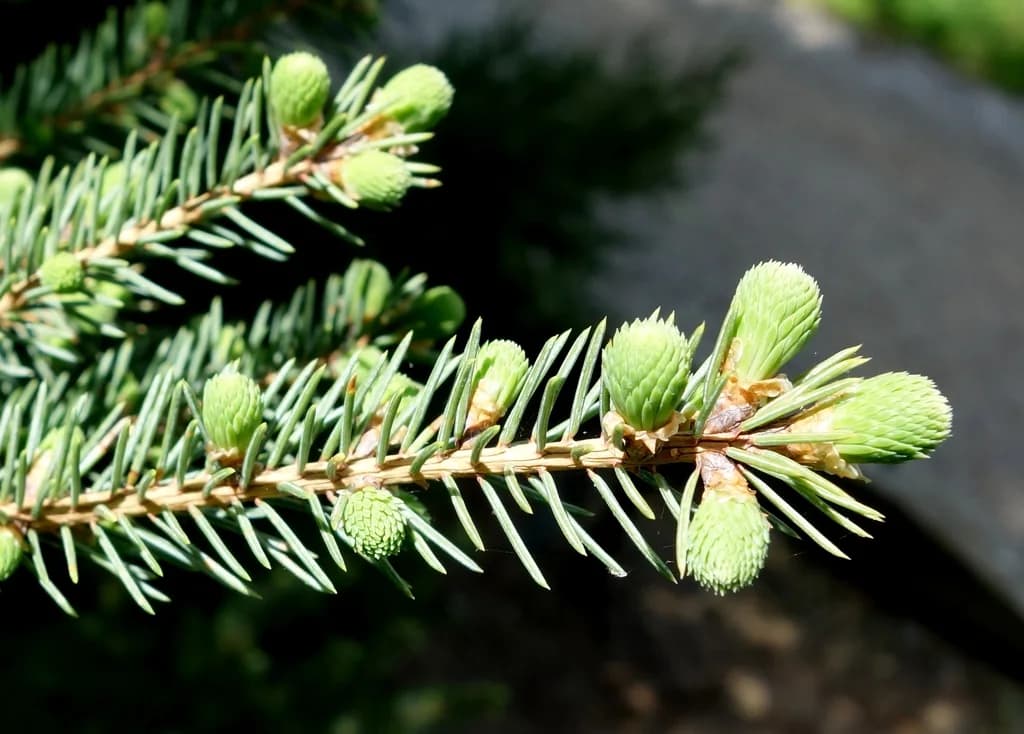
Needles and developing cones · Photo: Daderot · CC0 1.0 · Source · Converted to WebP
01 · Meet the tree
Meet black spruce.
Black spruce often belongs to bogs, peatlands, and cold northern landscapes. Its narrow crown and small persistent cones offer a meeting with slow attention. The surrounding habitat is part of that encounter, best observed from a durable, permitted route.
Needles and twigs
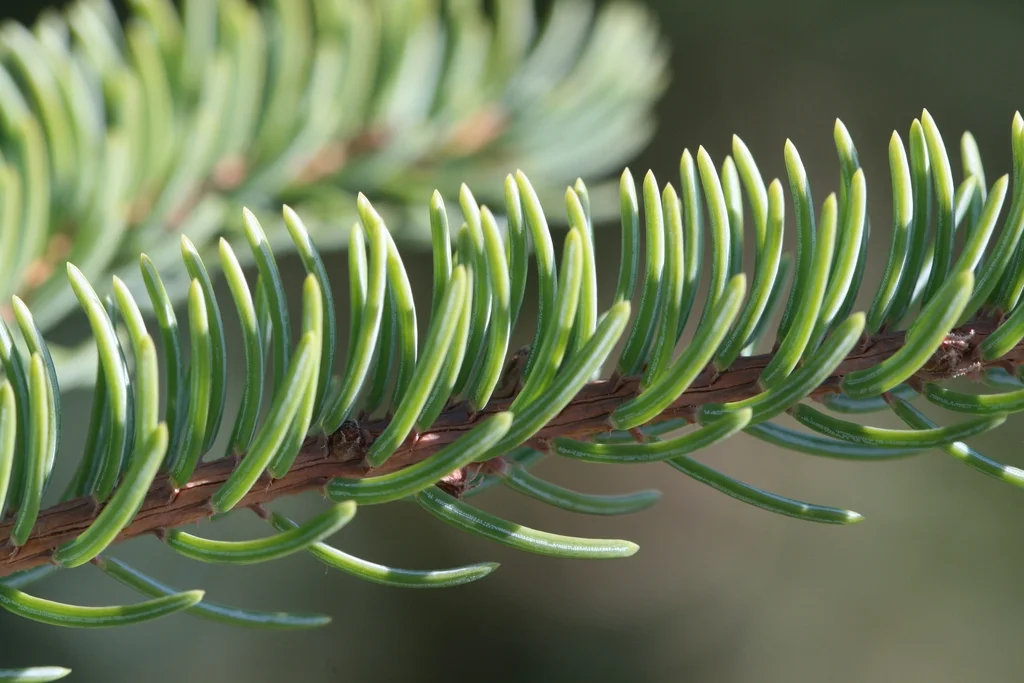
Short, dull bluish-green, four-sided needles attach singly. Fine hairs on young branchlets help distinguish black spruce from the generally hairless branchlets of white spruce. Red spruce can also have hairy branchlets; use several features.
Cones and crown
Small hanging cones can remain on the tree for several years. A narrow, spire-like crown is common, but form changes with exposure and growing conditions. Neither crown shape nor cone persistence is sufficient alone.
Place
In New England, look for black spruce in bogs, swampy peatlands, and some high mountain settings. This habitat association is a clue, not an instruction to leave a trail or cross wet, fragile ground.
Look closer.
Compare several features, and notice how age and season change their appearance. These photographs are starting points for observation; leave living leaves, needles, cones, and bark attached.
Needles · Arthur Chapman · CC BY 2.0 · Source · Converted to WebP
Watch new growth at the tips and older cones remaining through repeated visits. In winter, notice the crown against snow or sky from a suitable route. Wetland and mountain conditions change quickly; a view from a boardwalk or distant path can be a complete encounter.
Three qualities to contemplate beside the tree. Begin with what you can observe, then see what meaning emerges for you.
These tree-specific associations are new contemplative interpretations for the digital school. “Energy” here describes felt experience and symbolism; it is not a measured healing field or a promise of a particular effect.
Patience
Older cones can remain attached for several years.
A lasting detail can invite a slower pace of attention.
What could I stop rushing for a moment?
Care
The tree grows within a habitat of other living things.
Appreciation can take the form of leaving a place undisturbed.
What does care ask me to leave alone?
Quiet Endurance
An evergreen crown remains through northern seasons.
Consider a sustainable commitment that includes support and rest.
What helps me continue gently?
03 · Practice with this tree · About 5 minutes
A small detail. A patient return.
A new five-minute practice connecting patient observation with care for the habitat around black spruce. Observe from an established route.
Use a permitted boardwalk, trail, or other stable viewpoint with your usual supports. Do not step into bog vegetation or wet ground to get closer.
Choose what is already visible
Find a branch silhouette, a patch of needles, or a cone you can see comfortably. There is no need to reach, collect, or confirm every identification clue.
Rest with one detail
Let a few natural breaths pass while looking. Notice changes in light or sound without demanding that anything happen.
Leave room for the habitat
Widen your attention to the surrounding vegetation. Choose one way to care for the place, such as keeping to the route and leaving the tree untouched.
Let the visit be enough.
Spend about five minutes, or less if that suits you. Keep your device available when needed. No touching, collecting, controlled breathing, or tree-supported movement is required; leave the tree and its surroundings undisturbed.
The book teaches attention and learning from trees. This page adds a species-specific encounter; it does not claim that the original book assigned these three energies to black spruce.
Choose a tree with care.
Chapter 3 introduces three pathways and choosing an appropriate setting.
How did care for the place change the way you paid attention?
Reflect quietly or write a sentence in your own notebook. On another visit, look at the same detail again. Your experience may fit these themes, suggest something different, or simply be a few minutes of looking.