Needles
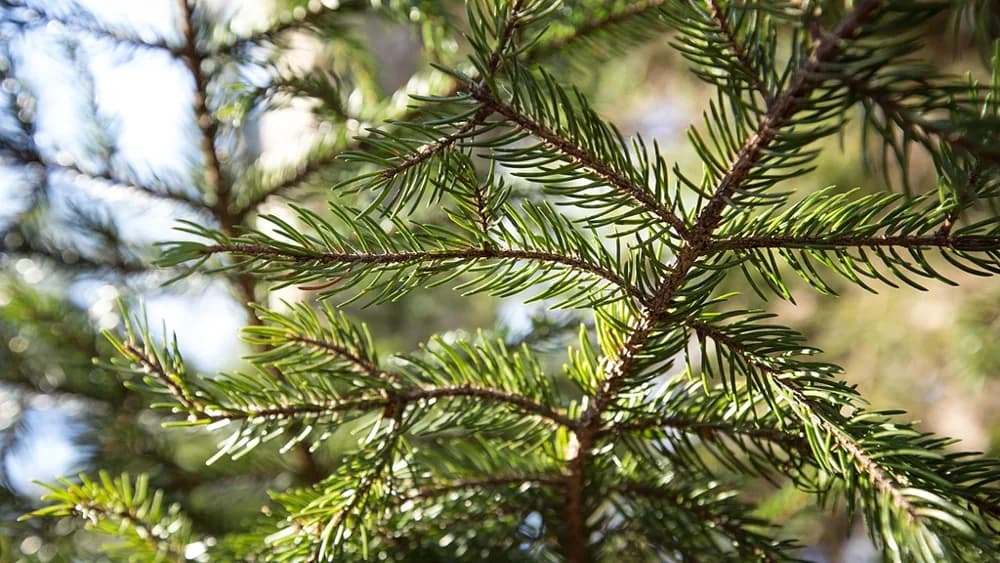
Red spruce has short, four-sided needles attached individually to twigs. Their yellow-green color is one feature to compare with cones and tree form.
Red spruce · Picea rubens
Follow a direction without rushing. Bring a worthwhile aspiration back to a grounded next step.
01 · Meet the tree
Follow a direction without rushing. Bring a worthwhile aspiration back to a grounded next step. Begin with this individual tree: its form, its setting, and what you can observe today. Let the encounter come before the meaning.
Red spruce has short, four-sided needles attached individually to twigs. Their yellow-green color is one feature to compare with cones and tree form.
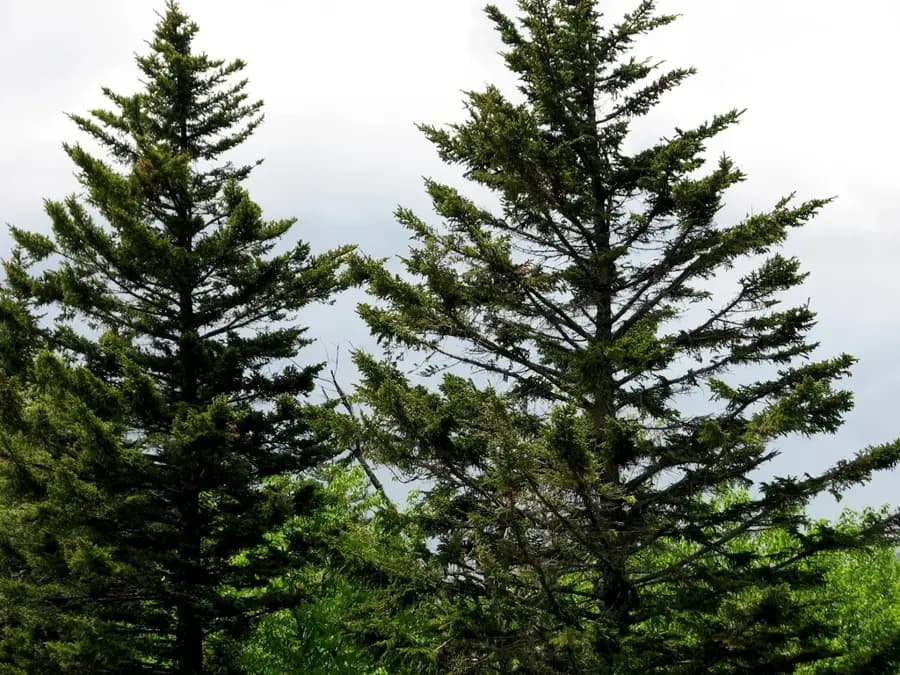
This evergreen usually has a narrow, conical crown. Notice the actual tree’s shape rather than expecting perfect symmetry.
Red spruce belongs to cool northeastern and Appalachian landscapes, including high elevations. It favors moisture and well-drained acidic soils.
Compare several features, and notice how age and season change their appearance. These photographs are starting points for observation; leave living leaves, needles, cones, and bark attached.
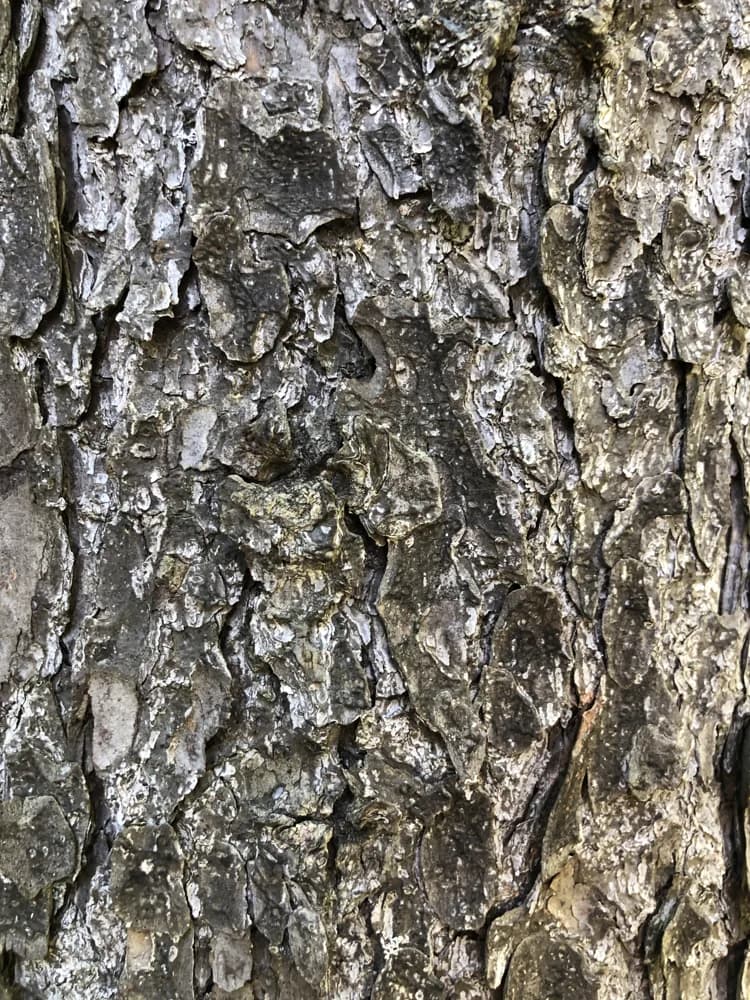
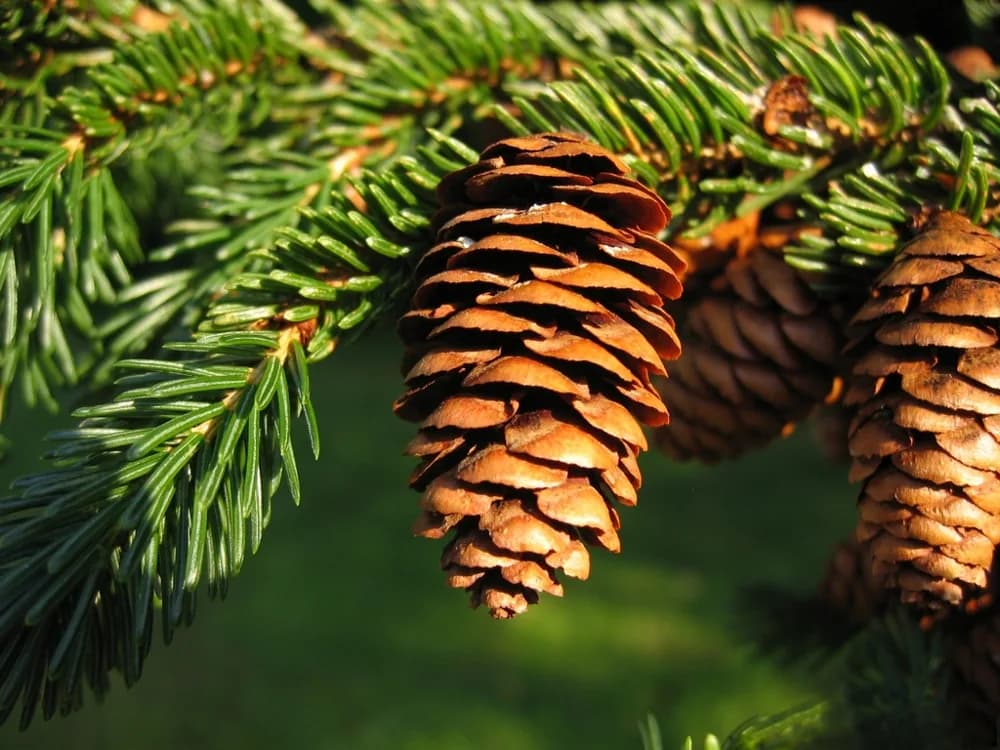
Evergreen foliage provides continuity while buds, new shoots, and cones mark change. On repeated visits, notice weather and light as well as growth. A high-elevation encounter calls for suitable weather and a permitted trail.
Botanical reference: NC State Extension’s red spruce profile. This is a starting point for observation, not a complete identification key.
02 · Energy & character
Three qualities to contemplate beside the tree. Begin with what you can observe, then see what meaning emerges for you.
These tree-specific associations are new contemplative interpretations for the digital school. “Energy” here describes felt experience and symbolism; it is not a measured healing field or a promise of a particular effect.
A conical crown gives the tree a visible overall direction.
Resolve can mean choosing a direction that is worth returning to, even when progress is uneven.
What direction matters to you?
The crown rises above branches arranged along the trunk.
Let upward growth prompt a reflection on aspiration. Your goal can be meaningful without becoming a demand for perfection.
What are you reaching toward?
The crown spreads outward as well as upward.
Consider what supports your aspiration alongside what advances it. Rest and adjustment can belong to the same effort.
What support does your goal need?
03 · Practice with this tree · About 5 minutes
A new observation practice exploring resolve, aspiration, balance beside red spruce. Read once, then spend a few minutes with the tree.
Open outdoor practice →Choose a stable viewpoint with your usual supports. Notice contact with the ground or seat; no balancing pose is needed.
Move your gaze comfortably along the trunk and branches. You need not look directly overhead or strain your neck.
Bring to mind one goal that matters. Notice what makes it worthwhile and what conditions could support it.
Name one action small enough for your actual day. Finish by returning attention to the tree and surrounding place.
Spend about five minutes, or less if that suits you. Keep your device available when needed. No touching, collecting, controlled breathing, or tree-supported movement is required; leave the tree and its surroundings undisturbed.
04 · Roots in the book
The book teaches attention and learning from trees. This page adds a species-specific encounter; it does not claim that the original book assigned these three energies to spruce.
Chapter 3 introduces three pathways and choosing an appropriate setting.
Read the chapter companionOriginal: printed pp. 13–17Chapter 4 encourages a sustainable beginning with five or ten minutes.
Read the chapter companionOriginal: printed p. 28One-pointed focus and aspiration for excellence, perseverance, and balance and optimization connect this new practice with Chapter 6’s invitations to learn from trees.
Explore Wisdom and WonderOriginal: Chapter 6, printed pp. 96–12405 · Notice for yourself
Reflect quietly or write a sentence in your own notebook. On another visit, look at the same detail again. Your experience may fit these themes, suggest something different, or simply be a few minutes of looking.