Needles and twigs
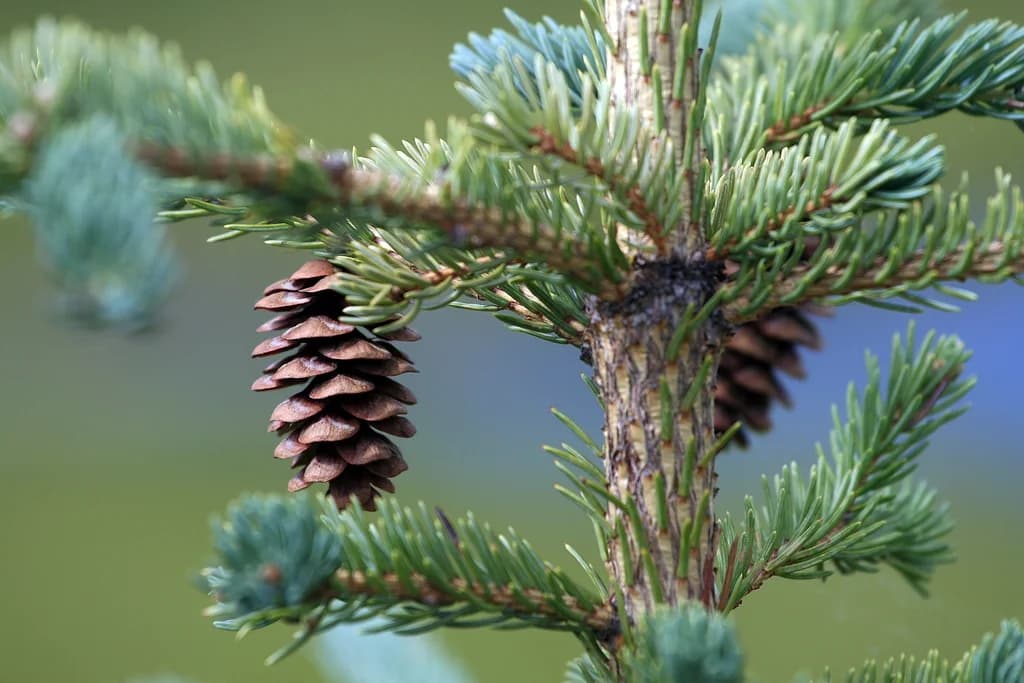
Short needles attach singly around the twig rather than in pine-like bundles. They are often blue-green, with a roughly four-sided cross-section. Branchlets are generally hairless; color alone cannot separate spruce species.
 Tree Yoga SchoolPractice with the living world
White spruce · Picea glauca
Look between the needles. Let one small detail open a wider view.
01 · Meet the tree
White spruce belongs to the northern woods, with individual needles arranged around twigs and hanging seed cones. A pale cast to the foliage can invite a slower look at color, light, and the spaces within a crown.
Short needles attach singly around the twig rather than in pine-like bundles. They are often blue-green, with a roughly four-sided cross-section. Branchlets are generally hairless; color alone cannot separate spruce species.
Hanging, slender cylindrical seed cones have thin scales with rounded, smooth margins. Mature bark is thin and scaly. Compare twigs and cones as well as foliage; white, red, and black spruce can be difficult to distinguish.
White spruce is a northern North American forest tree, including New England. This library follows Native Plant Trust in using Picea glauca, matching the champion-register name. NC State currently lists the same white spruce under Picea laxa.
Compare several features, and notice how age and season change their appearance. These photographs are starting points for observation; leave living leaves, needles, cones, and bark attached.
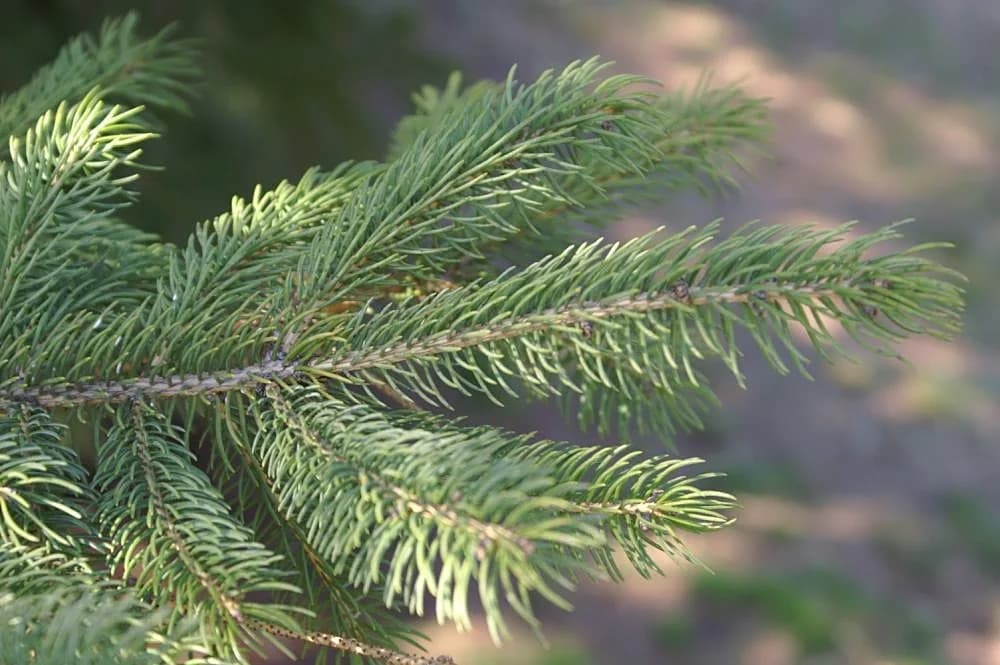
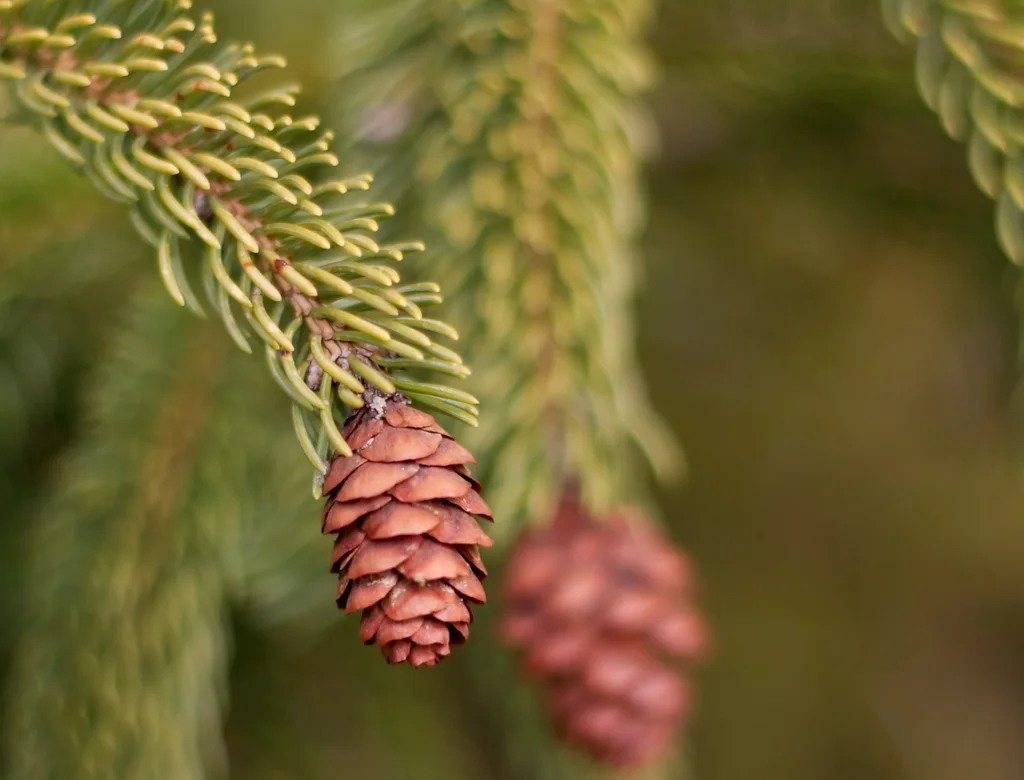
Observe fresh spring tips, summer needle color, and maturing hanging cones when present. In winter, look at the relation between crown, sky, and nearby trees. Older needles eventually fall; remaining evergreen foliage is not evidence that the tree never changes.
Chapter 4 invites a practice of returning across seasons. Read When and Where Try the seasonal observation practice
Botanical reference: Native Plant Trust Go Botany white spruce profile. This is a starting point for observation, not a complete identification key.
Explore the habitat: NC State Extension: white spruce, listed as Picea laxa.
02 · Energy & character
Three qualities to contemplate beside the tree. Begin with what you can observe, then see what meaning emerges for you.
These tree-specific associations are new contemplative interpretations for the digital school. “Energy” here describes felt experience and symbolism; it is not a measured healing field or a promise of a particular effect.
A single twig reveals individual needles and spaces.
Let clarity begin with describing what is visible.
What can I describe before interpreting?
Light reaches the eye through gaps in the crown.
Attention can include openings as well as objects.
Where is there already a little room?
Several spruce species have similar evergreen outlines.
Looking carefully can include leaving a question unresolved.
What do I still need to learn?
03 · Practice with this tree · About 5 minutes
A new five-minute observation practice exploring clarity and spaciousness beside white spruce, grounded in the book’s invitation to practice presence.
Open outdoor practiceSit or stand with your usual supports on a permitted route. Choose foliage you can see without leaning into branches or straining your neck.
Silently name a color, an angle, or a pattern of needles. Keep the description simple; you do not have to settle an identification today.
Move your attention to a patch of sky or light between branches. Let your view alternate gently between the branch and the space around it.
Choose one detail to recognize on your next visit, or one question to research later. Finish by including the whole setting.
Spend about five minutes, or less if that suits you. Keep your device available when needed. No touching, collecting, controlled breathing, or tree-supported movement is required; leave the tree and its surroundings undisturbed.
04 · Roots in the book
The book teaches attention and learning from trees. This page adds a species-specific encounter; it does not claim that the original book assigned these three energies to white spruce.
Chapter 3 introduces three pathways and choosing an appropriate setting.
Read the chapter companionOriginal: printed pp. 13–17Chapter 4 encourages a sustainable beginning with five or ten minutes.
Read the chapter companionOriginal: printed p. 28Presence, one-pointed focus, and balance and optimization connect this new practice with Chapter 6’s invitations to learn from trees.
Explore Wisdom and WonderOriginal: Chapter 6, printed pp. 96–12405 · Notice for yourself
Reflect quietly or write a sentence in your own notebook. On another visit, look at the same detail again. Your experience may fit these themes, suggest something different, or simply be a few minutes of looking.