Leaves
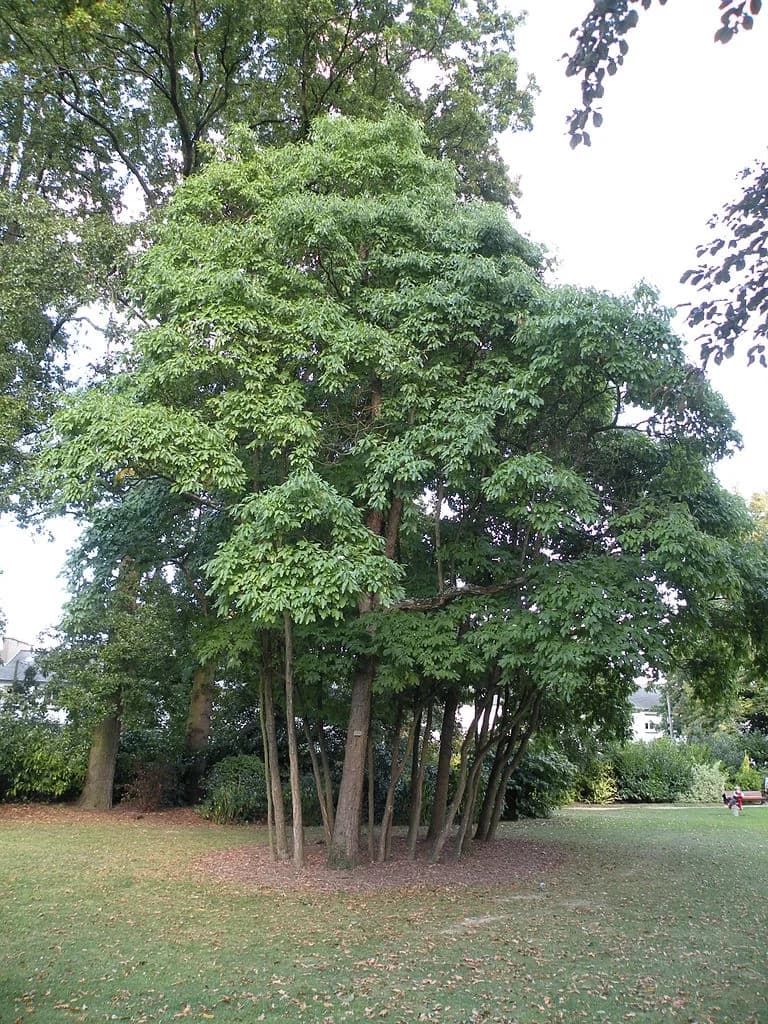
One sassafras can carry unlobed, mitten-shaped, and three-lobed leaves. Leaves are alternate. Not every twig will display every shape.
Sassafras · Sassafras albidum
Make room for more than one shape. Notice a difference without needing to resolve it.
01 · Meet the tree
A first impression is only a beginning. Give this encounter enough time for a second detail to appear. The practice is to look carefully and allow your description to become more generous.
One sassafras can carry unlobed, mitten-shaped, and three-lobed leaves. Leaves are alternate. Not every twig will display every shape.
Small yellow-green flowers appear in spring. Female trees can bear blue fruits held in red cups on red stalks. Observe without tasting or collecting.
Native to eastern North America, sassafras occurs in woods, edges, and old fields. Root sprouts can form colonies. Mature bark develops furrows.
Compare several features, and notice how age and season change their appearance. These photographs are starting points for observation; leave living leaves, needles, cones, and bark attached.
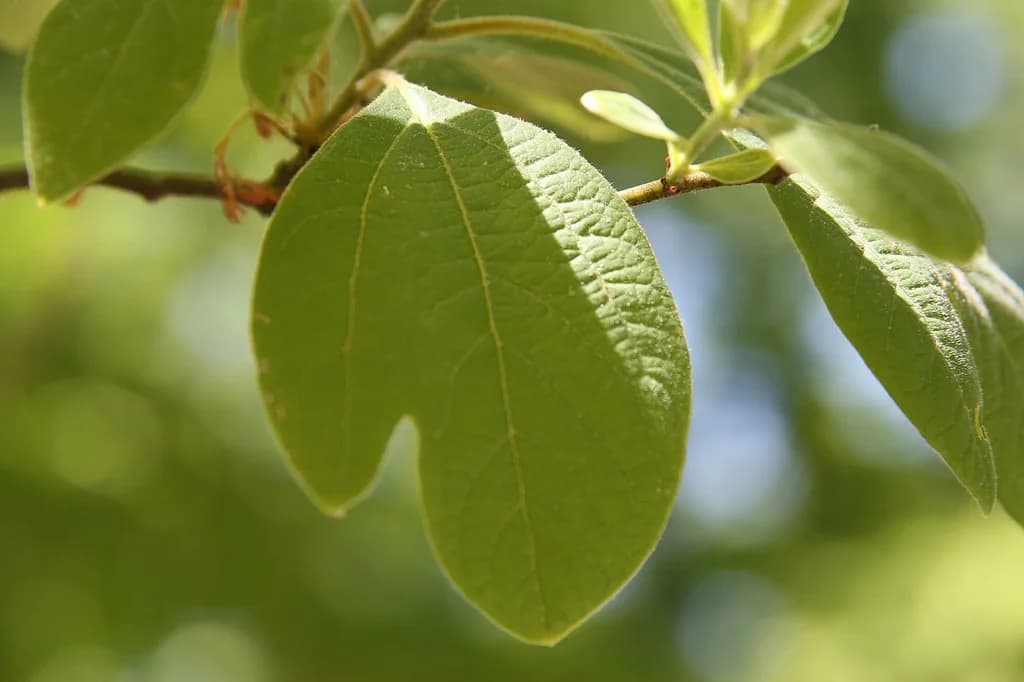
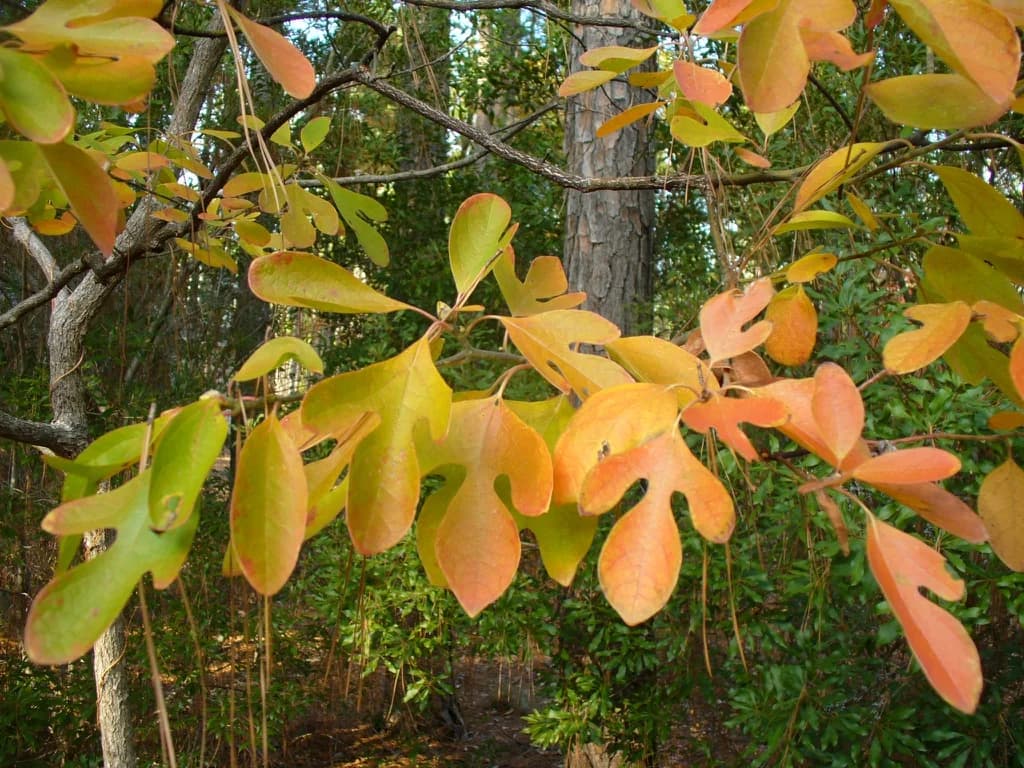
Look for spring flowers, then compare summer leaf outlines. Autumn foliage can be yellow, orange, or red. Winter offers buds, branches, and bark to observe when leaf shapes are absent.
Botanical reference: NC State Extension’s sassafras profile. This is a starting point for observation, not a complete identification key.
02 · Energy & character
Three qualities to contemplate beside the tree. Begin with what you can observe, then see what meaning emerges for you.
These tree-specific associations are new contemplative interpretations for the digital school. “Energy” here describes felt experience and symbolism; it is not a measured healing field or a promise of a particular effect.
Different leaf outlines may be visible on the same tree.
Let variation suggest that there may be several workable ways to approach a situation. You need not choose immediately.
What other possibility deserves a look?
The leaf shapes before you need not match one imagined ideal.
Practice describing a difference before judging it. Acceptance here means giving an observation room to be accurate.
What can you acknowledge as it is?
A second leaf may add something to your first impression.
Keep an initial conclusion lightly enough that new evidence can change it.
What could a second look teach you?
03 · Practice with this tree · About 5 minutes
A new observation practice exploring acceptance through comparison. About five minutes is enough; a shorter encounter is welcome.
Open outdoor practice →Choose a permitted place and a supported position. Keep branches and roots undisturbed.
Choose a leaf, twig, or bark pattern. Silently name its outline in ordinary words. No botanical vocabulary is required.
Compare another visible detail. Notice one similarity and one difference without ranking them. In winter, compare branch shapes instead.
Breathe naturally. Carry one curious question into your day and allow yourself time to learn the answer.
Spend about five minutes, or less if that suits you. Keep your device available when needed. No touching, collecting, controlled breathing, or tree-supported movement is required; leave the tree and its surroundings undisturbed.
04 · Roots in the book
The book teaches attention and learning from trees. This page adds a species-specific encounter; it does not claim that the original book assigned these three energies to sassafras.
Chapter 3 introduces three pathways and choosing an appropriate setting.
Read the chapter companionOriginal: printed pp. 13–17Chapter 4 encourages a sustainable beginning with five or ten minutes.
Read the chapter companionOriginal: printed p. 28Acceptance, adaptability, and presence connect this new practice with Chapter 6’s invitations to learn from trees.
Explore Wisdom and WonderOriginal: Chapter 6, printed pp. 96–12405 · Notice for yourself
Reflect quietly or write a sentence in your own notebook. On another visit, look at the same detail again. Your experience may fit these themes, suggest something different, or simply be a few minutes of looking.