Leaves
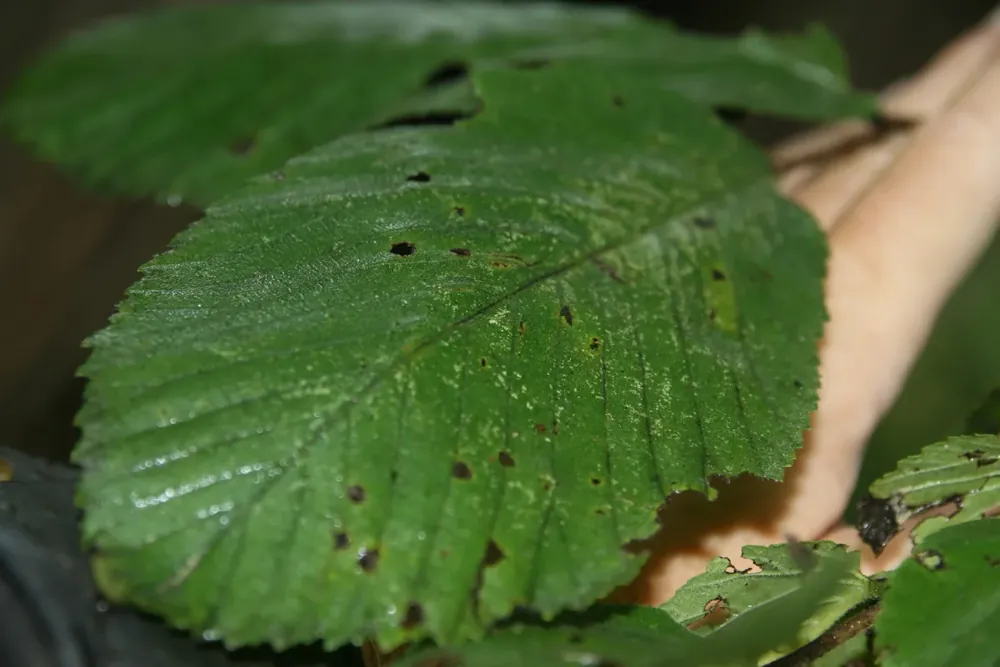
Alternate leaves have uneven bases, doubly toothed margins, and a rough upper surface. The underside is paler and hairy. Compare several features with other elms; do not strip a leaf to test its texture.
Slippery Elm · Ulmus rubra
Let a close look be gentle. You can notice texture without touching it.
01 · Meet the tree
Slippery elm offers a useful surprise: its name sounds smooth, while its leaves have a rough surface. Use that contrast as a prompt to loosen expectations and look carefully. Gentleness here belongs to the way you attend, not to a claim about a healing effect.
Alternate leaves have uneven bases, doubly toothed margins, and a rough upper surface. The underside is paler and hairy. Compare several features with other elms; do not strip a leaf to test its texture.
Small greenish-red flowers form clusters in late winter or early spring, followed by flat, winged fruits called samaras. Seasonal timing varies with location and weather.
Gray bark develops narrow ridges and shallow furrows. Slippery elm is susceptible to Dutch elm disease. Leave bark attached; observation does not require harvesting or exposing the reddish inner bark.
Compare several features, and notice how age and season change their appearance. These photographs are starting points for observation; leave living leaves, needles, cones, and bark attached.
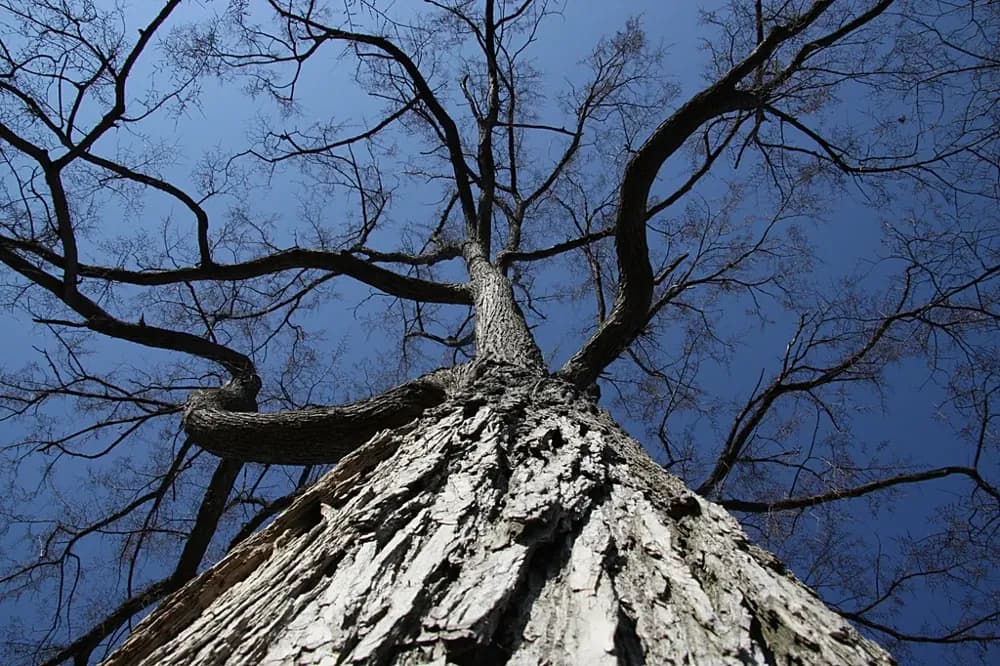
Early flowers and spring samaras can precede the full summer crown. Autumn foliage turns dull yellow; winter reveals twigs and bark. Look for what is present, and let a return visit add another part of the picture.
Botanical reference: NC State Extension’s slippery elm profile. This is a starting point for observation, not a complete identification key.
02 · Energy & character
Three qualities to contemplate beside the tree. Begin with what you can observe, then see what meaning emerges for you.
These tree-specific associations are new contemplative interpretations for the digital school. “Energy” here describes felt experience and symbolism; it is not a measured healing field or a promise of a particular effect.
Fine details remain visible without removing leaves or bark.
Try an attentive approach that asks less of the tree and of yourself. Looking can be enough.
How can your attention become less demanding?
An uneven leaf base and repeated teeth interrupt a simple outline.
Notice a detail that a familiar name might lead you to overlook. Let the particular tree correct your expectation.
What becomes clear when you slow down?
Bark remains part of a living trunk, with its own texture and pattern.
Value something without requiring it to provide a product or an answer. Care can mean leaving it intact.
What can you leave better protected?
03 · Practice with this tree · About 5 minutes
An original five-minute practice of visual texture and gentle attention. Touch is optional in Tree Yoga; this practice uses looking alone.
Open outdoor practice →Sit or stand on stable, permitted ground using your normal supports. Choose a patch of bark or an attached leaf you can see comfortably, clear of damaged branches.
Follow one ridge, vein, or toothed edge with your eyes. Notice light and shadow across it. Leave the tree untouched and let your breath continue naturally.
When your attention wanders, notice where it went and come back gently. Treat each return as another look, without scoring your concentration.
Widen your view to the tree and its surroundings. Consider one ordinary task you could approach with less pressure. Choose a kinder pace or smaller step, then finish.
Spend about five minutes, or less if that suits you. Keep your device available when needed. No touching, collecting, controlled breathing, or tree-supported movement is required; leave the tree and its surroundings undisturbed.
04 · Roots in the book
The book teaches attention and learning from trees. This page adds a species-specific encounter; it does not claim that the original book assigned these three energies to slippery elm.
Chapter 3 introduces three pathways and choosing an appropriate setting.
Read the chapter companionOriginal: printed pp. 13–17Chapter 4 encourages a sustainable beginning with five or ten minutes.
Read the chapter companionOriginal: printed p. 28Presence, one-pointed focus, and compassion connect this new practice with Chapter 6’s invitations to learn from trees.
Explore Wisdom and WonderOriginal: Chapter 6, printed pp. 96–12405 · Notice for yourself
Reflect quietly or write a sentence in your own notebook. On another visit, look at the same detail again. Your experience may fit these themes, suggest something different, or simply be a few minutes of looking.