Foliage
Opposite scale-like leaves overlap in flattened sprays. Dark green upper surfaces contrast with pale markings beneath, often described as butterfly-shaped. Observe an accessible shoot or naturally fallen spray without tearing foliage.
 Tree Yoga SchoolPractice with the living world
Western redcedar · Thuja plicata
Follow a small overlapping pattern. Consider the care that makes continuity possible.
Optional · saved in this browser on this device.
01 · Meet the tree
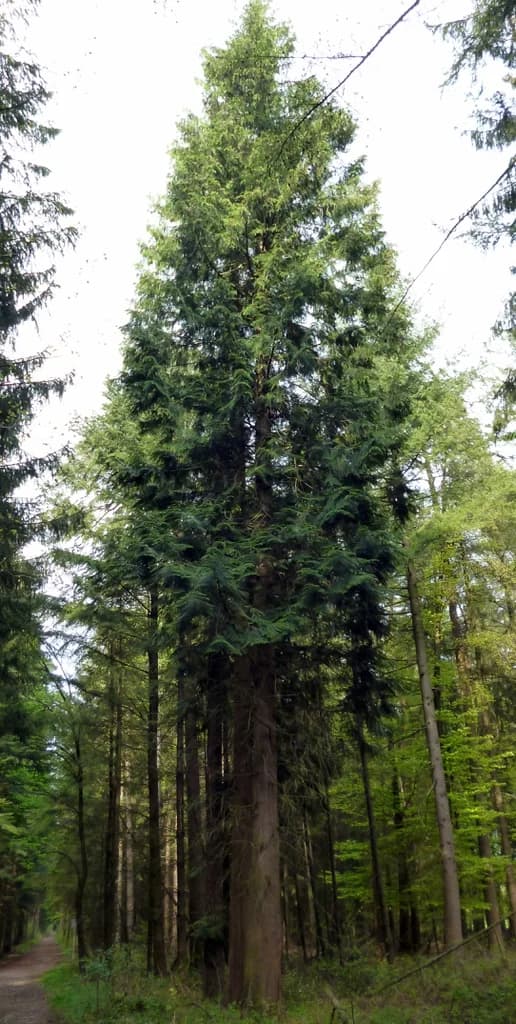
Western redcedar carries flattened sprays of tiny scale leaves and bark that becomes fibrous with age. Look closely at the pattern without pulling it apart. The tree and its moist woodland setting offer a place to practice attentive care.
Opposite scale-like leaves overlap in flattened sprays. Dark green upper surfaces contrast with pale markings beneath, often described as butterfly-shaped. Observe an accessible shoot or naturally fallen spray without tearing foliage.
Small seed cones have visible scales and mature to brown. Bark is gray to reddish-brown and fibrous, separating into strips with age. Leave every strip attached; the appearance is enough for observation.
A western North American tree associated with the Pacific Northwest and other moist western forests, western redcedar belongs to Thuja in the cypress family. It is distinct from northern white-cedar, Thuja occidentalis, and eastern redcedar, Juniperus virginiana.
Compare several features, and notice how age and season change their appearance. These photographs are starting points for observation; leave living leaves, needles, cones, and bark attached.
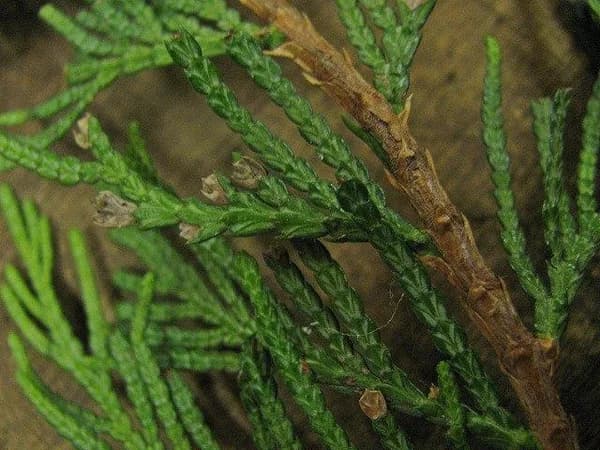
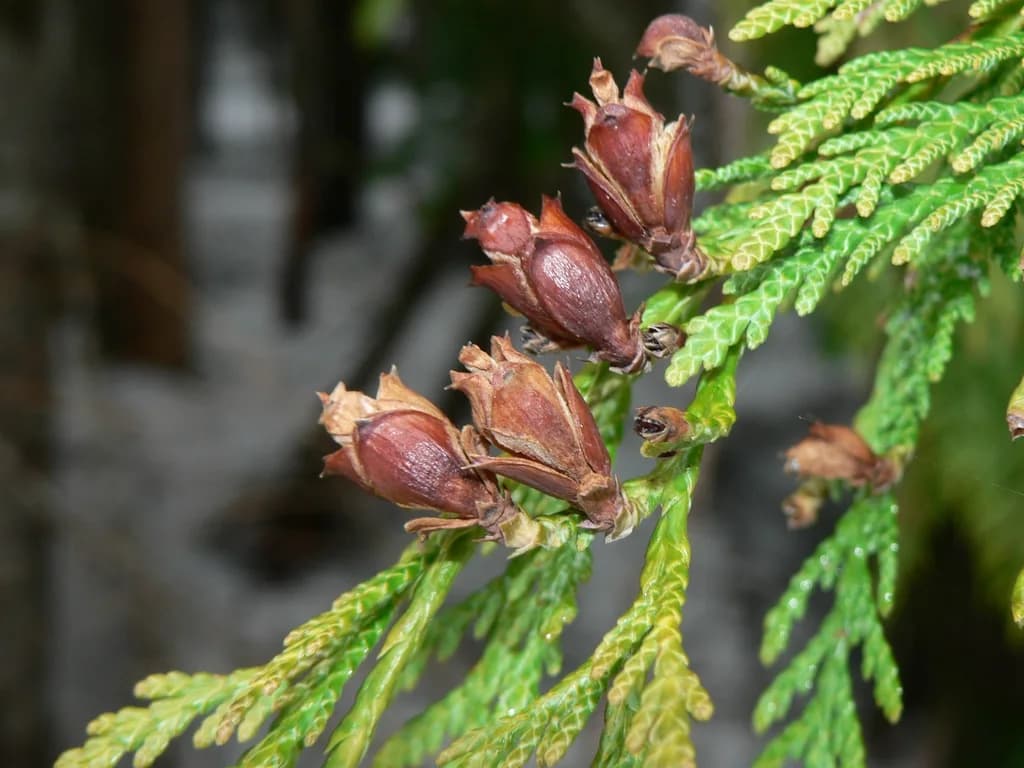
Look for fresh foliage at spray tips and small developing cones when visible. Older foliage can be shed while the crown remains green. On return visits, notice light, soil moisture from the path, and nearby plants; do not peel bark or crush leaves to create a sensory experience.
Chapter 4 invites a practice of returning across seasons. Read When and Where Try the seasonal observation practice
Botanical reference: NC State Extension’s western redcedar profile. This is a starting point for observation, not a complete identification key.
02 · Energy & character
Three qualities to contemplate beside the tree. Begin with what you can observe, then see what meaning emerges for you.
These tree-specific associations are new contemplative interpretations for the digital school. “Energy” here describes felt experience and symbolism; it is not a measured healing field or a promise of a particular effect.
Small leaves overlap to form a larger leafy spray.
Consider how small acts can contribute to ongoing support.
What modest act of care can I repeat?
The upper and lower surfaces of a spray differ.
A second viewpoint can add to an initial understanding.
What becomes visible from another angle?
An evergreen crown changes a little at a time.
Let continuity include maintenance and renewal.
What helps me keep returning?
03 · Practice with this tree · About 5 minutes
A new observation practice exploring care and continuity beside western redcedar. No contact with foliage or bark is required.
Open outdoor practiceStay on a permitted, stable route with your usual supports. Find a spray or branch outline within comfortable view.
Follow the way small scale leaves create a wider pattern. If foliage is distant, follow visible branching instead.
Notice how light changes the detail from where you are. You can remain seated or still; there is no need to turn or bend a branch.
Consider one small act of care for yourself, another person, or this place. Let the intention remain modest and finish without taking anything from the tree.
Spend about five minutes, or less if that suits you. Keep your device available when needed. No touching, collecting, controlled breathing, or tree-supported movement is required; leave the tree and its surroundings undisturbed.
04 · Roots in the book
The book teaches attention and learning from trees. This page adds a species-specific encounter; it does not claim that the original book assigned these three energies to western redcedar.
Chapter 3 introduces three pathways and choosing an appropriate setting.
Read the chapter companionOriginal: printed pp. 13–17Chapter 4 encourages a sustainable beginning with five or ten minutes.
Read the chapter companionOriginal: printed p. 28Presence, perseverance, and unconditional love connect this new practice with Chapter 6’s invitations to learn from trees.
Explore Wisdom and WonderOriginal: Chapter 6, printed pp. 96–12405 · Notice for yourself
Reflect quietly or write a sentence in your own notebook. On another visit, look at the same detail again. Your experience may fit these themes, suggest something different, or simply be a few minutes of looking.