Bark
Older trunks develop long strips of bark that lift away at their ends. Young trees can have smoother bark. Leave loose-looking strips attached.
Shagbark hickory · Carya ovata
Let the layers hold your attention. Give something worthwhile time to develop.
01 · Meet the tree
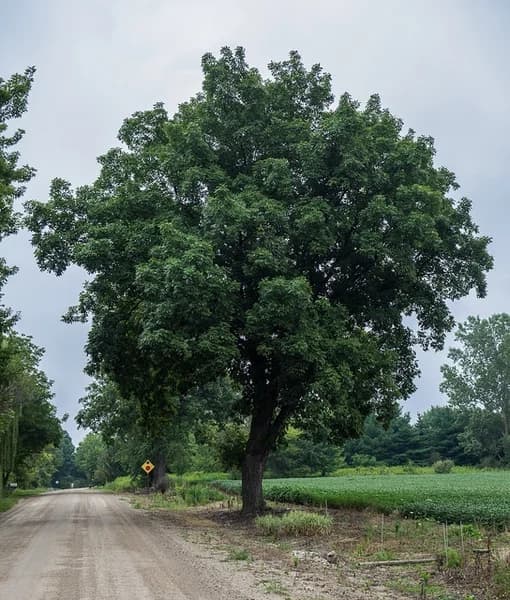
Some encounters begin with an unmistakable texture. Others begin with a young trunk whose familiar features have yet to develop. Meet the tree before you in its present stage.
Older trunks develop long strips of bark that lift away at their ends. Young trees can have smoother bark. Leave loose-looking strips attached.
Alternate, compound leaves usually have five leaflets, sometimes seven. The nuts sit inside thick husks that divide into four sections. Use several features to distinguish hickories.
Shagbark hickory belongs to the walnut family and is native across much of eastern and central North America. It occurs in woodlands and provides food for wildlife.
Compare several features, and notice how age and season change their appearance. These photographs are starting points for observation; leave living leaves, needles, cones, and bark attached.
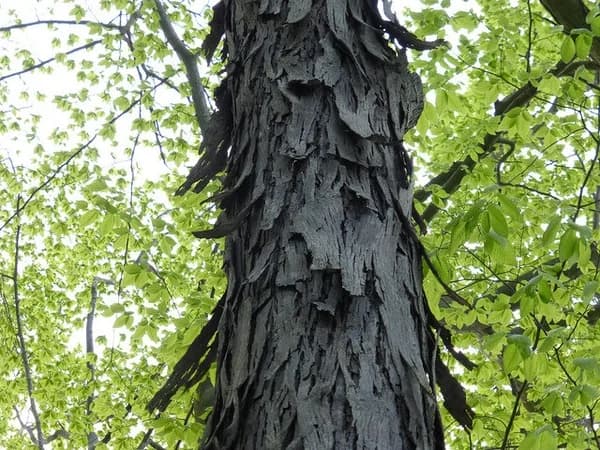
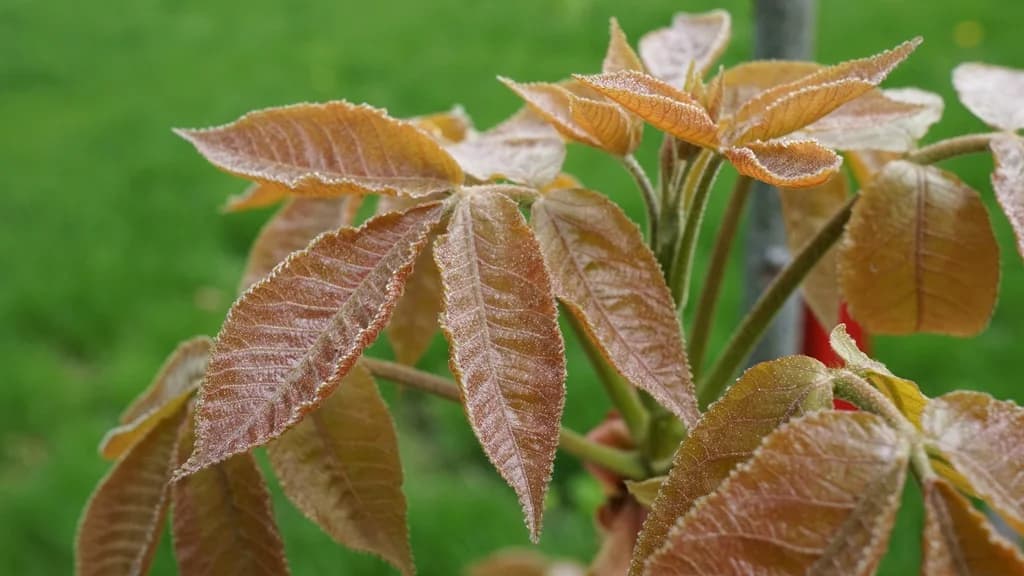
Spring brings unfolding compound leaves and flowers. Watch the full canopy in summer, then yellow foliage and ripening nuts in autumn. Winter offers clear views of bark and buds; mature shaggy bark is not present on every tree.
Botanical reference: NC State Extension’s shagbark hickory profile. This is a starting point for observation, not a complete identification key.
02 · Energy & character
Three qualities to contemplate beside the tree. Begin with what you can observe, then see what meaning emerges for you.
These tree-specific associations are new contemplative interpretations for the digital school. “Energy” here describes felt experience and symbolism; it is not a measured healing field or a promise of a particular effect.
The bark on a young tree may differ from the mature form in a photograph.
Let an unfinished appearance prompt patience with something still developing in your life. Name the stage you are actually in.
What are you asking to be finished before it has had time?
Attached bark strips create overlapping lines along the trunk.
Use the visible layers as a metaphor for experience carried forward. You can recognize earlier work while making room for a next step.
Which earlier effort can you build on?
Details can be observed while bark, buds, and nuts remain where they are.
Practice leaving room for a living place to continue beyond your visit. Attention can be a form of participation that asks very little of the tree.
What would careful attention look like here?
03 · Practice with this tree · About 5 minutes
An original five-minute practice connecting a close look at bark with patience for an ongoing effort.
Open outdoor practice →Find stable, permitted ground away from falling nuts or damaged branches. Sit or stand with support and keep your gaze at a comfortable height.
Notice a bark strip, a furrow, or a line of buds. Follow its edge with your eyes. Keep bark attached and leave nuts for the surrounding life.
Bring one ongoing effort to mind. Describe where it stands in a plain sentence. Let that description be accurate without asking it to be impressive.
Name one small action that would help the effort develop. Give it a realistic place in your day, then return to the tree for a final look.
Spend about five minutes, or less if that suits you. Keep your device available when needed. No touching, collecting, controlled breathing, or tree-supported movement is required; leave the tree and its surroundings undisturbed.
04 · Roots in the book
The book teaches attention and learning from trees. This page adds a species-specific encounter; it does not claim that the original book assigned these three energies to shagbark hickory.
Chapter 3 introduces three pathways and choosing an appropriate setting.
Read the chapter companionOriginal: printed pp. 13–17Chapter 4 encourages a sustainable beginning with five or ten minutes.
Read the chapter companionOriginal: printed p. 28Perseverance, acceptance, and presence connect this new practice with Chapter 6’s invitations to learn from trees.
Explore Wisdom and WonderOriginal: Chapter 6, printed pp. 96–12405 · Notice for yourself
Reflect quietly or write a sentence in your own notebook. On another visit, look at the same detail again. Your experience may fit these themes, suggest something different, or simply be a few minutes of looking.