Leaves
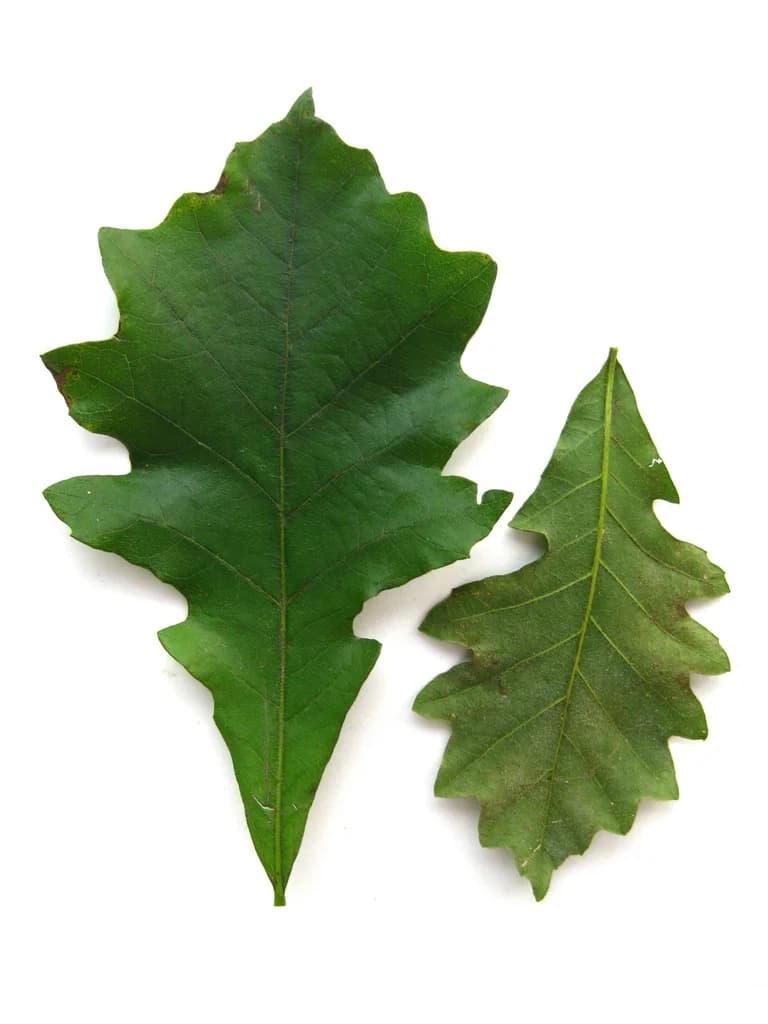
Alternate, oblong leaves have shallow rounded lobes or coarse teeth, with a darker upper surface and a pale, hairy underside. Compare several features; white oak and chestnut oak can look similar.
Swamp white oak · Quercus bicolor
Notice two sides of one leaf. Make room for a fuller view.
01 · Meet the tree
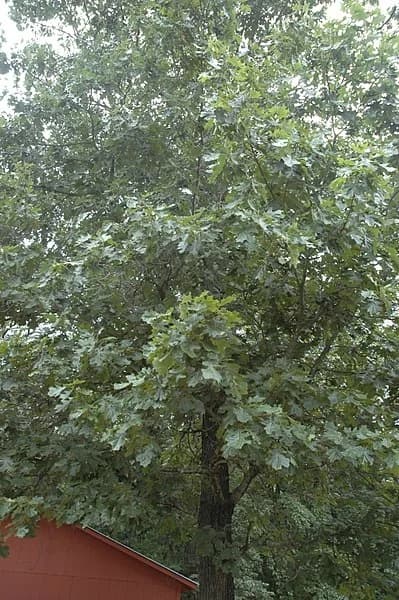
Swamp white oak's leaves are darker above and pale beneath. Begin with what the tree makes visible from your permitted place. A second perspective can deepen an encounter without requiring you to disturb it.
Alternate, oblong leaves have shallow rounded lobes or coarse teeth, with a darker upper surface and a pale, hairy underside. Compare several features; white oak and chestnut oak can look similar.
Acorns grow on conspicuously long stalks. Older bark develops ridges and furrows, and branch bark may peel naturally. Leave living bark and developing acorns attached.
Native to eastern and central North America, this species occurs in lowlands, floodplains, and along streams. It can tolerate seasonal flooding and drier periods. Choose firm ground rather than following it into wet habitat.
Compare several features, and notice how age and season change their appearance. These photographs are starting points for observation; leave living leaves, needles, cones, and bark attached.
Spring reveals flowers and new leaves. Summer makes the contrasting leaf surfaces easier to see, especially when wind turns them. Autumn brings brown acorns and changing foliage. Winter reveals branch form and bark. Local conditions determine what is visible on a visit.
Botanical reference: NC State Extension’s swamp white oak profile. This is a starting point for observation, not a complete identification key.
02 · Energy & character
Three qualities to contemplate beside the tree. Begin with what you can observe, then see what meaning emerges for you.
These tree-specific associations are new contemplative interpretations for the digital school. “Energy” here describes felt experience and symbolism; it is not a measured healing field or a promise of a particular effect.
The tree grows within a particular combination of water, soil, and light.
Use the surroundings as a prompt to recognize your own conditions. An adjustment can support a commitment rather than abandon it.
What adjustment fits today?
One trunk supports leaves whose positions change in the breeze.
Consider an intention you can keep while allowing your approach to change. Steadiness need not mean rigidity.
What would you like to remain faithful to?
A leaf can show contrasting surfaces as its angle changes.
Let the contrast prompt another view of a familiar matter. You can acknowledge a partial view before reaching a conclusion.
What other perspective could you consider?
03 · Practice with this tree · About 5 minutes
An original five-minute practice in steadiness and changing perspective beside a swamp white oak.
Open outdoor practice →Use a permitted path or seat with a comfortable view. Remain clear of unstable ground and damaged branches. Sitting, standing, or observing at a distance are equally welcome.
Notice one light and one dark area of foliage or bark. If a leaf turns naturally, watch its two surfaces. There is no need to pick or turn a living leaf.
Name what you can actually see, then notice what remains hidden. Let your breathing stay ordinary. Allow uncertainty without rushing to complete the picture.
Name an intention you value and a small change that could support it today. Return to the wider tree and finish at your own pace.
Spend about five minutes, or less if that suits you. Keep your device available when needed. No touching, collecting, controlled breathing, or tree-supported movement is required; leave the tree and its surroundings undisturbed.
04 · Roots in the book
The book teaches attention and learning from trees. This page adds a species-specific encounter; it does not claim that the original book assigned these three energies to swamp white oak.
Chapter 3 introduces three pathways and choosing an appropriate setting.
Read the chapter companionOriginal: printed pp. 13–17Chapter 4 encourages a sustainable beginning with five or ten minutes.
Read the chapter companionOriginal: printed p. 28Adaptability, discernment, and acceptance connect this new practice with Chapter 6’s invitations to learn from trees.
Explore Wisdom and WonderOriginal: Chapter 6, printed pp. 96–12405 · Notice for yourself
Reflect quietly or write a sentence in your own notebook. On another visit, look at the same detail again. Your experience may fit these themes, suggest something different, or simply be a few minutes of looking.