Leaves and bark
Alternate leaves have finely toothed edges. Young bark is relatively smooth with visible lenticels; older bark develops dark, flaky plates. Check several features before naming the tree.
Black cherry · Prunus serotina
Notice the life around one tree. Let your attention make room for another presence.
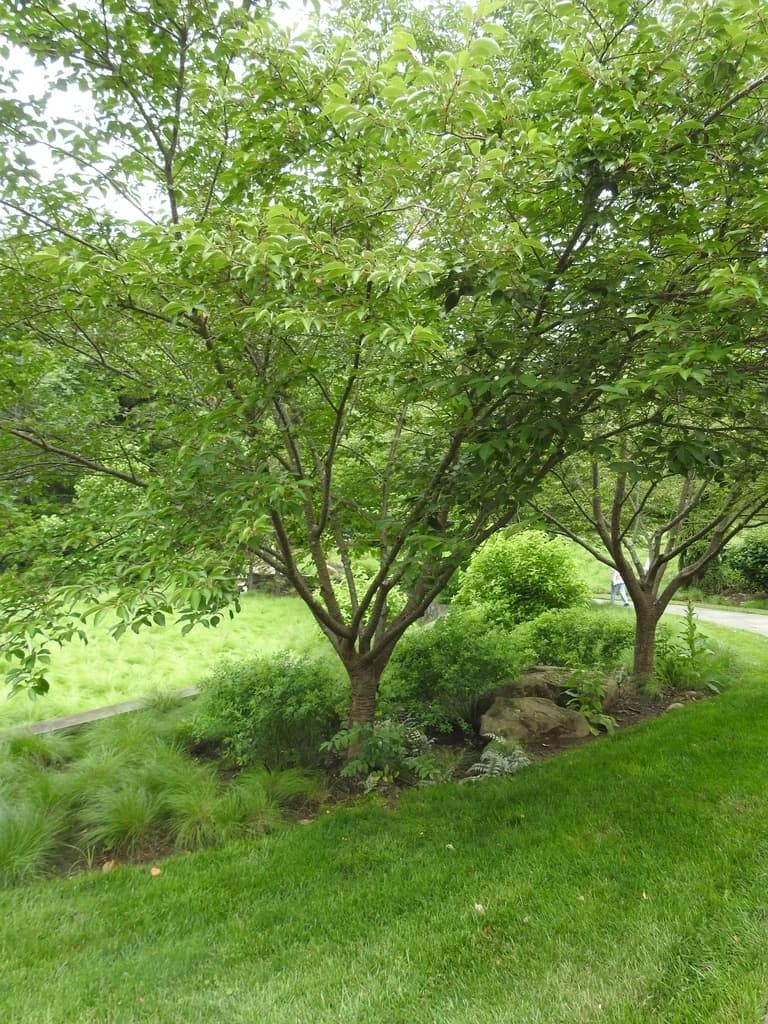
01 · Meet the tree
Begin with the tree, then allow a little of its surroundings into the encounter. A sound, a shadow, or an empty branch can be enough. Wildlife does not need to appear for this practice to matter.
Alternate leaves have finely toothed edges. Young bark is relatively smooth with visible lenticels; older bark develops dark, flaky plates. Check several features before naming the tree.
Small white flowers appear in elongated clusters. Fruits change from red toward dark purple or black as they ripen. Observe without tasting, chewing, or collecting any part of the tree.
A member of the rose family widespread in eastern North America, black cherry occurs in woods and open edges. Flowers serve pollinators and fruits feed birds and other wildlife.
Compare several features, and notice how age and season change their appearance. These photographs are starting points for observation; leave living leaves, needles, cones, and bark attached.
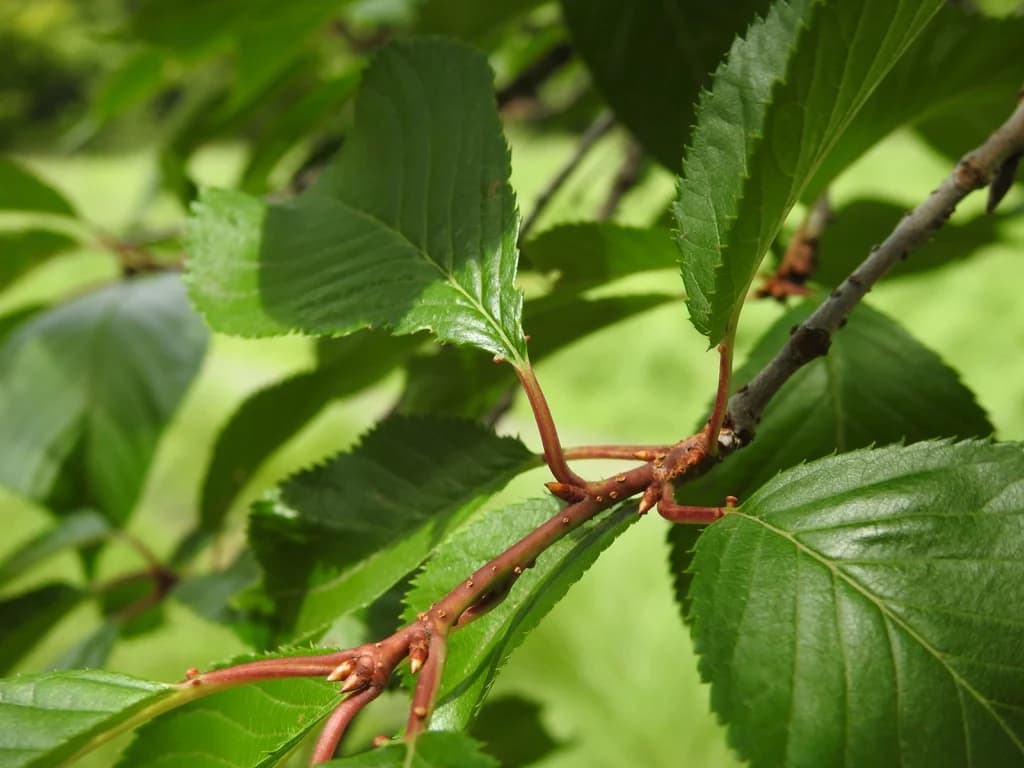
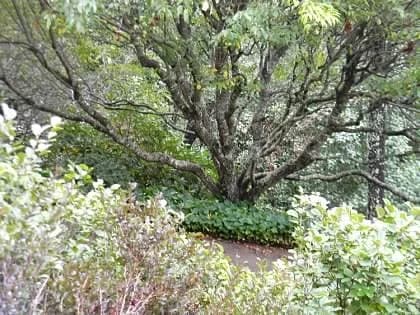
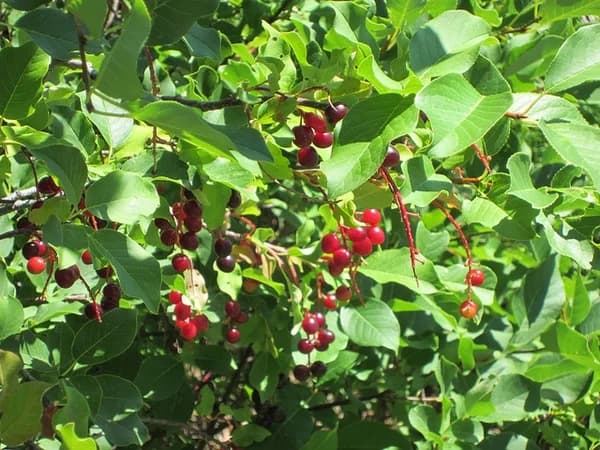
Look for flower clusters with spring foliage, followed by developing summer fruits. Autumn leaves can turn yellow or orange. Winter reveals buds, twigs, and bark patterns. Birds and insects may visit at different times; observe without disturbing them.
Botanical reference: NC State Extension’s black cherry profile. This is a starting point for observation, not a complete identification key.
02 · Energy & character
Three qualities to contemplate beside the tree. Begin with what you can observe, then see what meaning emerges for you.
These tree-specific associations are new contemplative interpretations for the digital school. “Energy” here describes felt experience and symbolism; it is not a measured healing field or a promise of a particular effect.
The tree shares a scene with neighboring plants, passing sounds, and changing light.
Let the wider view prompt awareness of the relationships surrounding your own work and daily life.
Who or what helps make your day possible?
A flowering or fruiting tree may attract other living things.
Use that possibility as a prompt to consider something useful you can offer. Keep the gesture small enough to carry out with care.
What could you share without overextending yourself?
Some nearby activity becomes noticeable when you stop moving or speaking.
Practice leaving a little space before responding. Listening can also mean attending to visible movement when sound is unavailable.
What becomes noticeable when you leave a pause?
03 · Practice with this tree · About 5 minutes
An original five-minute practice in listening and relationship, with visual observation available throughout.
Open outdoor practice →Choose a comfortable, supported position on permitted ground. Keep distance from nests and visiting wildlife. Leave leaves, bark, and fruit untouched.
Look at a bark pattern or branch junction. Describe it quietly to yourself. Let your breathing remain natural.
Allow one nearby sound or visible movement into your attention. If nothing moves, notice the space between branches. There is no need to attract wildlife or wait for an event.
Choose one conversation or interaction where you could leave more room to listen. Take one final look, then continue at your own pace.
Spend about five minutes, or less if that suits you. Keep your device available when needed. No touching, collecting, controlled breathing, or tree-supported movement is required; leave the tree and its surroundings undisturbed.
04 · Roots in the book
The book teaches attention and learning from trees. This page adds a species-specific encounter; it does not claim that the original book assigned these three energies to black cherry.
Chapter 3 introduces three pathways and choosing an appropriate setting.
Read the chapter companionOriginal: printed pp. 13–17Chapter 4 encourages a sustainable beginning with five or ten minutes.
Read the chapter companionOriginal: printed p. 28Presence, acceptance, and adaptability connect this new practice with Chapter 6’s invitations to learn from trees.
Explore Wisdom and WonderOriginal: Chapter 6, printed pp. 96–12405 · Notice for yourself
Reflect quietly or write a sentence in your own notebook. On another visit, look at the same detail again. Your experience may fit these themes, suggest something different, or simply be a few minutes of looking.