Flowers
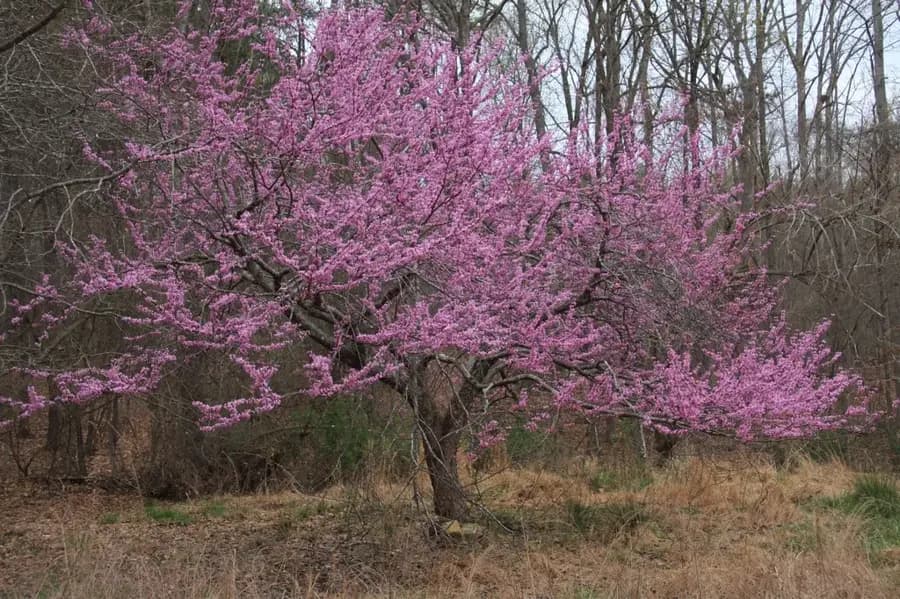
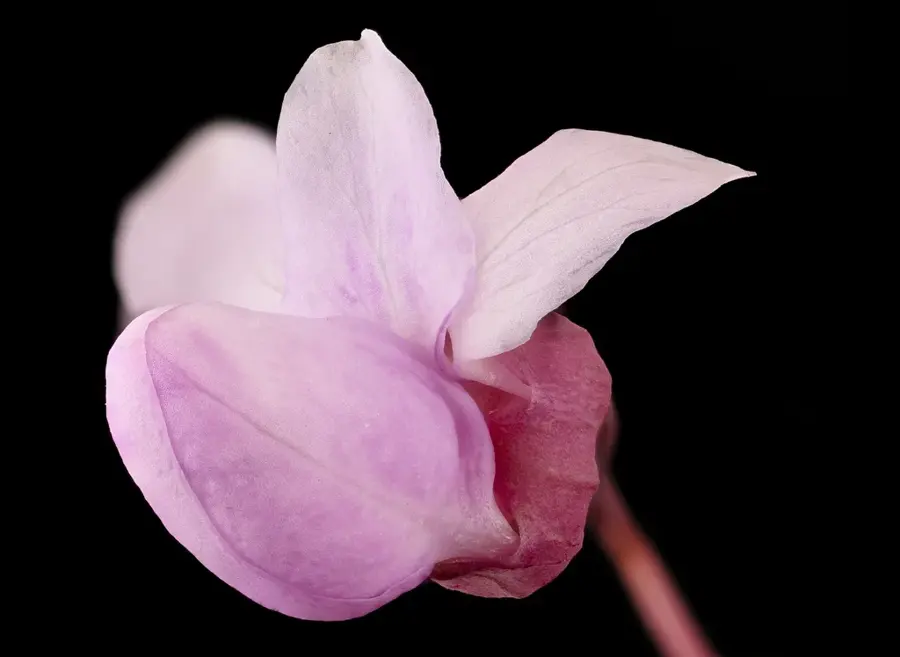
Clusters of small pink to purplish, pea-shaped flowers often appear on older branches and the trunk before the leaves unfold. Flower color varies among cultivated forms.
Eastern Redbud · Cercis canadensis
Look for one seasonal detail. Give an emerging possibility your attention.
01 · Meet the tree
A small change can be enough to begin an encounter: a swelling bud, an unfolding leaf, a seed pod, or a new angle of light. Meet the season you have, letting the tree set the pace of observation.
Clusters of small pink to purplish, pea-shaped flowers often appear on older branches and the trunk before the leaves unfold. Flower color varies among cultivated forms.
Simple, alternate leaves are broadly heart-shaped with smooth edges. Flattened seed pods follow the flowers and can persist after leaves fall. Use several features together when identifying the tree.
Eastern redbud is a small tree in the pea family, native to eastern and central North America. It grows along woodland edges and is widely planted in gardens and public landscapes.
Compare several features, and notice how age and season change their appearance. These photographs are starting points for observation; leave living leaves, needles, cones, and bark attached.
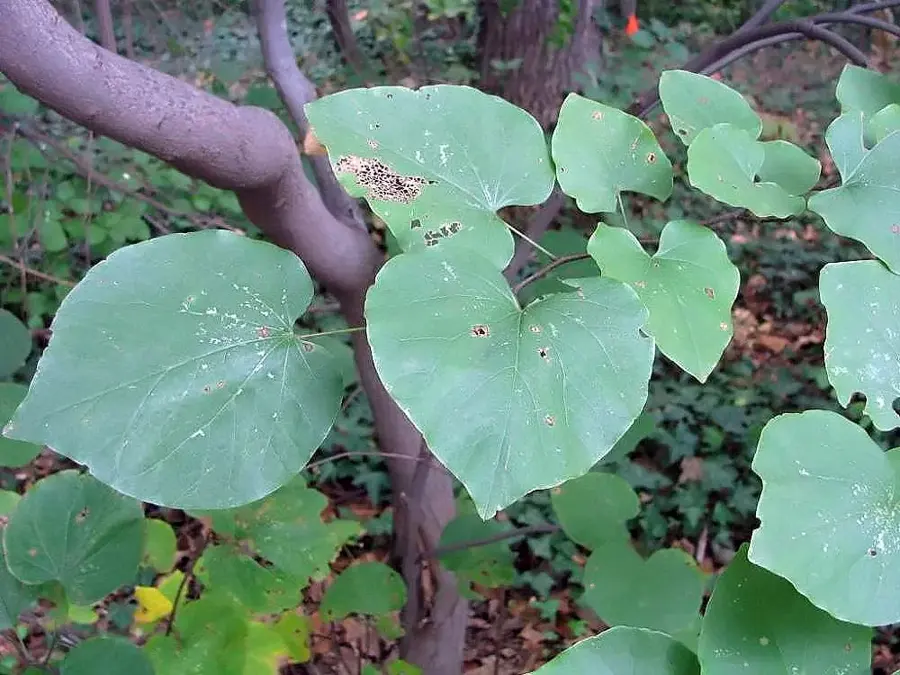
Spring often brings flowers before foliage, then newly unfolding leaves. Summer offers a leafy crown and developing pods. Autumn foliage may turn yellow; winter reveals branching, buds, and sometimes persistent pods. A tree need not be flowering for this practice.
Botanical reference: NC State Extension’s eastern redbud profile. This is a starting point for observation, not a complete identification key.
02 · Energy & character
Three qualities to contemplate beside the tree. Begin with what you can observe, then see what meaning emerges for you.
These tree-specific associations are new contemplative interpretations for the digital school. “Energy” here describes felt experience and symbolism; it is not a measured healing field or a promise of a particular effect.
Buds, flowers, leaves, and pods mark different stages of a seasonal cycle.
Let a small sign prompt recognition of something beginning in your life. A beginning can be quiet and incomplete.
What is just beginning to take shape?
A color, a curve, or a patch of light may draw your attention.
Allow an enjoyable detail a little time without demanding a change in your whole mood. A moment of pleasure can remain simple.
What small detail would you like to stay with?
Looking again can reveal a feature you missed at first.
Approach an emerging idea with a question. You can explore before deciding what it must become.
What would you like to learn next?
03 · Practice with this tree · About 5 minutes
An original five-minute observation practice. Read once, then take the practice at your own pace beside a tree or with its photograph.
Open outdoor practice →Choose permitted, stable ground and a comfortable seat or stance. Let your breathing remain natural. Notice the season and weather without expecting flowers.
Choose a bud, leaf edge, pod, branch curve, or changing light. Look closely from where you are; leave flowers and other parts attached.
Stay with the detail for a few breaths. Notice one additional feature. If it feels pleasant, allow that; if it does not, simple curiosity is enough.
Name something you would like to begin or revisit. Choose a first step small enough for today. Finish by noticing how the detail belongs to the whole tree.
Spend about five minutes, or less if that suits you. Keep your device available when needed. No touching, collecting, controlled breathing, or tree-supported movement is required; leave the tree and its surroundings undisturbed.
04 · Roots in the book
The book teaches attention and learning from trees. This page adds a species-specific encounter; it does not claim that the original book assigned these three energies to eastern redbud.
Chapter 3 introduces three pathways and choosing an appropriate setting.
Read the chapter companionOriginal: printed pp. 13–17Chapter 4 encourages a sustainable beginning with five or ten minutes.
Read the chapter companionOriginal: printed p. 28Curiosity, presence, and openness connect this new practice with Chapter 6’s invitations to learn from trees.
Explore Wisdom and WonderOriginal: Chapter 6, printed pp. 96–12405 · Notice for yourself
Reflect quietly or write a sentence in your own notebook. On another visit, look at the same detail again. Your experience may fit these themes, suggest something different, or simply be a few minutes of looking.