Needles
Long needles commonly occur in bundles of three, sometimes two. Length and bundle number vary with region and tree. Oregon State describes both counts; do not force every specimen into one fixed pattern.
 Tree Yoga SchoolPractice with the living world
Ponderosa pine · Pinus ponderosa
Look at a changing surface. Find steadiness without asking every detail to stay the same.
Optional · saved in this browser on this device.
01 · Meet the tree
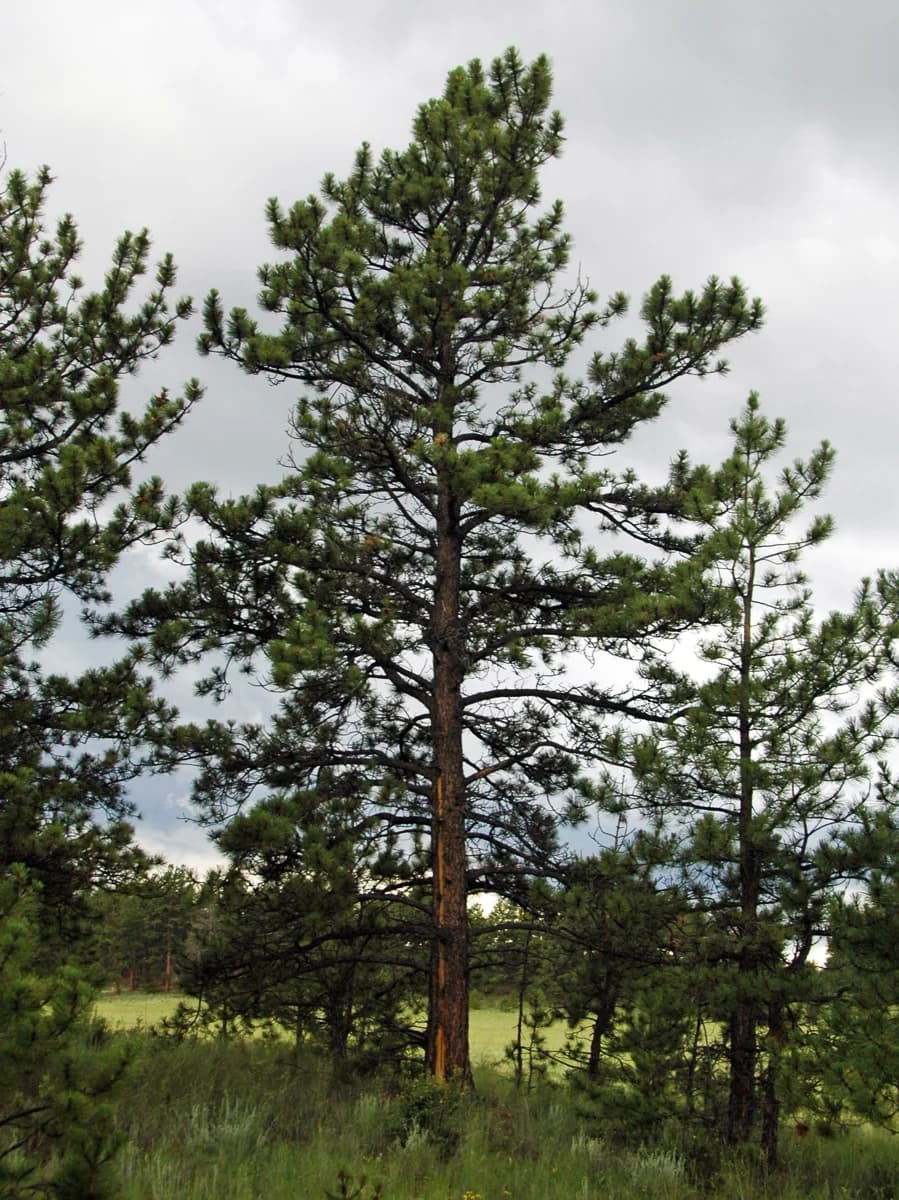
Ponderosa pine is a familiar presence across many western landscapes. Long needle bundles and, on older trees, broad warm-colored bark plates provide details worth slowing down for. Age and region matter when learning to recognize it.
Long needles commonly occur in bundles of three, sometimes two. Length and bundle number vary with region and tree. Oregon State describes both counts; do not force every specimen into one fixed pattern.
Young bark is dark, while older bark often develops yellow-brown to cinnamon-colored plates with deep furrows. Woody cones carry prickles on the scales. Look without pressing hands against cones or removing bark.
Ponderosa pine grows across a broad western North American range, often in sunny, well-drained settings. It also occurs as a planted tree. Other western pines can have long bundled needles, so combine several features with local guidance.
Compare several features, and notice how age and season change their appearance. These photographs are starting points for observation; leave living leaves, needles, cones, and bark attached.
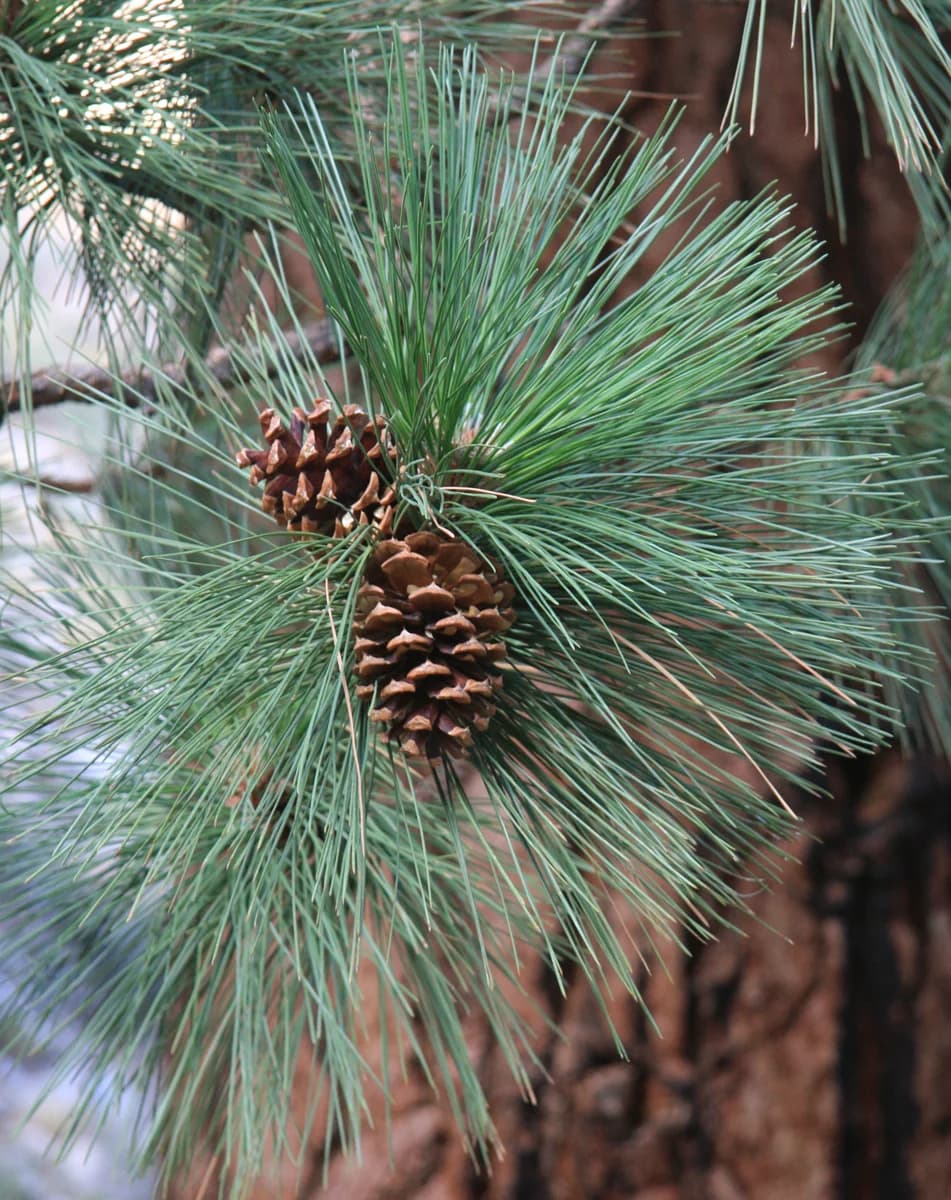
Watch new shoot growth and needle color alongside older bark patterns. Older needles eventually drop despite an evergreen crown. Compare the same visible bark plate or branch over time; a dark young trunk and an orange-brown older trunk can belong to the same species.
Chapter 4 invites a practice of returning across seasons. Read When and Where Try the seasonal observation practice
Botanical reference: Oregon State University ponderosa pine profile. This is a starting point for observation, not a complete identification key.
Explore the habitat: NC State Extension: ponderosa pine foliage, cones, and bark.
02 · Energy & character
Three qualities to contemplate beside the tree. Begin with what you can observe, then see what meaning emerges for you.
These tree-specific associations are new contemplative interpretations for the digital school. “Energy” here describes felt experience and symbolism; it is not a measured healing field or a promise of a particular effect.
A trunk carries a continuing pattern of bark plates.
Choose a dependable point of attention without needing rigid control.
What can I return to today?
Needle bundles and bark vary with age and region.
Allow several observations to inform a conclusion.
What would make my understanding more complete?
One species grows in many western settings.
Consider an adjustment that fits the conditions you actually have.
Where would a small change help?
03 · Practice with this tree · About 5 minutes
A new five-minute practice of observation and discernment beside ponderosa pine. A view of bark or a crown from an established route is enough.
Open outdoor practiceUse stable ground in a permitted place with your usual supports. Keep clear of low branches and prickly cones.
Look at a bark plate, a needle bundle, or a gap in the crown. Describe its shape and color without testing scent by rubbing or breaking material.
Include a neighboring detail that looks different. Let both belong in your view while breathing normally.
Name one small action you can repeat, and one way to adapt it if your circumstances change. Finish by looking at the whole place.
Spend about five minutes, or less if that suits you. Keep your device available when needed. No touching, collecting, controlled breathing, or tree-supported movement is required; leave the tree and its surroundings undisturbed.
04 · Roots in the book
The book teaches attention and learning from trees. This page adds a species-specific encounter; it does not claim that the original book assigned these three energies to ponderosa pine.
Chapter 3 introduces three pathways and choosing an appropriate setting.
Read the chapter companionOriginal: printed pp. 13–17Chapter 4 encourages a sustainable beginning with five or ten minutes.
Read the chapter companionOriginal: printed p. 28Adaptability, presence, and perseverance connect this new practice with Chapter 6’s invitations to learn from trees.
Explore Wisdom and WonderOriginal: Chapter 6, printed pp. 96–12405 · Notice for yourself
Reflect quietly or write a sentence in your own notebook. On another visit, look at the same detail again. Your experience may fit these themes, suggest something different, or simply be a few minutes of looking.