Needles
Slender, flexible needles are roughly three to five inches long and grow in bundles of two or three. Count several bundles: one bundle alone is not a reliable identification.
Shortleaf Pine · Pinus echinata
Look through an evergreen crown and notice change within continuity.
01 · Meet the tree
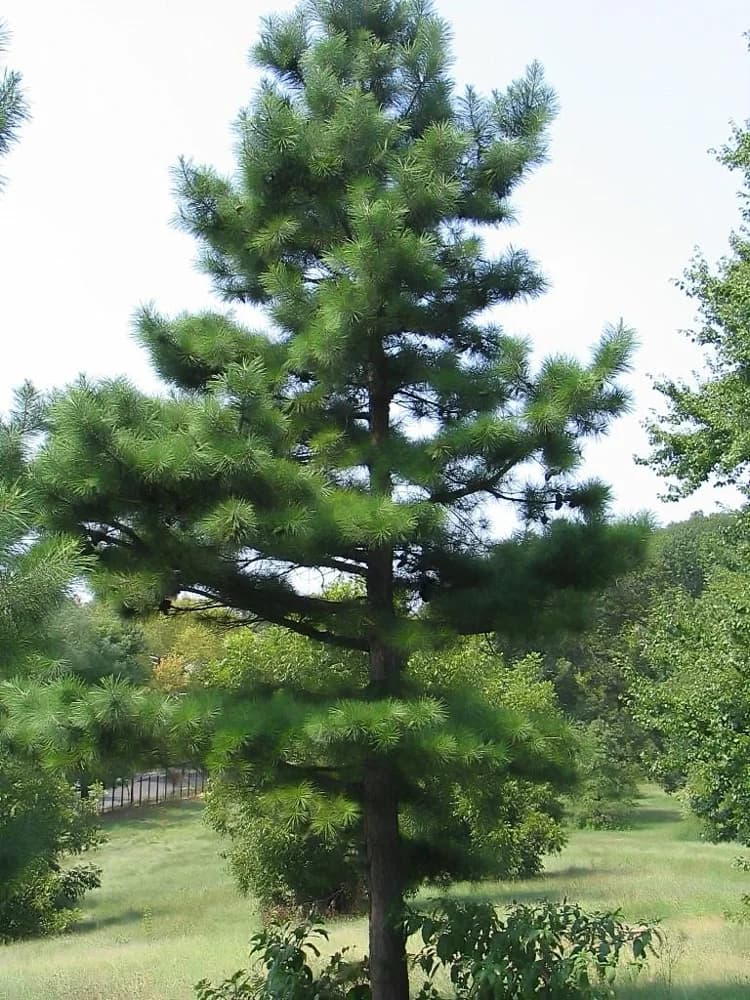
Shortleaf pine keeps a green presence through the seasons while individual needles are replaced. Its bundles, open branches, and scaly bark invite attention to the relationship between ongoing change and a steady overall form.
Slender, flexible needles are roughly three to five inches long and grow in bundles of two or three. Count several bundles: one bundle alone is not a reliable identification.
Small woody cones and mature bark with irregular scaly plates provide additional clues. Look for small resin pores in the plates; reddish-brown tones become more evident on older trunks.
Native to eastern and southern United States, shortleaf pine favors sunlight and well-drained soils. Observe needles, cones, and bark together to distinguish it from other southern pines.
Compare several features, and notice how age and season change their appearance. These photographs are starting points for observation; leave living leaves, needles, cones, and bark attached.
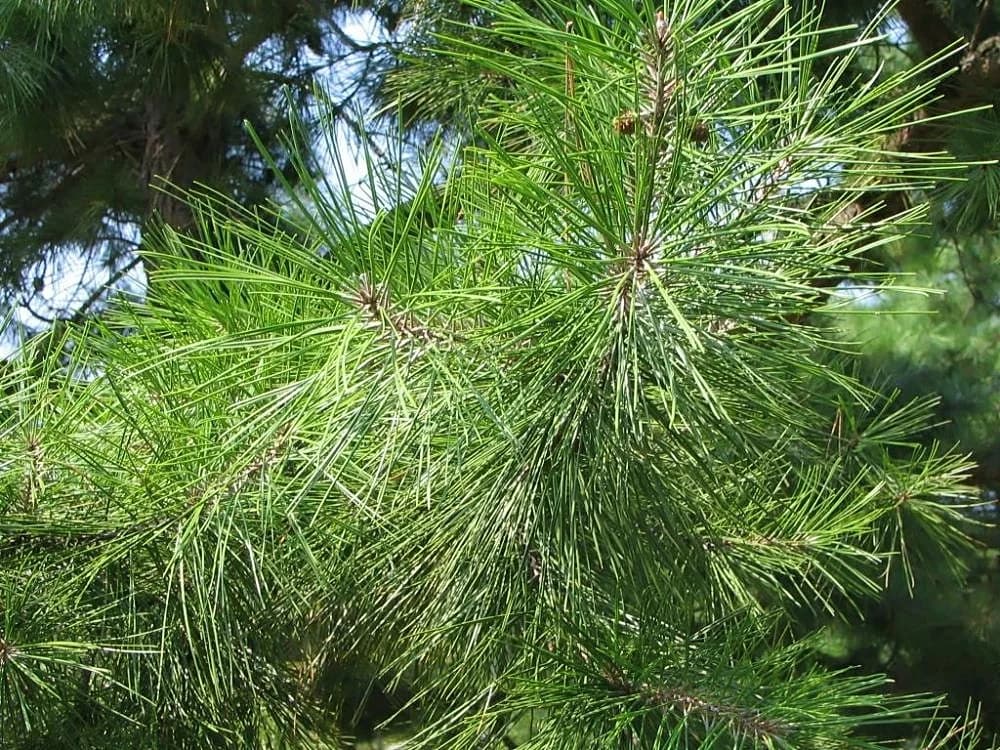
New shoots and reproductive cones appear in spring. Mature woody cones develop over more than one season. Older needles fall as newer needles remain, so evergreen does not mean unchanging. Winter offers a clear view of its green crown among bare deciduous trees.
Chapter 4 invites a practice of returning across seasons. Read When and Where → Try the seasonal observation practice →
Botanical reference: NC State Extension’s shortleaf pine profile. This is a starting point for observation, not a complete identification key.
02 · Energy & character
Three qualities to contemplate beside the tree. Begin with what you can observe, then see what meaning emerges for you.
These tree-specific associations are new contemplative interpretations for the digital school. “Energy” here describes felt experience and symbolism; it is not a measured healing field or a promise of a particular effect.
The crown remains green through the seasons.
A familiar rhythm can be useful while other things change.
Which small rhythm would support me today?
Older needles are shed while newer needles remain.
Continuity can include making room for replacement.
What can I release while keeping what matters?
Needle bundles belong to branches within a larger crown.
Changing the scale of attention can reveal another relationship.
Would a closer or wider view help me now?
03 · Practice with this tree · About 5 minutes
An original five-minute observation practice. Read once, then give your attention to the tree; sitting, standing, or observing from a distance are equally welcome.
Open outdoor practice →Choose stable ground where you can see the crown without straining your neck. Sit if that is more comfortable.
Look at accessible needles or the detail photograph. Notice how two or three needles share one base.
Move your attention from a bundle to a branch, then to the whole crown. Keep your breathing unforced.
Name one gentle routine you want to keep and one thing you are ready to release. Leave cones, needles, and bark undisturbed.
Spend about five minutes, or less if that suits you. Keep your device available when needed. No touching, collecting, controlled breathing, or tree-supported movement is required; leave the tree and its surroundings undisturbed.
04 · Roots in the book
The book teaches attention and learning from trees. This page adds a species-specific encounter; it does not claim that the original book assigned these three energies to shortleaf pine.
Chapter 3 introduces three pathways and choosing an appropriate setting.
Read the chapter companionOriginal: printed pp. 13–17Chapter 4 encourages a sustainable beginning with five or ten minutes.
Read the chapter companionOriginal: printed p. 28Steadiness, Renewal, Perspective connect this new practice with Chapter 6’s invitations to learn from trees.
Explore Wisdom and WonderOriginal: Chapter 6, printed pp. 96–12405 · Notice for yourself
Reflect quietly or write a sentence in your own notebook. On another visit, look at the same detail again. Your experience may fit these themes, suggest something different, or simply be a few minutes of looking.