Leaves
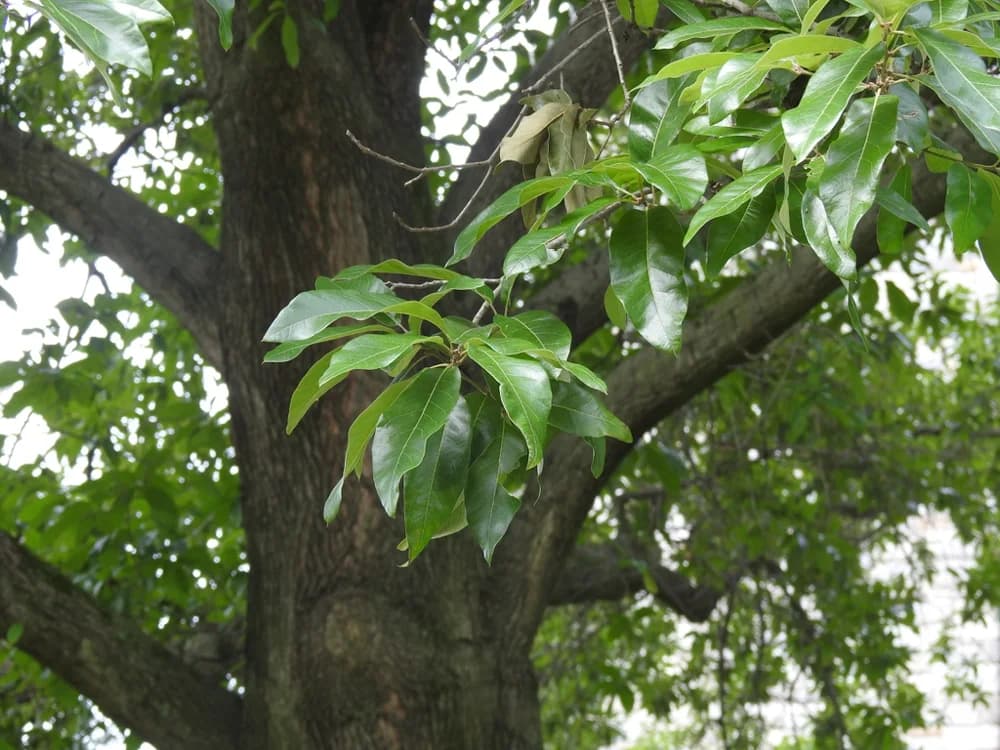
Alternate leaves are glossy, broadly lance-shaped, and usually unlobed, with a terminal bristle. Some have wavy margins or shallow lobes. They are generally broader than willow oak leaves.
Shingle Oak · Quercus imbricaria
Let an unexpected oak invite you to look beyond familiar outlines.
01 · Meet the tree
Shingle oak challenges the familiar picture of a lobed oak leaf. Its mostly unlobed foliage and broadening crown offer a practice in curiosity: allowing a living tree to be more varied than our first expectation.
Alternate leaves are glossy, broadly lance-shaped, and usually unlobed, with a terminal bristle. Some have wavy margins or shallow lobes. They are generally broader than willow oak leaves.
Acorns mature in their second year. Gray-brown bark develops shallow fissures and ridges with age. Use leaf shape, fruit, buds, and bark together rather than relying on one clue.
Native to the central and upper southern United States, shingle oak occurs on well-drained uplands and sometimes near lowland streams. The common name recalls its wood’s historical use for shingles.
Compare several features, and notice how age and season change their appearance. These photographs are starting points for observation; leave living leaves, needles, cones, and bark attached.
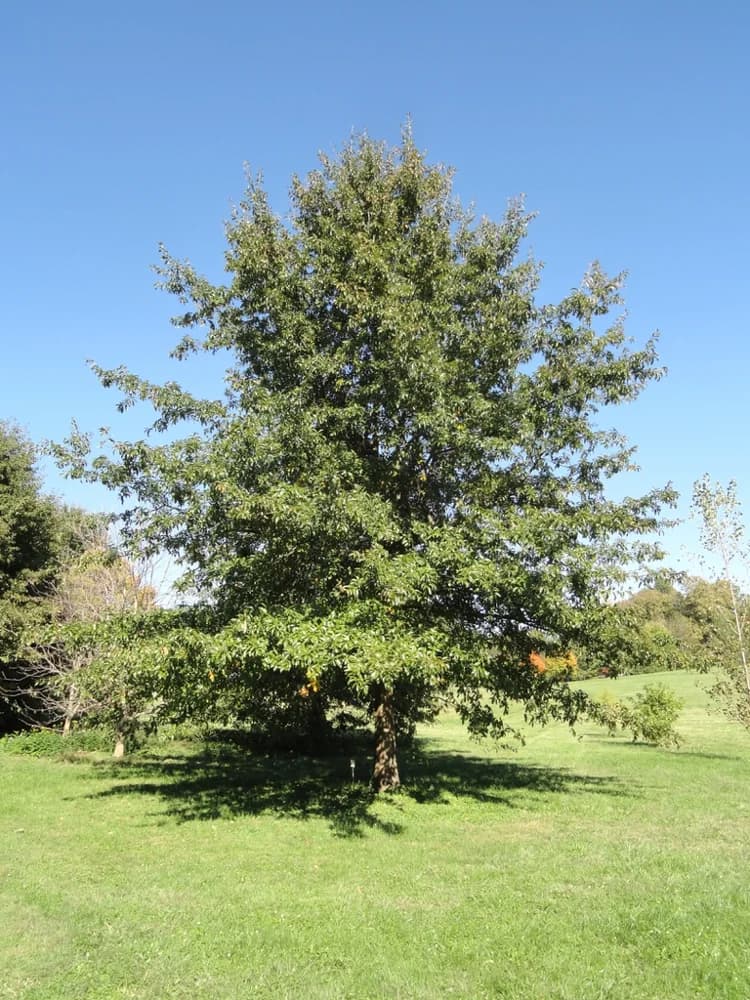
Spring renews the glossy foliage. Summer reveals a broad crown, becoming more open with age. Autumn color ranges from yellow-brown to russet red; some dried leaves persist into winter, offering another opportunity to observe the outline.
Chapter 4 invites a practice of returning across seasons. Read When and Where → Try the seasonal observation practice →
Botanical reference: NC State Extension’s shingle oak profile. This is a starting point for observation, not a complete identification key.
02 · Energy & character
Three qualities to contemplate beside the tree. Begin with what you can observe, then see what meaning emerges for you.
These tree-specific associations are new contemplative interpretations for the digital school. “Energy” here describes felt experience and symbolism; it is not a measured healing field or a promise of a particular effect.
An oak can carry mostly unlobed leaves.
A useful category can still leave room for surprise.
Where has an expectation narrowed my attention?
The crown becomes broad with age.
Room for others can develop gradually.
How could I make a little more room today?
Some leaves remain on branches into winter.
Change may include both leaving and carrying forward.
What would I like to carry into the next season?
03 · Practice with this tree · About 5 minutes
An original five-minute observation practice. Read once, then give your attention to the tree; sitting, standing, or observing from a distance are equally welcome.
Open outdoor practice →Find a comfortable place with a view of the tree. Notice the shape you expected before studying it closely.
Observe a leaf’s edge and tip without picking it. Compare the actual outline with your first impression.
Look from leaf to branch to crown. Allow several details to belong together without needing an immediate conclusion.
Name one thing that surprised you. Consider where the same willingness to look again might help today.
Spend about five minutes, or less if that suits you. Keep your device available when needed. No touching, collecting, controlled breathing, or tree-supported movement is required; leave the tree and its surroundings undisturbed.
04 · Roots in the book
The book teaches attention and learning from trees. This page adds a species-specific encounter; it does not claim that the original book assigned these three energies to shingle oak.
Chapter 3 introduces three pathways and choosing an appropriate setting.
Read the chapter companionOriginal: printed pp. 13–17Chapter 4 encourages a sustainable beginning with five or ten minutes.
Read the chapter companionOriginal: printed p. 28Curiosity, Shelter, Continuity connect this new practice with Chapter 6’s invitations to learn from trees.
Explore Wisdom and WonderOriginal: Chapter 6, printed pp. 96–12405 · Notice for yourself
Reflect quietly or write a sentence in your own notebook. On another visit, look at the same detail again. Your experience may fit these themes, suggest something different, or simply be a few minutes of looking.