Leaves
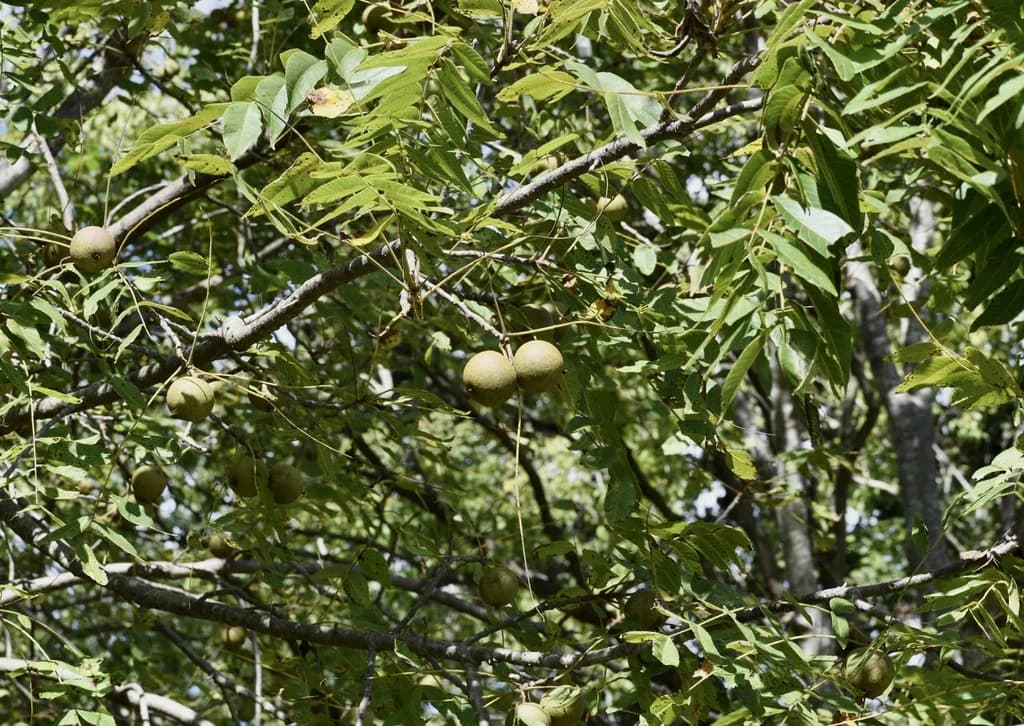
Alternate, compound leaves carry many toothed leaflets along a central stalk. The terminal leaflet may be small or absent. Compare the whole leaf and twig, rather than treating a leaflet as a complete leaf.
Black walnut · Juglans nigra
Look beyond today's result. Choose something worth tending over time.
01 · Meet the tree
A crown of branches can invite a longer view of your own work. Meet the individual tree first, then consider what you are willing to give time and care.
Alternate, compound leaves carry many toothed leaflets along a central stalk. The terminal leaflet may be small or absent. Compare the whole leaf and twig, rather than treating a leaflet as a complete leaf.
Dark bark develops deep furrows. Round nuts grow inside thick green husks that darken and can stain. Observe fallen fruit in place and choose a viewpoint clear of falling nuts.
A large member of the walnut family native to central and eastern North America, black walnut often grows in fertile, well-drained soils. Its nuts provide food for squirrels and other wildlife.
Compare several features, and notice how age and season change their appearance. These photographs are starting points for observation; leave living leaves, needles, cones, and bark attached.
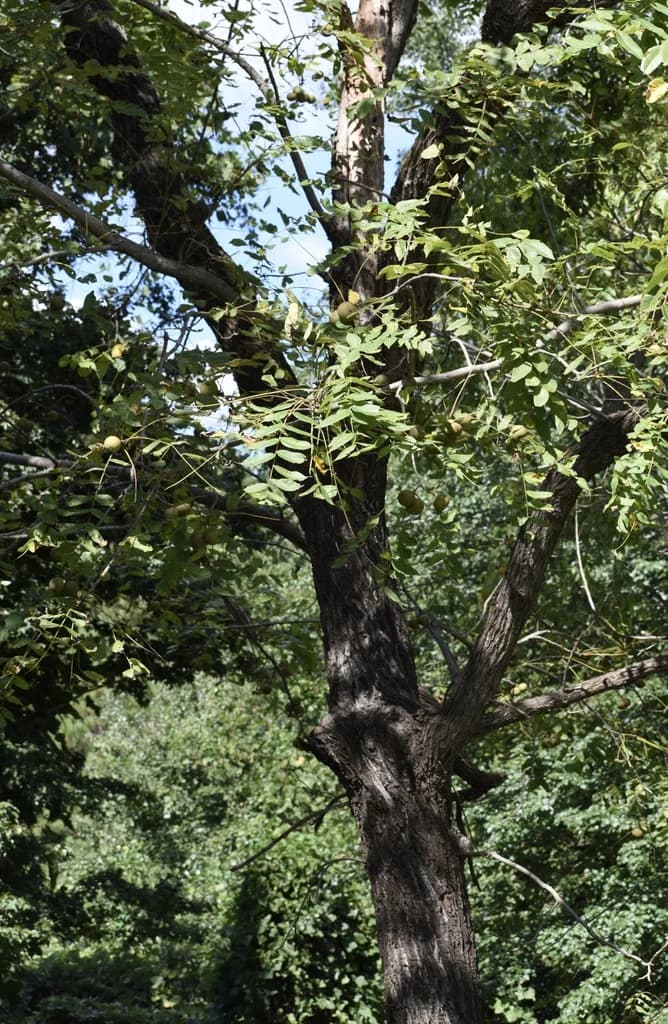
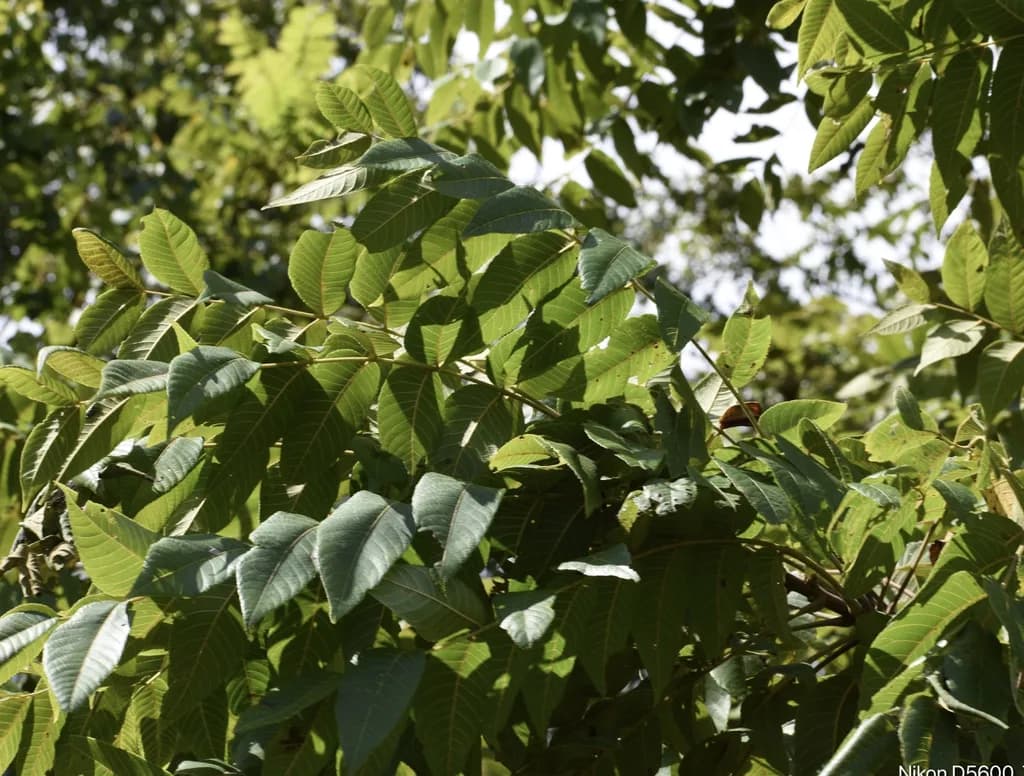
Look for fresh compound leaves and catkins in spring, a full canopy in summer, and ripening nuts with yellowing foliage in autumn. Winter reveals branch structure and furrowed bark. Nut crops vary between years.
Botanical reference: NC State Extension’s black walnut profile. This is a starting point for observation, not a complete identification key.
02 · Energy & character
Three qualities to contemplate beside the tree. Begin with what you can observe, then see what meaning emerges for you.
These tree-specific associations are new contemplative interpretations for the digital school. “Energy” here describes felt experience and symbolism; it is not a measured healing field or a promise of a particular effect.
A single visit gives a brief view of a living tree.
Let the limited view remind you to leave room for development you cannot assess today.
What deserves more time before you judge its outcome?
Branches divide into smaller branches across the crown.
Use that visible structure as a metaphor for a larger effort made of many small choices.
Which small choice supports your longer intention?
The ground around the tree holds leaves, twigs, and sometimes fallen fruit.
Consider the ordinary conditions that help your own work continue. Time, rest, and practical support deserve attention.
What condition could you improve this week?
03 · Practice with this tree · About 5 minutes
An original five-minute practice for patient attention to a long-term intention.
Open outdoor practice →Sit or stand on stable, permitted ground with your usual supports, clear of falling nuts and damaged branches. Observe the crown from a comfortable distance.
Trace a branch with your eyes as far as you can comfortably see. If looking upward strains your neck, choose a line in the bark instead.
Bring one project, relationship, or skill to mind. Say quietly what you hope to care for over time, without setting a demand for today's results.
Name one manageable action that supports that intention. Give it a realistic place in your day, then return your attention to the tree before leaving.
Spend about five minutes, or less if that suits you. Keep your device available when needed. No touching, collecting, controlled breathing, or tree-supported movement is required; leave the tree and its surroundings undisturbed.
04 · Roots in the book
The book teaches attention and learning from trees. This page adds a species-specific encounter; it does not claim that the original book assigned these three energies to black walnut.
Chapter 3 introduces three pathways and choosing an appropriate setting.
Read the chapter companionOriginal: printed pp. 13–17Chapter 4 encourages a sustainable beginning with five or ten minutes.
Read the chapter companionOriginal: printed p. 28Perseverance, presence, and acceptance connect this new practice with Chapter 6’s invitations to learn from trees.
Explore Wisdom and WonderOriginal: Chapter 6, printed pp. 96–12405 · Notice for yourself
Reflect quietly or write a sentence in your own notebook. On another visit, look at the same detail again. Your experience may fit these themes, suggest something different, or simply be a few minutes of looking.