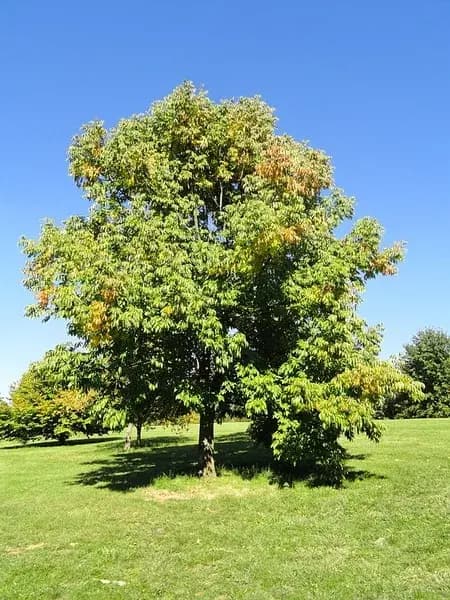
fraxinus americana · resized and converted to WebP · Photo: Photographer not listed (NC State source) · CC0 · Source · Converted to WebP
01 · Meet the tree
Meet white ash.
Attention begins with the living tree before you. Notice a leaf, a branch, or light on bark without requiring it to represent triumph or loss. Allow appreciation and concern to coexist if both are present.
Leaves and twigs
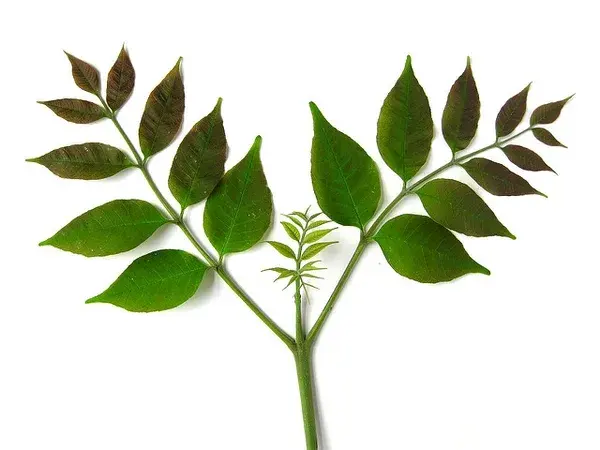
Leaves and branches are arranged oppositely. Each compound leaf usually has seven leaflets, with a range of five to nine; leaflet undersides are often paler. Compare buds, leaf scars, and other features when distinguishing white ash from other ashes.
Bark and seeds
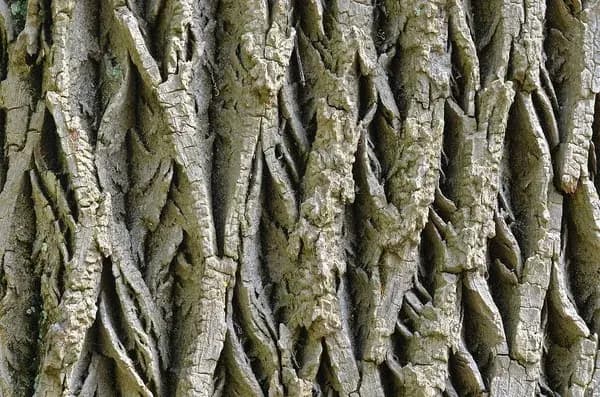
Mature bark often has intersecting ridges forming a diamond-like pattern. Female trees produce narrow, winged fruits called samaras. Young bark may look different, and fruit will not be present on every tree.
Place and care
White ash is native to eastern North America. Emerald ash borer threatens ash trees, and an old register entry does not confirm a tree’s current health. Observe from a suitable distance if branches appear dead or damaged; a qualified arborist can advise on tree care.
Look closer.
Compare several features, and notice how age and season change their appearance. These photographs are starting points for observation; leave living leaves, needles, cones, and bark attached.
Leaves · resized and converted to WebP · Virens · CC BY 2.0 · Source · Converted to WebPBark · resized and converted to WebP · Derek Ramsey · CC BY-SA 4.0 · Source · Converted to WebP
Leaves unfold in spring, followed by a full compound-leaf canopy in summer. Autumn foliage may turn yellow or purple. Winter reveals opposite branching and bark; seasonal timing and color vary between individuals and places.
Three qualities to contemplate beside the tree. Begin with what you can observe, then see what meaning emerges for you.
These tree-specific associations are new contemplative interpretations for the digital school. “Energy” here describes felt experience and symbolism; it is not a measured healing field or a promise of a particular effect.
Appreciation
One leaf or line of bark offers details that become clearer with time.
Let noticing come before evaluating. Appreciation can be specific: a color, a pattern, or the chance to share this place today.
What can you appreciate without needing it to last forever?
Care
The tree lives within a place affected by weather, insects, soil, and human activity.
Consider one thing within your own reach to look after. Care can be small and practical, with room for uncertainty about outcomes.
What deserves a little attention today?
Stewardship
A tree’s present condition and the information recorded about it may differ.
Let curiosity lead to responsible learning. Checking a source, asking a knowledgeable person, or respecting a protected area can all express care.
What could you learn before deciding how to help?
03 · Practice with this tree · About 5 minutes
Notice what deserves care.
An original five-minute observation practice. Read once, then take the practice at your own pace beside a tree or with its photograph.
Observe from a permitted path or another stable place clear of dead or damaged branches. Sit or stand with support. A distant view or a photograph can serve this practice.
Name one living detail
Notice a leaf, bud, or other visible feature without touching or collecting it. If you are uncertain about the tree’s condition, simply name what you can actually see.
Allow an honest response
Notice appreciation, concern, sadness, curiosity, or no strong feeling. You do not need to produce a particular emotion. Continue breathing naturally and return to the visible detail.
Choose one act of care
Identify a small action within reach: learn about local trees, care for a shared place, or check in with someone. Give the action a realistic time, then finish at your own pace.
Let the visit be enough.
Spend about five minutes, or less if that suits you. Keep your device available when needed. No touching, collecting, controlled breathing, or tree-supported movement is required; leave the tree and its surroundings undisturbed.
The book teaches attention and learning from trees. This page adds a species-specific encounter; it does not claim that the original book assigned these three energies to white ash.
Choose a tree with care.
Chapter 3 introduces three pathways and choosing an appropriate setting.
What would care look like at a scale you can sustain?
Reflect quietly or write a sentence in your own notebook. On another visit, look at the same detail again. Your experience may fit these themes, suggest something different, or simply be a few minutes of looking.