White Ash
Fraxinus americana
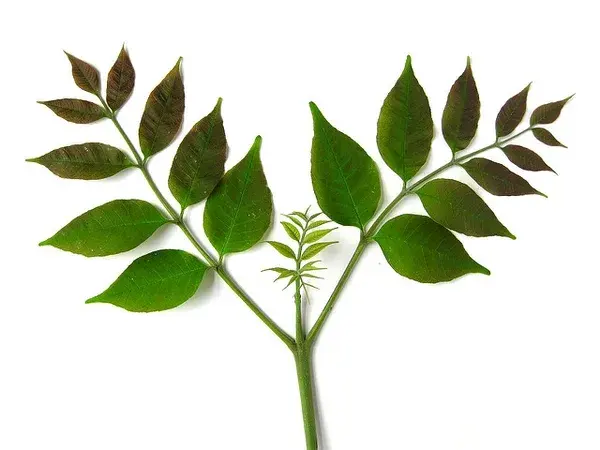
Usually five to nine leaflets, commonly seven; undersides are often whitish or noticeably paler.
Compare similar trees
Both have opposite, compound leaves and overlapping bark patterns. Mature samaras offer a stronger distinction when fruit is available.
Observe from a permitted path. Use attached or naturally fallen material without picking or peeling. Photographs show individual examples, not every variation or a common scale.
Count whole leaves at the twig, not leaflets. Leaflet number and color overlap; these photographs do not show every underside.
Fraxinus americana
Usually five to nine leaflets, commonly seven; undersides are often whitish or noticeably paler.
Fraxinus pennsylvanica
Usually five to nine leaflets too; undersides tend to be pale green, with very short leaflet stalks.
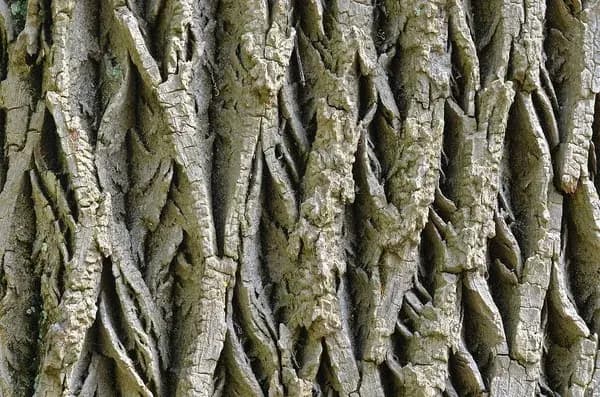
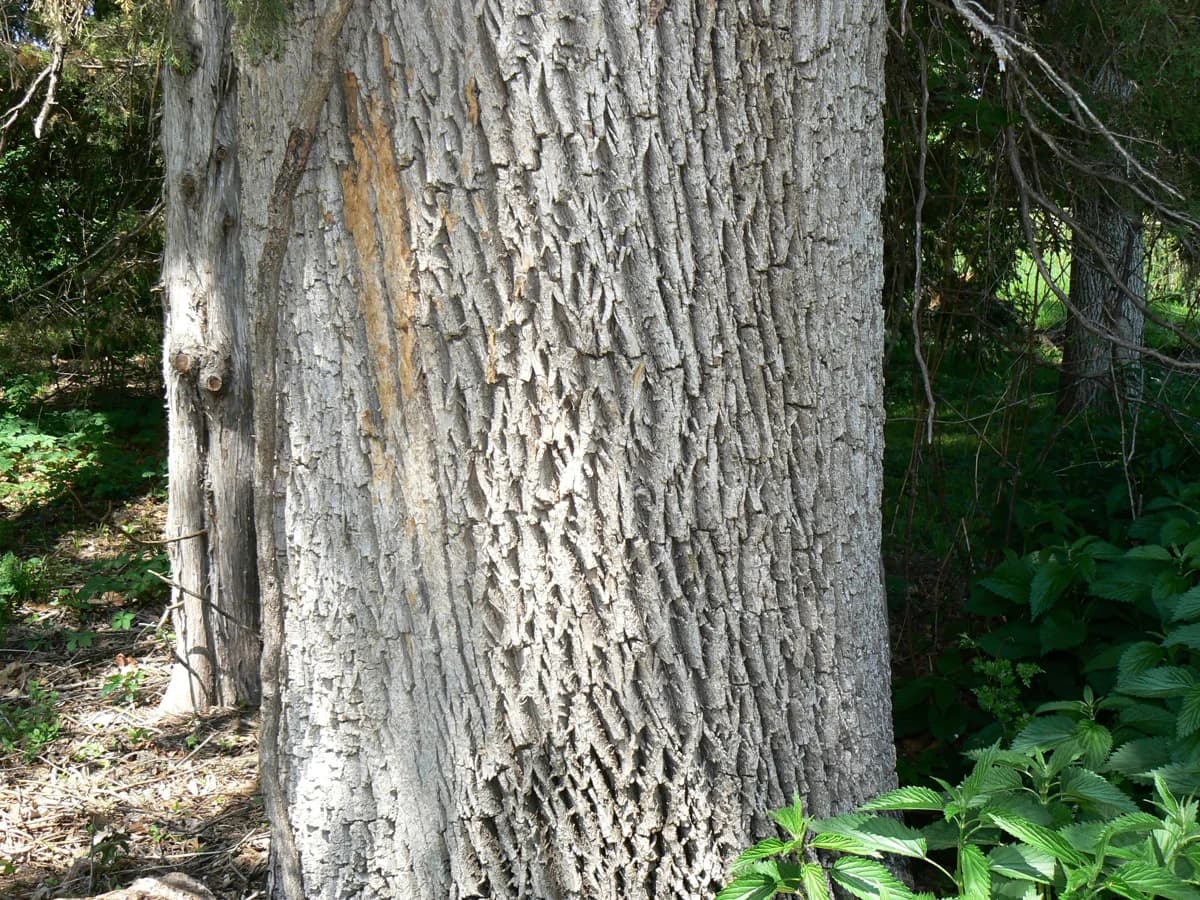
Bark alone does not reliably separate these ashes. Examine leaves and fallen fruit as well.
Fraxinus americana
Mature bark often forms interlacing ridges and a diamond-like pattern.
Fraxinus pennsylvanica
Mature bark also forms intersecting ridges and diamond-shaped furrows.
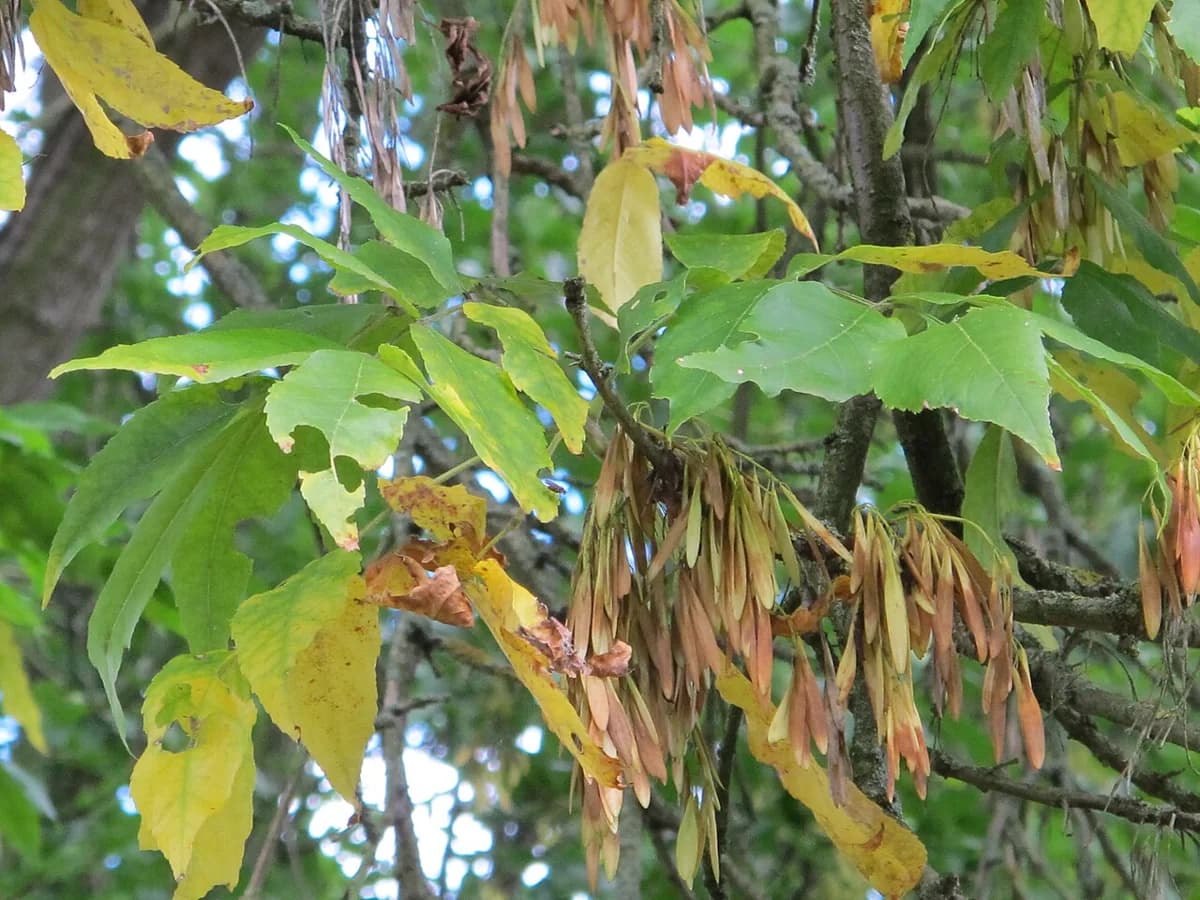
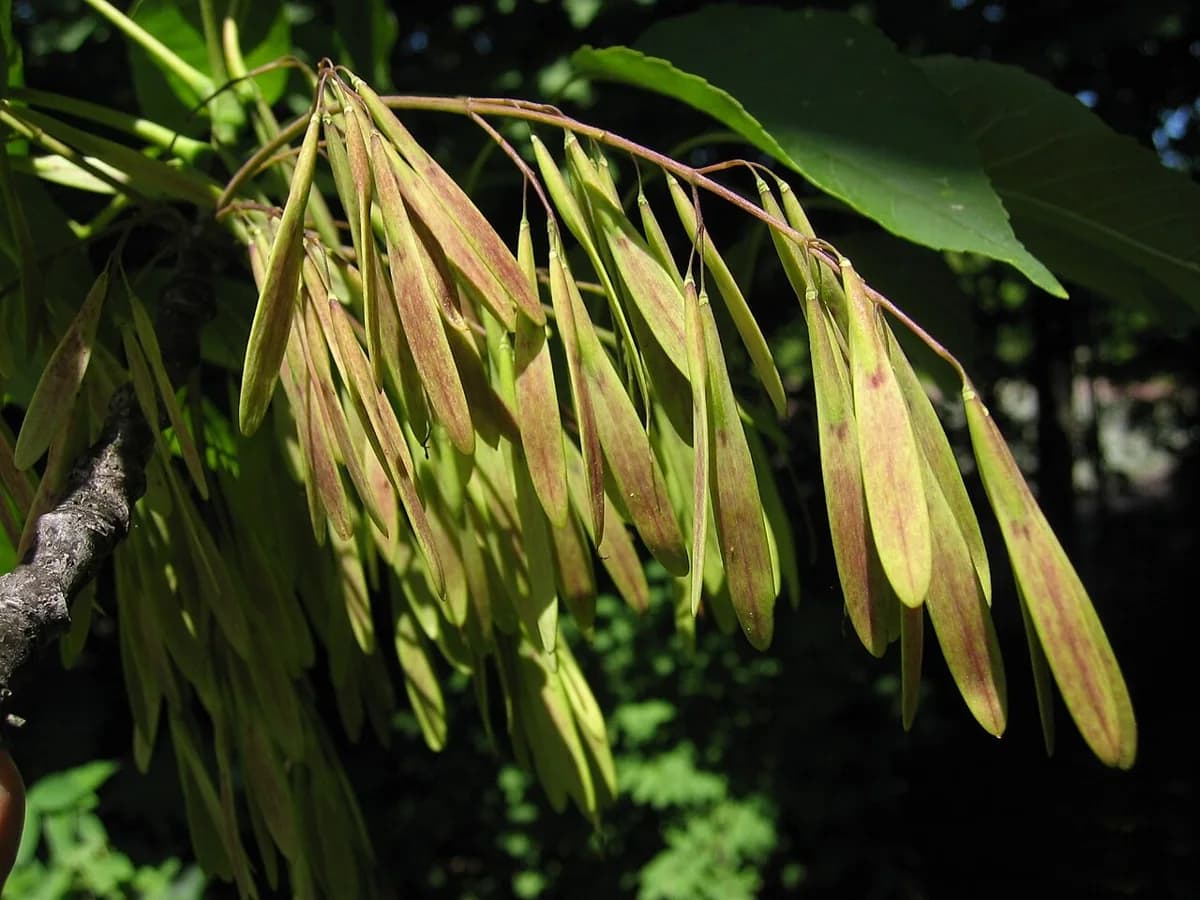
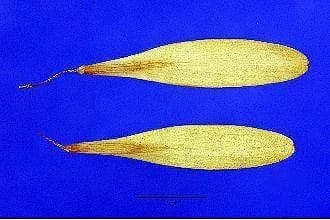
Compare mature, naturally fallen samaras. Only female trees bear fruit, so its absence does not settle identity. Images are not at a common scale.
Fraxinus americana
The wing attaches near the end of a relatively plump seed body and extends little along its sides.
Fraxinus pennsylvanica
The seed body is narrower, with the wing extending farther alongside it.
These clues compare this pair; other species, hybrids, age, and growing conditions can complicate identification. If the features disagree, keep observing and consult a local field guide or knowledgeable person.
Botanical references checked October 10, 2026. NC State Extension: White Ash · Green ash.
Additional botanical references: USDA: White ash plant guide · Oregon State University: Green ash.