Quaking aspen
Populus tremuloides
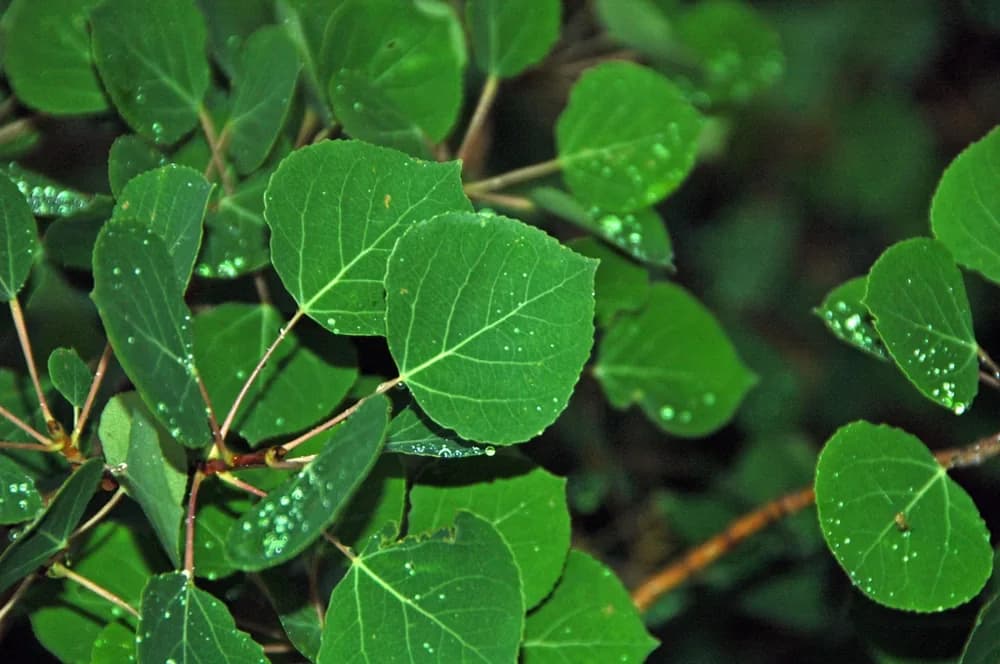
Leaves are often rounded to broadly triangular, with relatively small, fine teeth along the edge.
 Tree Yoga SchoolPractice with the living world
Compare similar trees
Both are aspens with alternate, toothed leaves. Compare the size of the teeth, then look at winter bud scales when visible.
Observe from a permitted path. Use attached or naturally fallen material without picking or peeling. Photographs show individual examples, not every variation or a common scale.
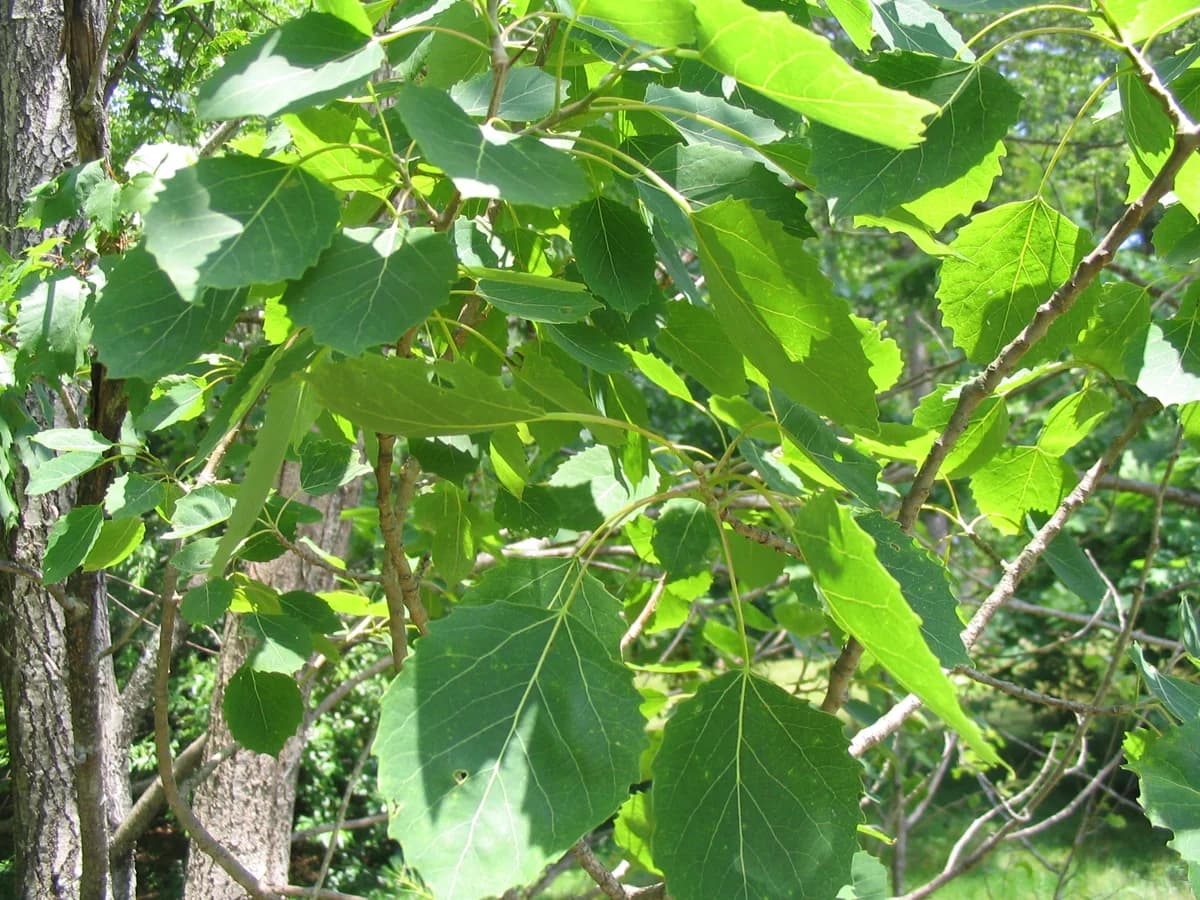
Compare several mature leaves. Size and outline overlap, and damage can change a leaf’s edge. The large teeth on bigtooth aspen are teeth, not deep leaf lobes.
Populus tremuloides
Leaves are often rounded to broadly triangular, with relatively small, fine teeth along the edge.
Populus grandidentata
Leaves have conspicuously larger, coarser teeth; the blade is often larger too.
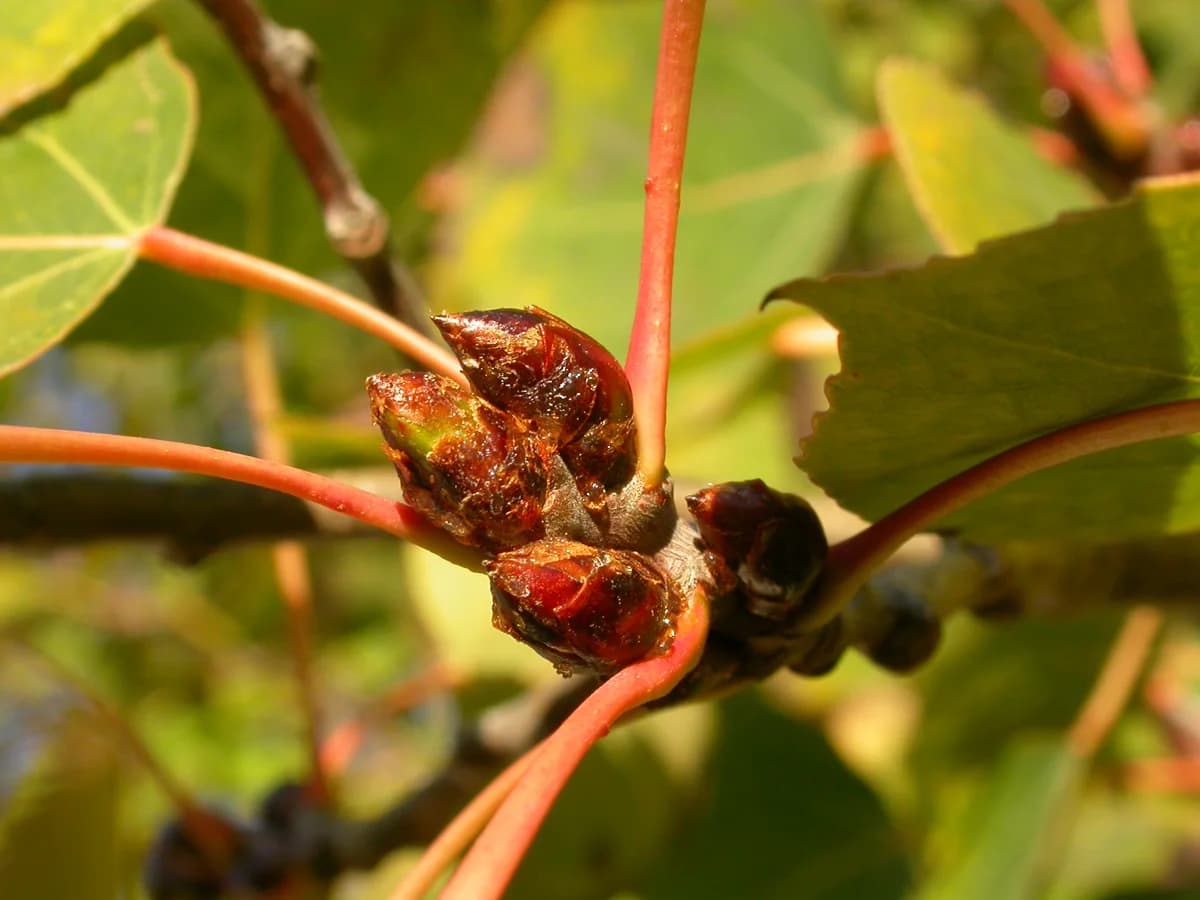
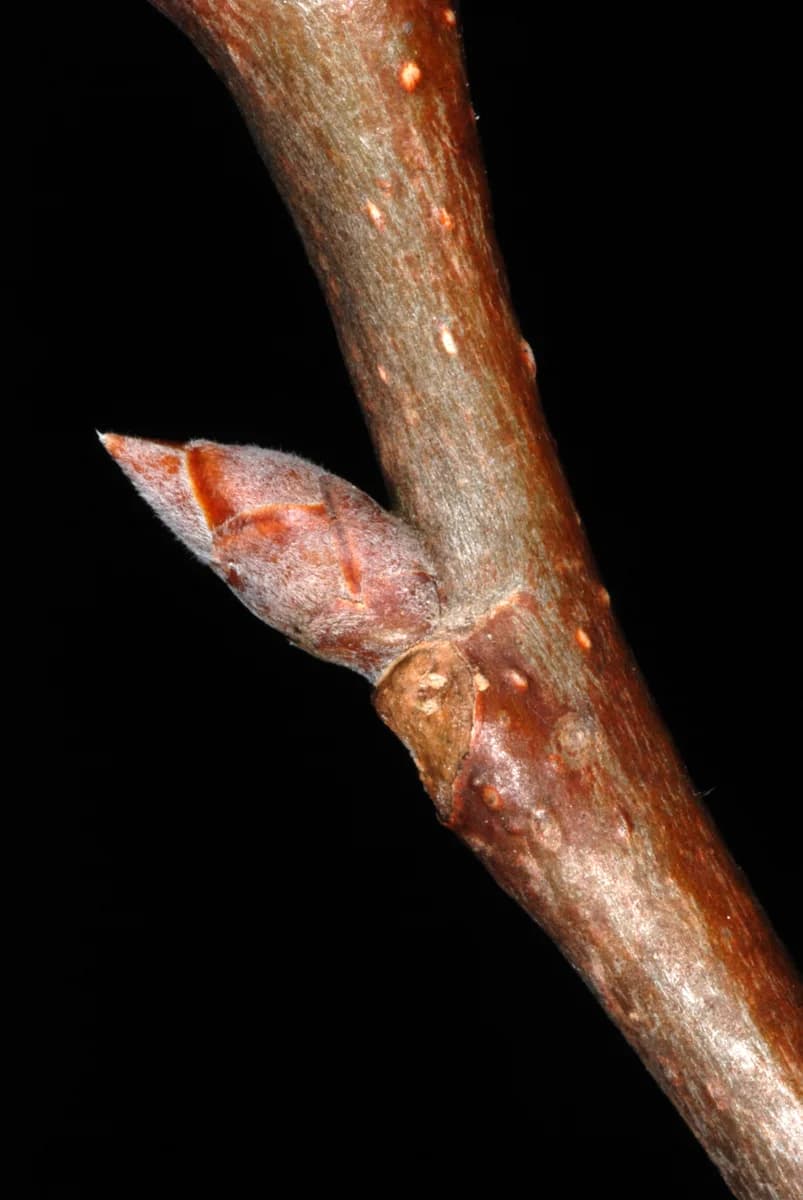
These close views are not at a common scale. Fine hairs may require magnification on a naturally fallen twig or a comfortably visible branch. Do not confuse pale hairs with reflected light or remove a bud to check it.
Populus tremuloides
Winter bud scales are hairless; the buds can be pointed.
Populus grandidentata
Winter bud scales are hairy, offering a useful additional clue.
These clues compare this pair; other species, hybrids, age, and growing conditions can complicate identification. If the features disagree, keep observing and consult a local field guide or knowledgeable person.
Botanical references checked October 26, 2026: NC State Extension: Quaking aspen · Native Plant Trust Go Botany bigtooth aspen profile.
Additional botanical references: Native Plant Trust: quaking aspen leaf and winter-bud characteristics · Native Plant Trust: bigtooth aspen leaf and winter-bud characteristics.