American hornbeam
Carpinus caroliniana
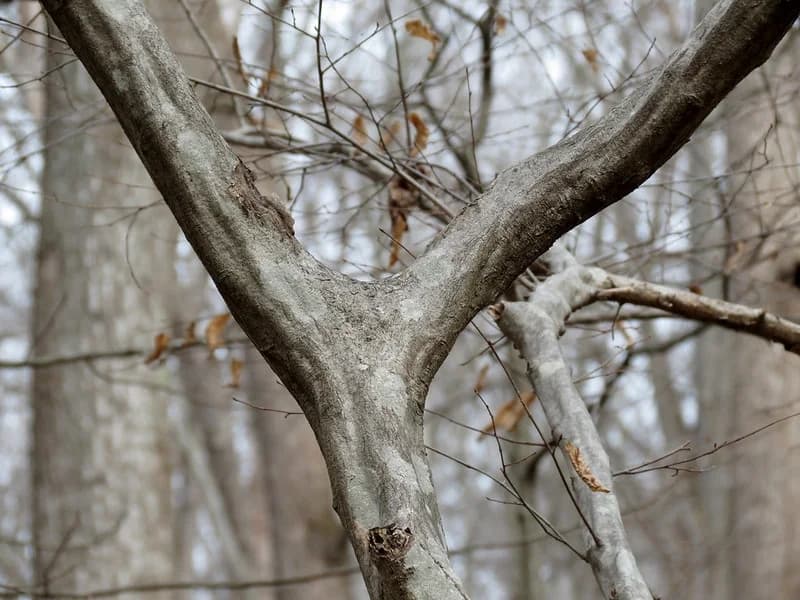
Smooth gray bark follows fluted, sinewy-looking trunks and branches, inspiring the name musclewood.
Compare similar trees
Both are called ironwood. Smooth, muscular bark versus loose scales—and leafy bracts versus papery sacs—give better clues than the shared name.
Observe from a permitted path. Use attached or naturally fallen material without picking or peeling. Photographs show individual examples, not every variation or a common scale.
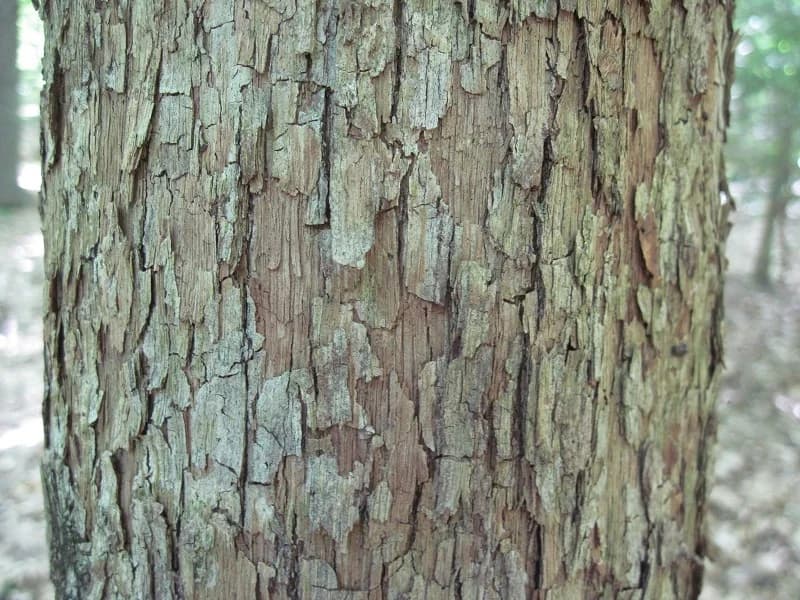
Compare mature bark without peeling it. Young hophornbeam can have smoother bark.
Carpinus caroliniana
Smooth gray bark follows fluted, sinewy-looking trunks and branches, inspiring the name musclewood.
Ostrya virginiana
Mature gray-brown bark breaks into narrow, loose scales, giving the trunk a shaggy texture.
The leaves resemble each other closely. Bark and fruit offer stronger distinctions.
Carpinus caroliniana
Simple, alternate leaves have double teeth and conspicuous side veins.
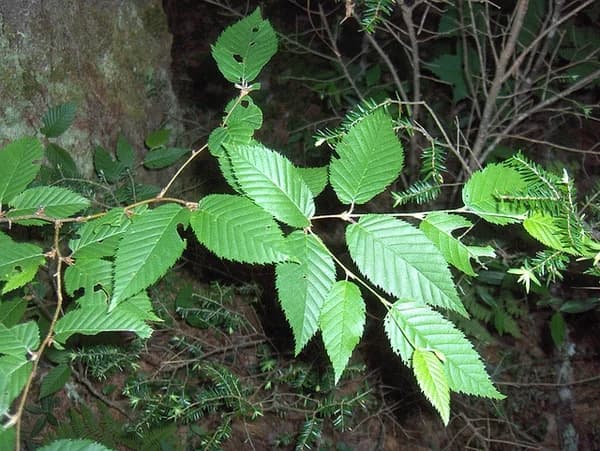
Ostrya virginiana
Simple, alternate leaves also have double teeth and strong veins; the fruit photograph includes this foliage.
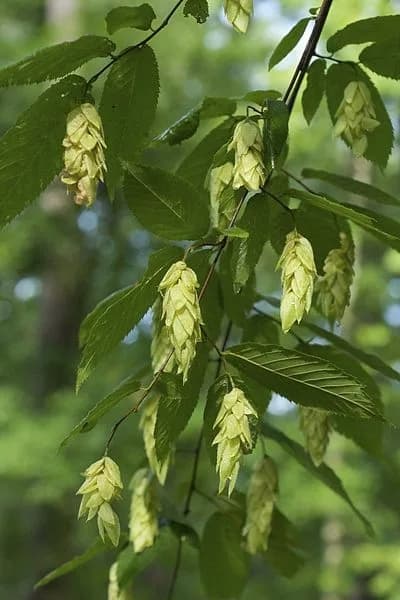
Look for leafy bracts versus enclosing sacs. Fruit may be absent outside its season.
Carpinus caroliniana
Small nutlets are accompanied by open, leafy, three-lobed bracts.
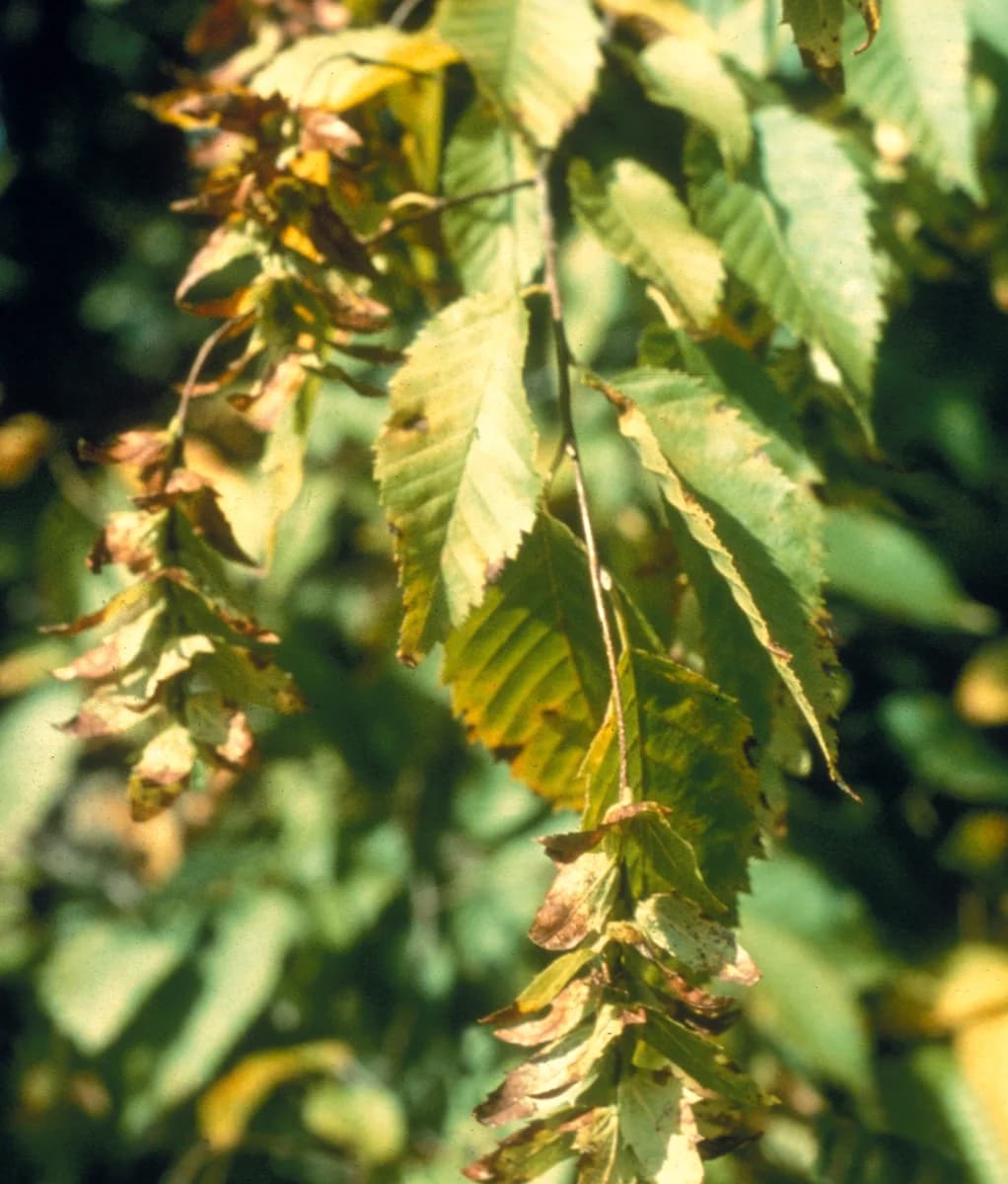
Ostrya virginiana
Nutlets sit inside inflated, papery sacs grouped into hop-like clusters.
These clues compare this pair; other species, hybrids, age, and growing conditions can complicate identification. If the features disagree, keep observing and consult a local field guide or knowledgeable person.
Botanical references checked October 10, 2026. NC State Extension: American hornbeam · American hophornbeam.