White oak
Quercus alba
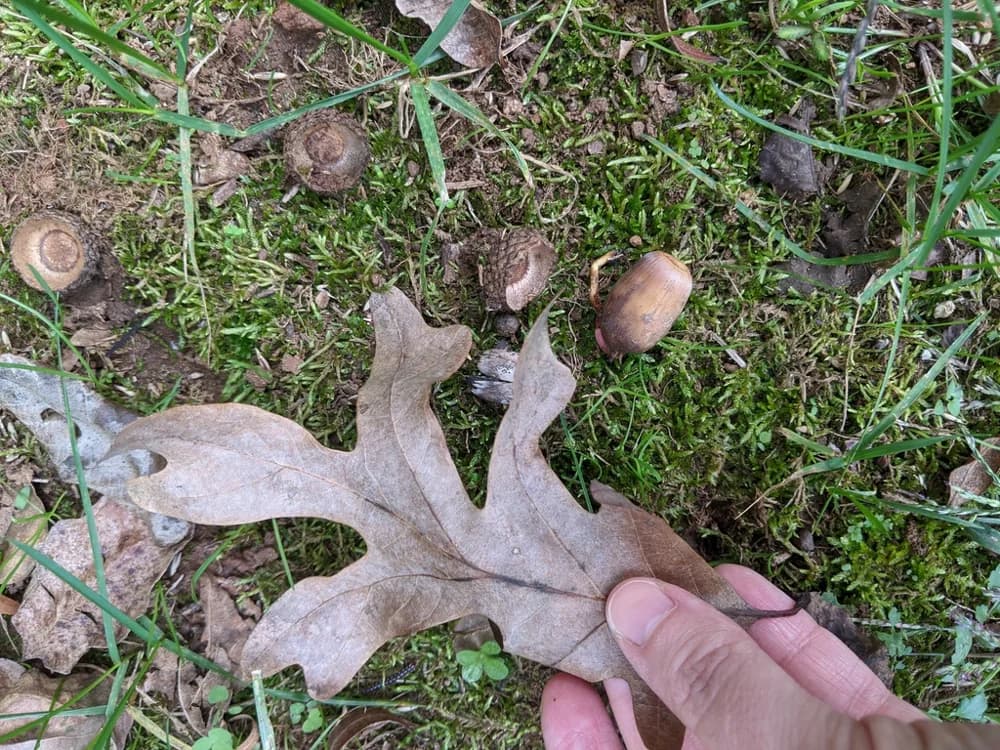
Rounded, fingerlike lobes without bristle tips; the blade is usually widest around its middle.
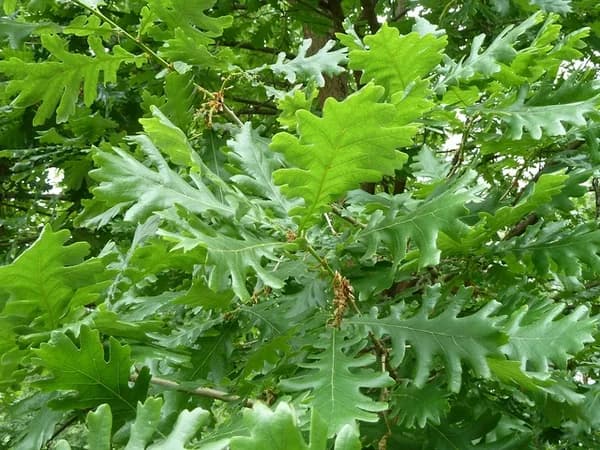
Compare similar trees
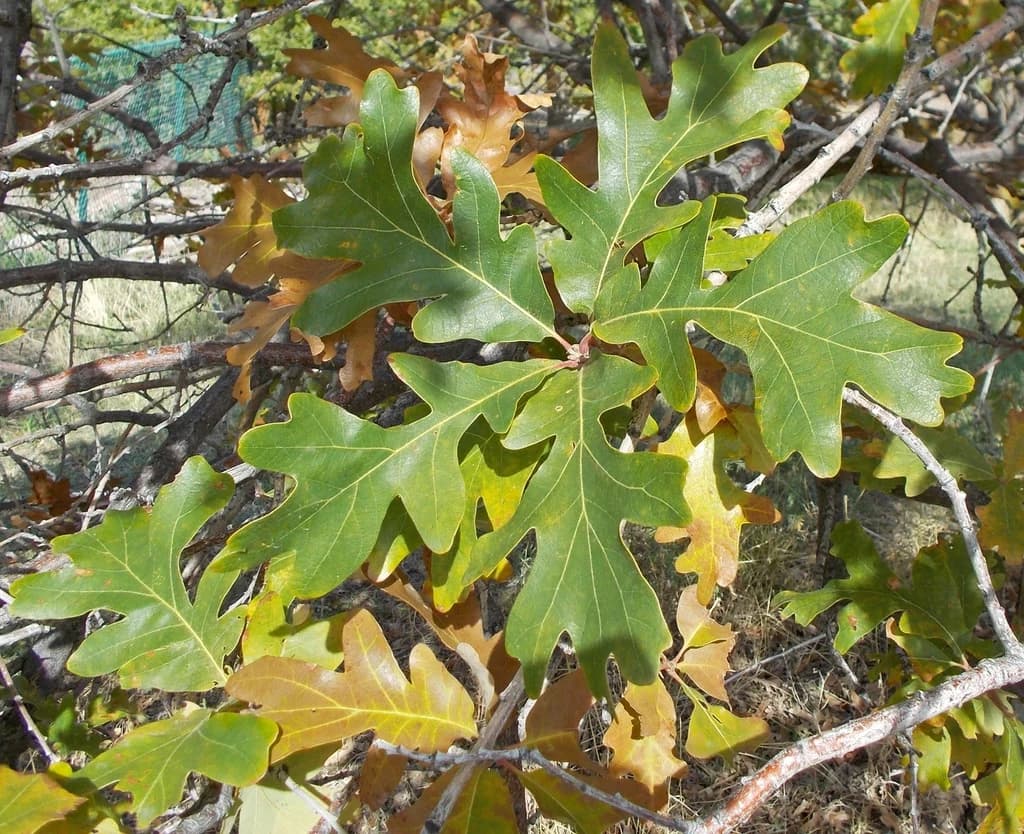
Both have rounded leaf lobes. Start with the acorn cup, then compare the leaf outline.
Observe from a permitted path. Use attached or naturally fallen material without picking or peeling. Photographs show individual examples, not every variation or a common scale.
Compare several leaves rather than one outline; the depth of the lobes varies.
Quercus alba
Rounded, fingerlike lobes without bristle tips; the blade is usually widest around its middle.
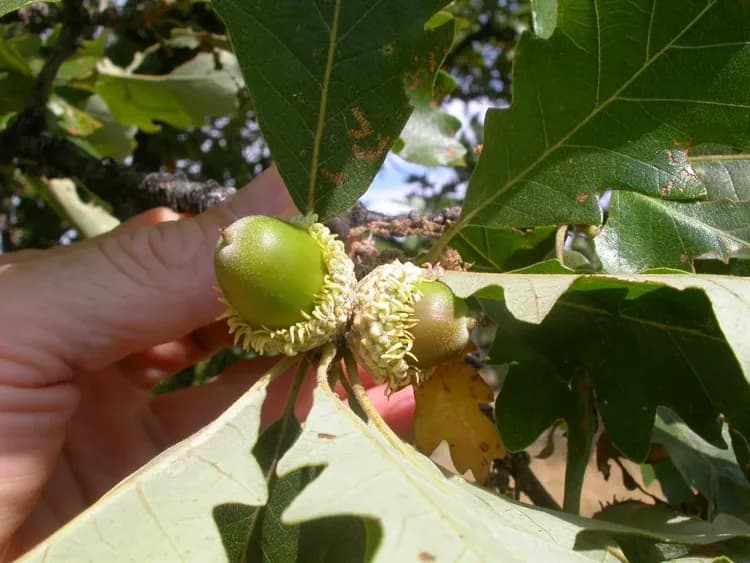
Quercus macrocarpa
Rounded lobes too, often with a deep narrowing near the middle and a broader upper portion. Leaf shapes vary.
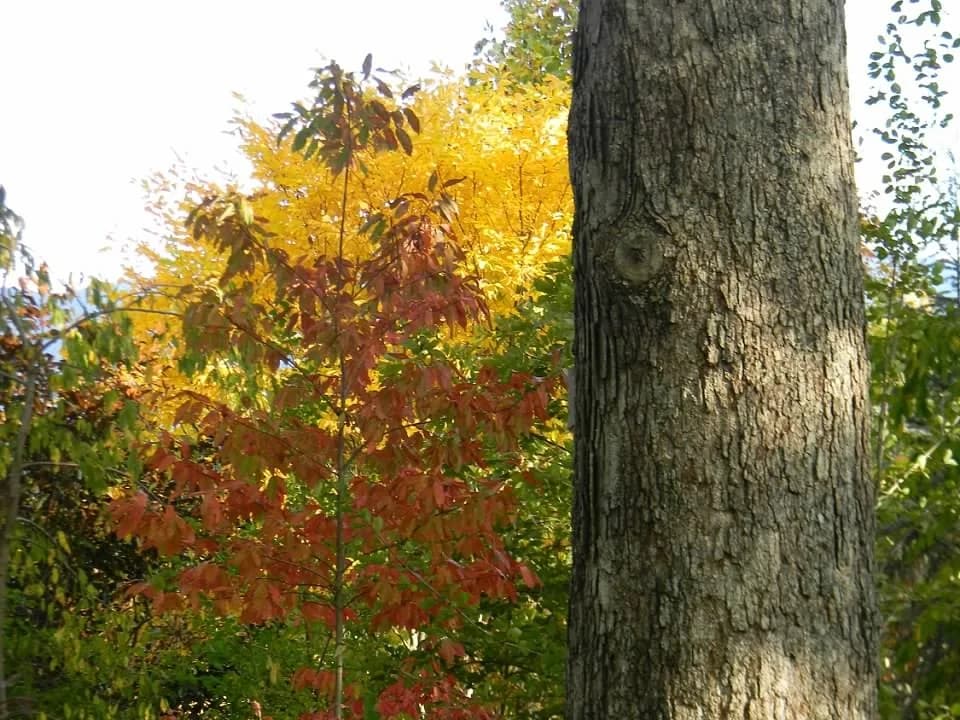
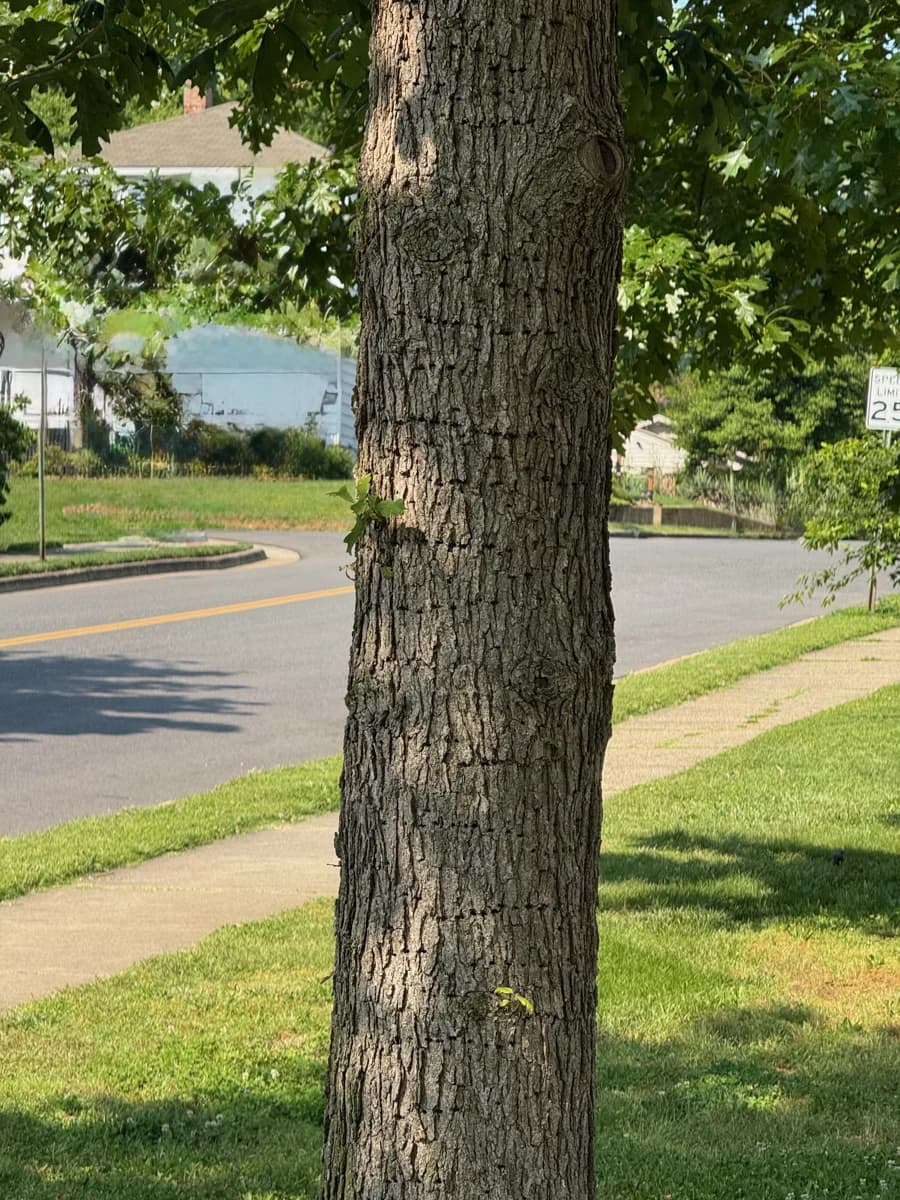
Bark changes with age. Compare mature trunks, and use it as supporting evidence.
Quercus alba
Light ash-gray bark develops scaly blocks and plates.
Quercus macrocarpa
Mature bark has deeper furrows and rough ridges.
Acorns mature in autumn; these photographs show different stages and are not to a common scale.
Quercus alba
A lumpy, unfringed cap covers roughly a quarter to a third of the nut.
Quercus macrocarpa
A substantial cup has a conspicuous fringe around its rim—the strongest clue in this pair.
These clues compare this pair; other species, hybrids, age, and growing conditions can complicate identification. If the features disagree, keep observing and consult a local field guide or knowledgeable person.
Botanical references checked October 10, 2026. NC State Extension: White oak · Bur oak.