Eastern Redcedar
Juniperus virginiana
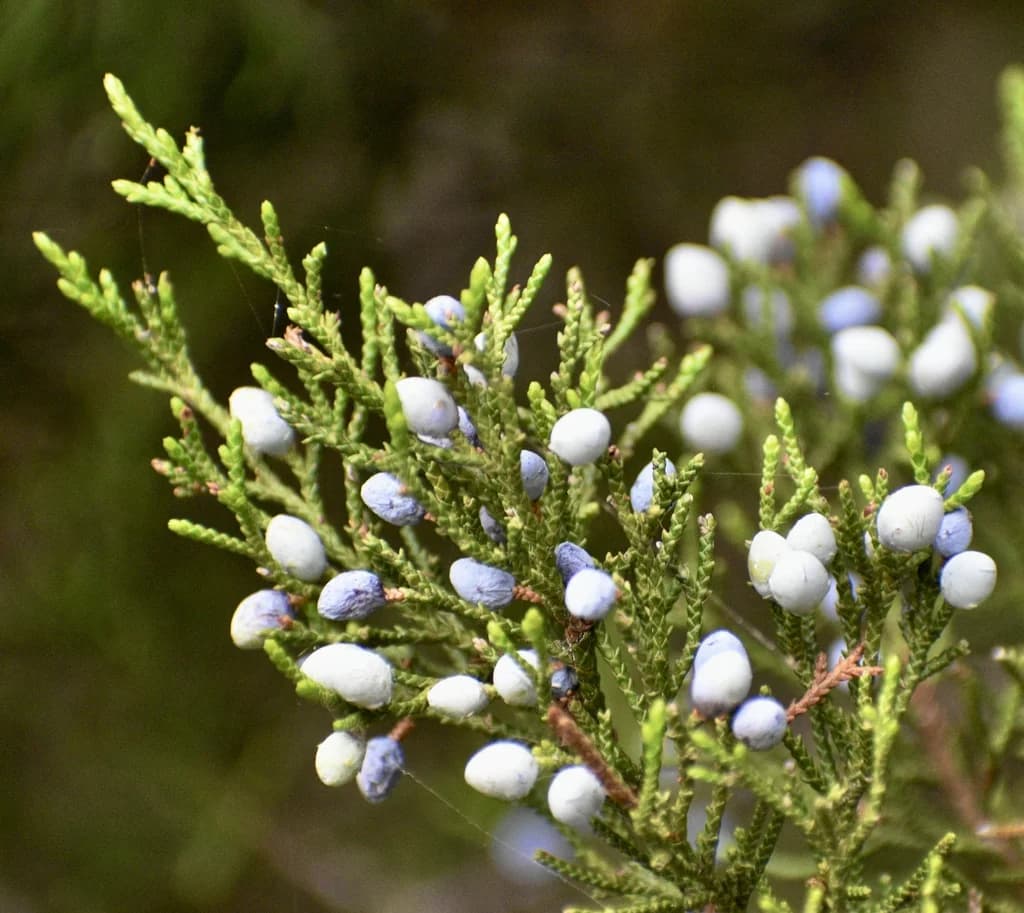
Mature leaves overlap as scales on branchlets; juvenile shoots can have pointed, needle-like leaves.
Compare similar trees
The shared name ‘cedar’ hides two different genera. Compare branchlet shape and seed cones.
Observe from a permitted path. Use attached or naturally fallen material without picking or peeling. Photographs show individual examples, not every variation or a common scale.
The redcedar photograph includes needle-like foliage and cones. Garden cultivars and juvenile shoots can look different.
Juniperus virginiana
Mature leaves overlap as scales on branchlets; juvenile shoots can have pointed, needle-like leaves.
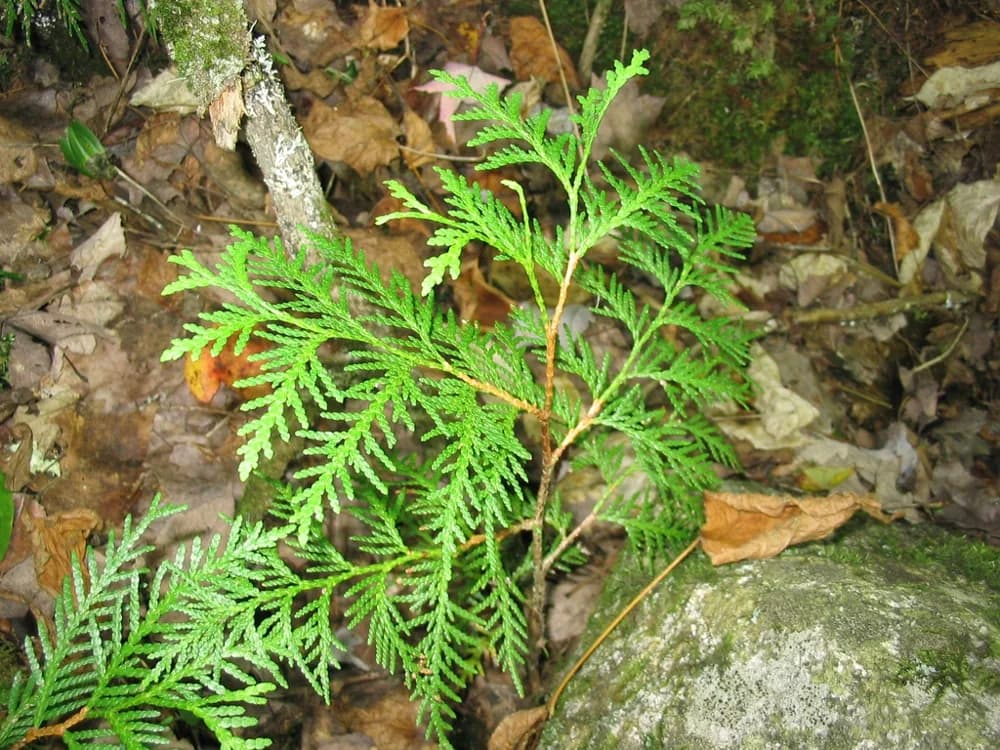
Thuja occidentalis
Scale-like leaves form distinctly flattened, fanlike sprays.
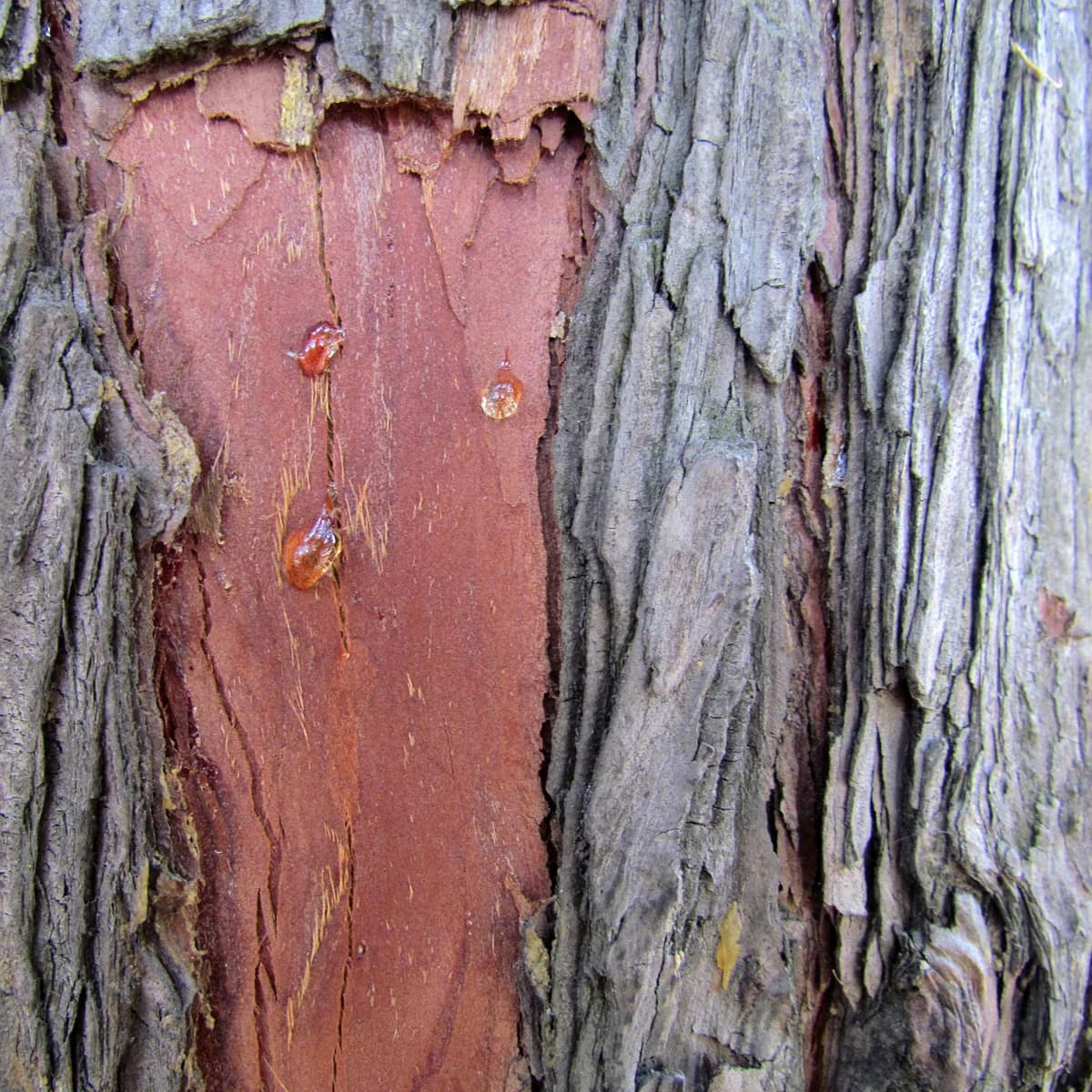
Both can have stringy bark. The redcedar close-up includes exposed inner bark at a damaged area; do not peel bark to inspect it. Foliage and cones provide the clearer distinction.
Juniperus virginiana
Grayish to reddish-brown bark peels into narrow fibrous strips.
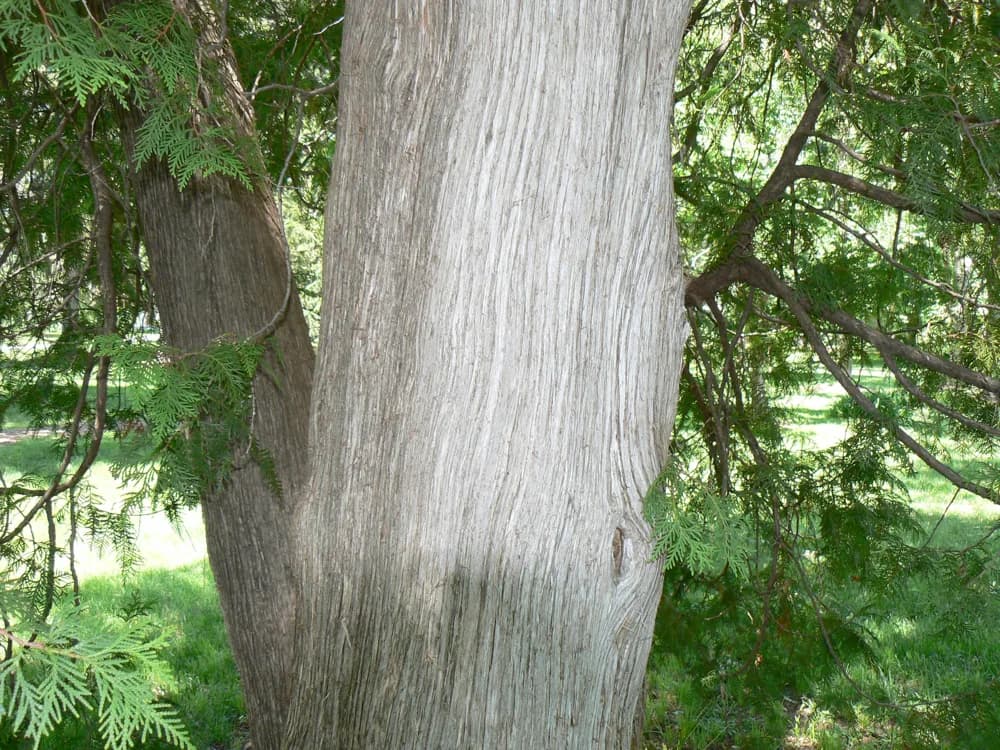
Thuja occidentalis
Gray to reddish-brown bark also peels in long, narrow strips.
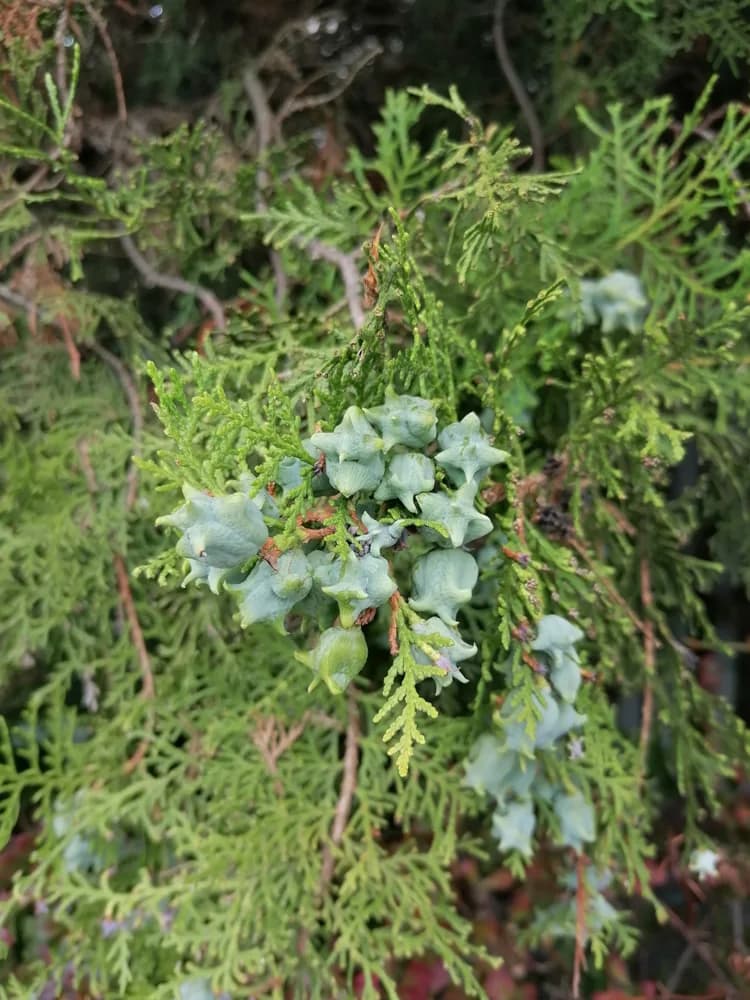
White-cedar cones are developing in the photograph. Not every redcedar bears blue cones; their absence does not settle identification.
Juniperus virginiana
Female trees bear rounded, blue, frosted-looking cones that resemble berries. They are not true fruits.
Thuja occidentalis
Small oblong cones have visible scales and turn light brown as they mature.
These clues compare this pair; other species, hybrids, age, and growing conditions can complicate identification. If the features disagree, keep observing and consult a local field guide or knowledgeable person.
Botanical references checked October 10, 2026. NC State Extension: Eastern Redcedar · Northern white-cedar.