Quaking aspen
Populus tremuloides
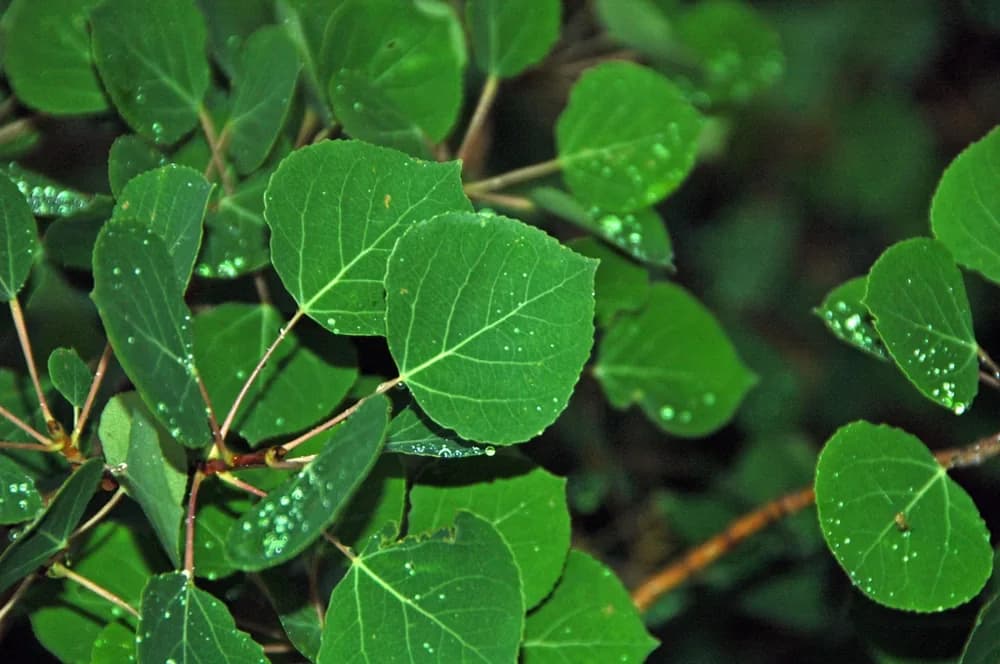
Leaves are often rounded to broadly triangular with small, fine teeth.
 Tree Yoga SchoolPractice with the living world
Compare similar trees
Both belong to Populus and can have moving leaves and pale young bark. Combine leaf shape with age-aware bark observations.
Observe from a permitted path. Use attached or naturally fallen material without picking or peeling. Photographs show individual examples, not every variation or a common scale.
Outline varies, so compare several mature leaves. Both species can have flattened leaf stalks and moving foliage; trembling alone does not settle the identification.
Populus tremuloides
Leaves are often rounded to broadly triangular with small, fine teeth.
Populus deltoides
Leaves are commonly more distinctly triangular, with a broad, nearly straight base and coarser teeth.

These photographs show particular trunk ages and are not matched in scale. Young cottonwood and older aspen can defeat a bark-only guess. Recheck foliage and consult a local key; other poplars and hybrids can complicate identification.
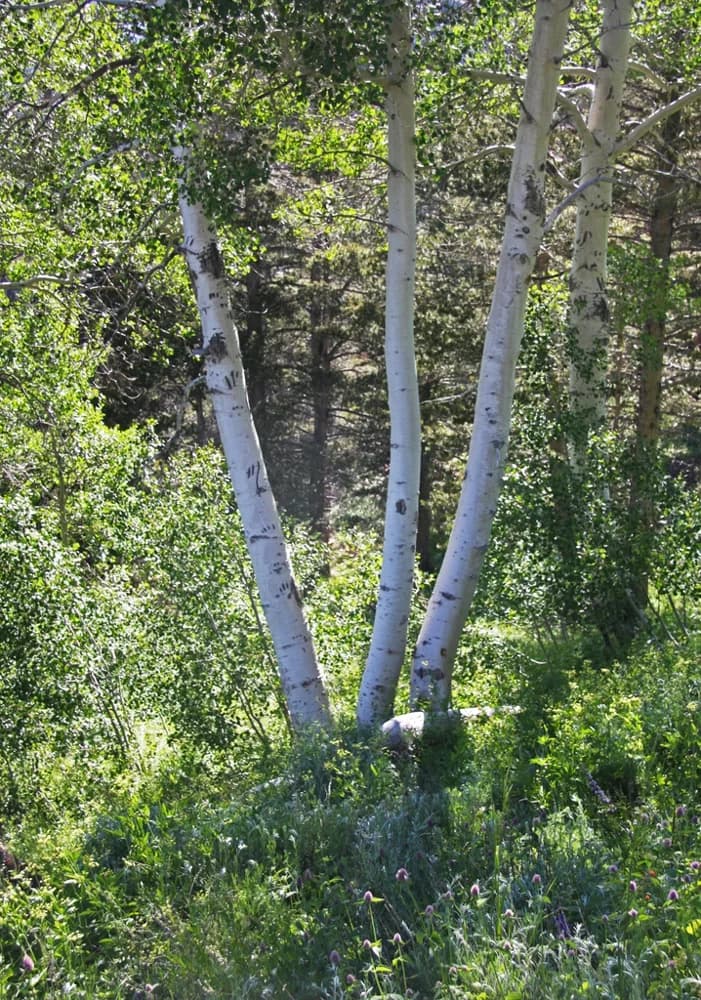
Populus tremuloides
Much of the trunk can remain pale and relatively smooth, with dark markings; older lower bark may become rough and furrowed.
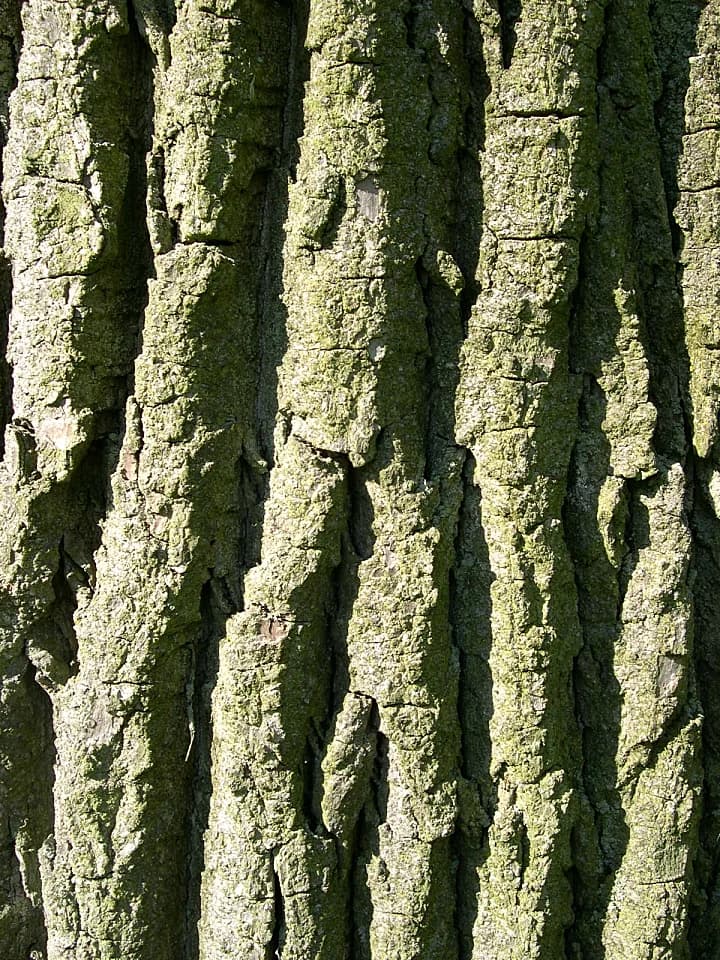
Populus deltoides
Young bark may be smooth and greenish-gray, while mature trunks develop deep, interconnecting furrows and ridges.
These clues compare this pair; other species, hybrids, age, and growing conditions can complicate identification. If the features disagree, keep observing and consult a local field guide or knowledgeable person.
Botanical references checked October 26, 2026: NC State Extension: Quaking aspen · NC State Extension: Eastern Cottonwood.
Additional botanical references: Native Plant Trust: quaking aspen · Native Plant Trust: eastern cottonwood.