Red maple
Acer rubrum
Usually three to five pointed lobes, with small teeth along the edges.
Compare similar trees
Both have opposite leaves and paired winged fruits. Look at the leaf edges before autumn color.
Observe from a permitted path. Use attached or naturally fallen material without picking or peeling. Photographs show individual examples, not every variation or a common scale.
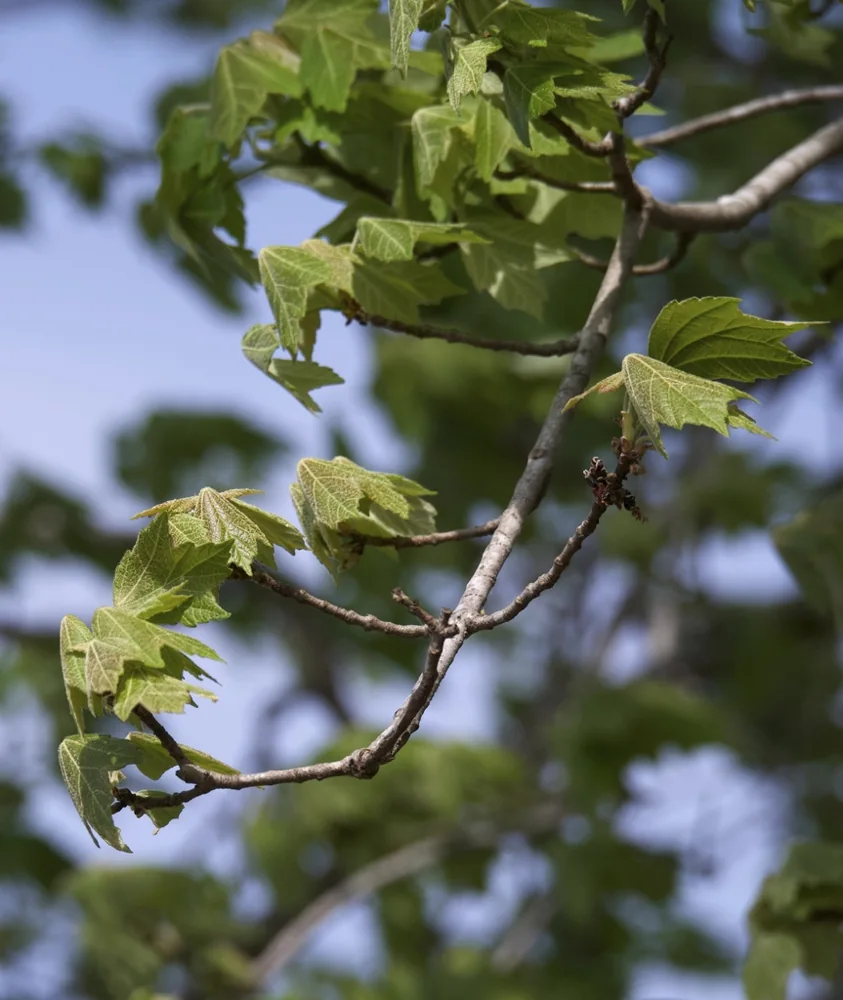
The red maple photograph shows emerging leaves. Check fully expanded leaves too; red autumn color occurs in both species.
Acer rubrum
Usually three to five pointed lobes, with small teeth along the edges.
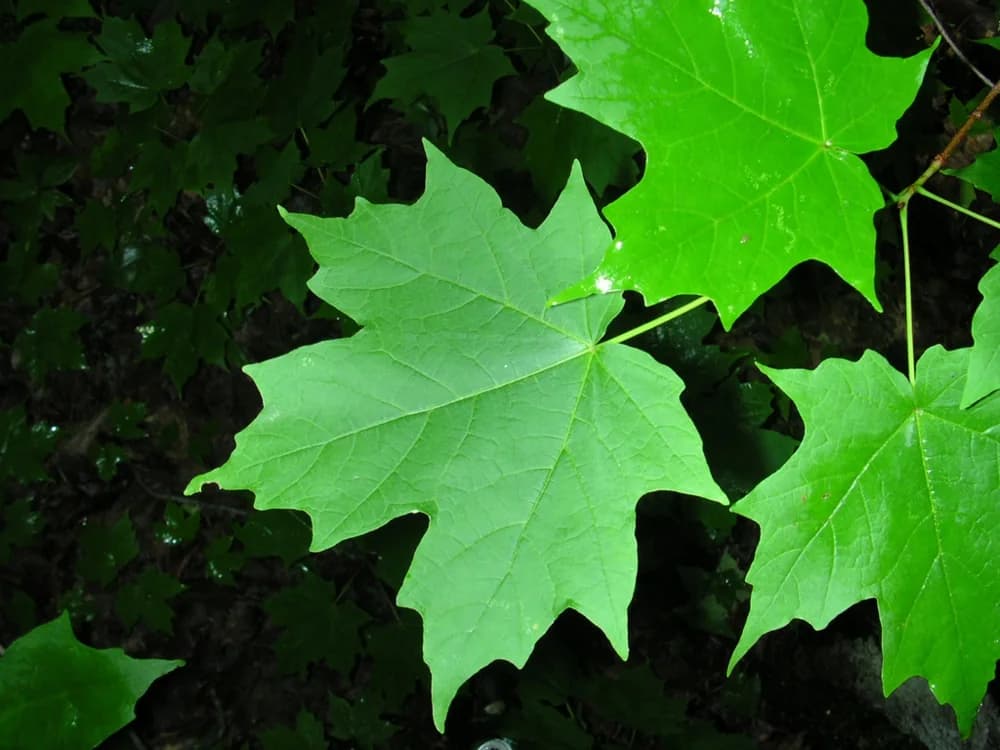
Acer saccharum
Typically five lobes, with smooth edges between the major points.
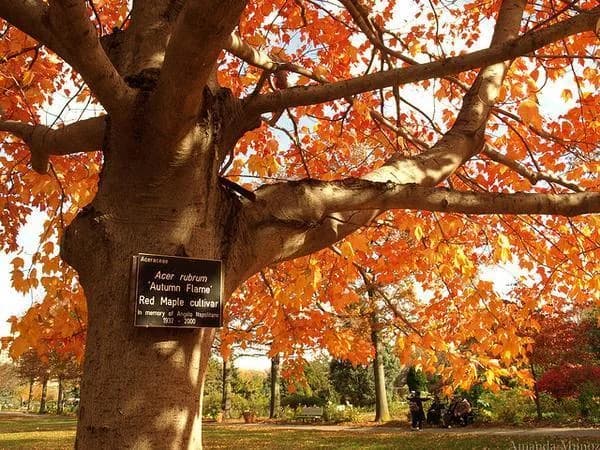
These bark patterns overlap. Bark alone is a weak way to separate the two.
Acer rubrum
Young bark is smooth gray; older bark breaks into ridges and plates.
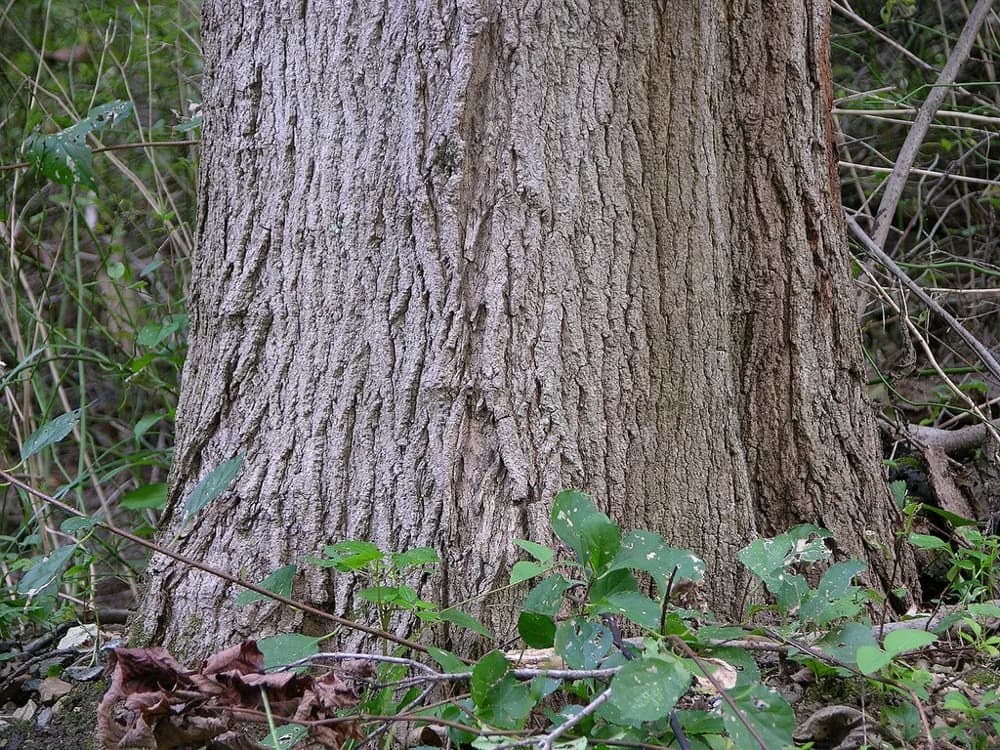
Acer saccharum
Older bark develops long, irregular, thick ridges or plates.
Timing varies with climate. Wing angle and fruit color vary too; combine them with leaf margins.
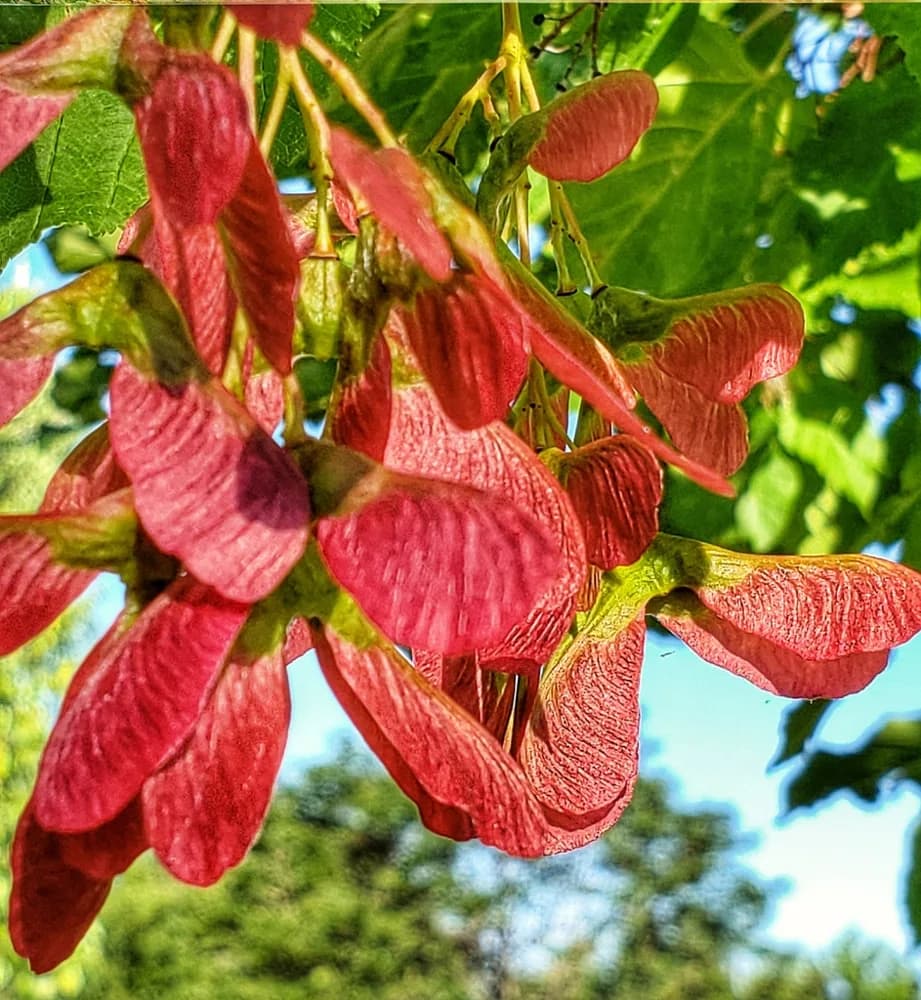
Acer rubrum
Paired samaras commonly form a V. They mature earlier, in spring or early summer.
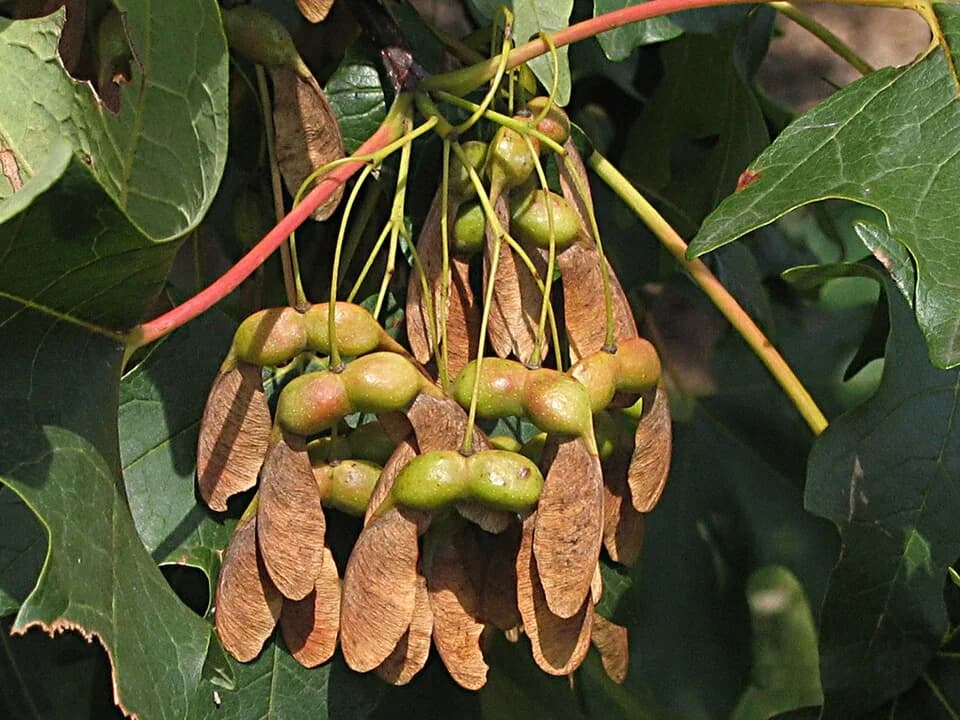
Acer saccharum
Paired samaras commonly form a U. They develop later, into summer and autumn.
These clues compare this pair; other species, hybrids, age, and growing conditions can complicate identification. If the features disagree, keep observing and consult a local field guide or knowledgeable person.
Botanical references checked October 10, 2026. NC State Extension: Red maple · Sugar maple.